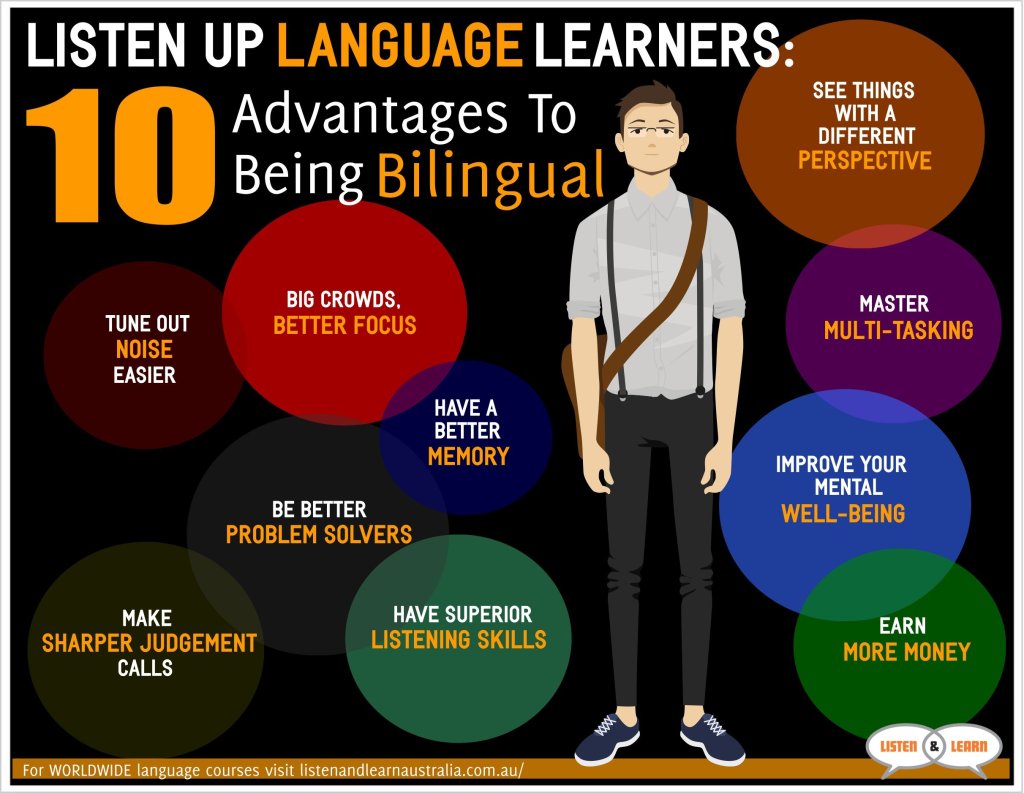
Bilingual education has become increasingly popular in recent years, as educators and researchers recognize the numerous benefits it offers to students. This case study delves into various aspects of bilingual education, exploring its impact on cognitive development, academic achievement, cultural identity, language preservation, career opportunities, and more.
1. The Impact of Bilingual Education on Cognitive Development
Research has consistently shown that bilingualism can have a positive impact on cognitive development. When individuals speak and think in multiple languages, they engage their brains in complex tasks such as switching between languages and inhibiting one language while using another. These cognitive processes enhance executive functions like problem-solving skills, attention control, and mental flexibility.
Studies comparing monolingual and bilingual children have found that bilinguals often outperform their monolingual peers in tasks related to these executive functions. They demonstrate heightened abilities in areas such as memory retention, multitasking, and creative thinking. Furthermore, learning multiple languages from an early age has been associated with increased gray matter density in certain brain regions responsible for language processing.
2. Bilingual Education and Its Effects on Academic Achievement
Bilingual education can also significantly impact academic achievement across various subjects. Students who receive instruction in both their native language (L1) and a second language (L2) tend to perform better academically compared to those who only receive instruction in L2.
By initially teaching core subjects like math or science in L1 before gradually transitioning to L2 instruction over time (known as transitional bilingual education), students can build a solid foundation of subject knowledge while simultaneously developing proficiency in the second language. Research studies have reported improved performance not only in L2 but also across other subjects when students are taught bilingually.
3. The Role of Cultural Identity in Bilingual Education
Bilingual education plays a crucial role in fostering cultural identity among students from diverse backgrounds. By incorporating students’ native languages into the curriculum, schools validate their linguistic and cultural heritage. This validation helps students develop a positive sense of self, promoting self-esteem and belongingness.
Moreover, bilingual education encourages cross-cultural understanding and appreciation among students from different linguistic backgrounds. It creates an environment where cultural diversity is celebrated rather than marginalized, leading to enhanced social cohesion within schools and communities.
4. Bilingual Education and the Preservation of Indigenous Languages
For many indigenous communities around the world, bilingual education serves as a powerful tool for language preservation. By integrating indigenous languages into the curriculum, schools not only help maintain linguistic traditions but also contribute to the overall well-being of these communities.
Bilingual education programs that prioritize indigenous languages empower future generations with knowledge about their heritage, culture, and history. Moreover, by valuing indigenous languages alongside dominant languages in educational settings, bilingual education promotes equality and challenges language discrimination.
5. Bilingual Education for Students with Learning Disabilities
Bilingual education can also benefit students with learning disabilities or special educational needs (SEN). Research suggests that incorporating multilingual strategies into teaching can facilitate comprehension for these students while supporting their cognitive development.
By utilizing visual aids, gestures, and other non-verbal communication techniques alongside verbal instruction in multiple languages, educators can create inclusive learning environments that cater to diverse learning styles. Additionally, bilingual approaches allow teachers to individualize instruction based on each student’s strengths and provide additional support where necessary.
6. The Benefits of Early Childhood Bilingual Education
Introducing bilingual education at an early age has numerous advantages for young learners. Children have a remarkable capacity to acquire new languages effortlessly during their early years when their brain plasticity is high.
Early childhood bilingual programs expose children to different sounds, vocabulary sets, grammar structures, and cultural experiences from an early stage. This exposure lays a strong foundation for future language acquisition while promoting intercultural competence among young learners.
Research shows that children who engage in early childhood bilingualism often demonstrate improved cognitive abilities compared to monolingual counterparts. They display enhanced problem-solving skills, creativity, and metalinguistic awareness (the ability to think about language as a system).
7. The Challenges of Implementing Bilingual Education in Rural Areas
While bilingual education has gained traction in urban areas, implementing it effectively in rural communities can be challenging due to various factors. Limited resources, including qualified bilingual teachers and appropriate instructional materials, pose significant obstacles.
Moreover, the geographical dispersion of students across vast rural landscapes can make it difficult to establish centralized bilingual schools. Transportation issues and cultural differences may also impact community involvement and support for bilingual programs.
To overcome these challenges, collaboration between educational institutions, local communities, and government bodies is crucial. Providing professional development opportunities for teachers specializing in bilingual education and leveraging technology for remote learning are some strategies that can help bridge the gap.
8. Bilingual Education as a Tool for Social Integration
Bilingual education has proven effective in promoting social integration among diverse student populations. By fostering multilingualism within classrooms, schools create an inclusive environment where students from different linguistic backgrounds feel valued and respected.
In addition to facilitating communication between students with varying language proficiencies, bilingual education encourages peer-to-peer learning experiences where individuals learn from each other’s languages and cultures. This interaction cultivates empathy, understanding, and tolerance while nurturing global citizenship values.
9. The Role of Technology in Enhancing Bilingual Education Programs
Technology plays a crucial role in enhancing the effectiveness of bilingual education programs. Digital tools offer numerous benefits such as online language learning platforms with interactive exercises or virtual classrooms that connect students from different locations.
Furthermore, technology supports differentiated instruction by providing personalized learning experiences tailored to individual student needs. It enables educators to incorporate multimedia resources like videos or audio recordings into lessons while offering opportunities for asynchronous or blended learning models.
10. Bilingual Education and Its Impact on Career Opportunities
Proficiency in multiple languages opens up a wide range of career opportunities for individuals across various industries. In today’s globalized world, businesses, government agencies, and NGOs actively seek bilingual employees who can bridge language barriers and navigate multicultural contexts.
Bilingual education equips students with valuable communication skills, cultural sensitivity, and adaptability – qualities highly valued in the job market. Moreover, bilingualism can enhance cognitive flexibility and problem-solving abilities, making individuals attractive candidates for roles that require critical thinking and creativity.
In conclusion, bilingual education offers numerous benefits across different aspects of a student’s development. From cognitive advantages to improved academic achievement, enhanced cultural identity to language preservation efforts – the impact of bilingual education is far-reaching. By recognizing its significance and addressing the challenges involved in its implementation, society can harness the power of multilingualism to create inclusive educational environments that prepare students for success in an interconnected world.
 Alternative Amie
Leave a comment