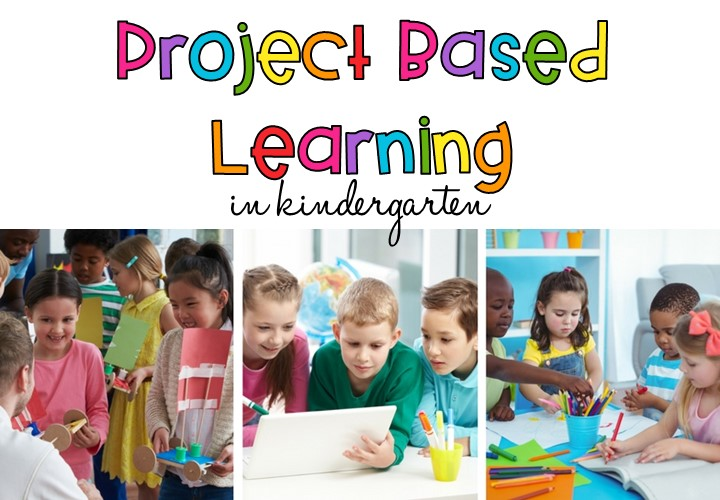
Project-based learning in STEM has gained significant popularity in recent years as educators recognize the value of hands-on, experiential learning. This approach provides students with opportunities to apply their knowledge and skills to real-world problems, fostering critical thinking, collaboration, and creativity. By engaging in projects that require them to design, build, and test prototypes or solutions, students not only deepen their understanding of STEM concepts but also develop important 21st-century skills.
Integrating art and design into STEM education is a powerful way to enhance student engagement and foster innovation. By incorporating artistic elements such as aesthetics, creativity, and visual communication into STEM projects, students are encouraged to think beyond technical aspects and consider the broader implications of their work. This interdisciplinary approach not only encourages diverse perspectives but also allows for more holistic problem-solving approaches. For example, incorporating design thinking principles can help students empathize with end-users and create solutions that address their needs effectively.
Environmental sustainability is a pressing issue that requires urgent attention from future generations. Integrating environmental sustainability into the STEM curriculum helps instill a sense of responsibility towards the environment while also teaching key scientific concepts related to ecosystems, climate change, renewable energy sources, and waste management. Through hands-on activities like building solar-powered devices or designing sustainable buildings using green technologies, students can learn about innovative ways to tackle environmental challenges.
Robotics and coding have become increasingly popular for young learners as they provide an excellent opportunity for developing computational thinking skills while enhancing problem-solving abilities. Engaging in robotics projects allows students to explore engineering concepts like mechanics and electronics through practical applications. Additionally, coding activities enable children to understand algorithms and logic by programming robots or creating interactive games. These experiences lay a strong foundation for future academic pursuits or careers in technology-related fields.
Inquiry-based science education focuses on promoting curiosity-driven exploration where students actively seek answers through questioning processes rather than simply memorizing facts from textbooks. It encourages critical thinking by challenging students to design experiments, collect data, analyze results, and draw conclusions. By engaging in hands-on investigations and collaborative group work, students develop essential scientific skills such as observation, inference, evidence-based reasoning, and communication.
Gamification in STEM classrooms has been found to enhance student motivation and engagement. By incorporating game elements like challenges, rewards, competition or collaboration into the learning process, teachers can create a more immersive and interactive environment. Gamified activities stimulate problem-solving abilities while making learning enjoyable. For instance, using educational games or simulations for physics concepts can help students visualize abstract ideas like motion or electricity through interactive experiences.
Cultivating creativity in mathematics education is crucial for developing well-rounded individuals capable of applying mathematical principles to real-world contexts. Encouraging open-ended problem-solving approaches that allow multiple solutions fosters creativity while reinforcing mathematical concepts. Teachers can incorporate activities such as puzzles, project-based tasks or exploring connections between math and art/music to promote creative thinking skills among students.
Incorporating virtual reality (VR) technology into science lessons opens up new avenues for immersive learning experiences. VR allows students to explore environments that would otherwise be inaccessible due to logistical constraints or safety concerns. For example, through VR applications in biology classes, students can observe microscopic organisms or dissect virtual specimens without the need for actual physical specimens.
Engineering challenges designed specifically for middle school students provide an opportunity for hands-on exploration of engineering principles like structural stability or energy transfer mechanisms. These challenges often involve designing and building prototypes that meet specific criteria while considering constraints such as cost-effectiveness or environmental impact. By engaging young learners in engineering projects early on in their academic journey, we can spark their interest in pursuing further studies within this field.
Outdoor and nature-based STEM activities provide a unique opportunity for students to connect with the natural world while experiencing firsthand the application of scientific concepts. Through activities like outdoor field trips or gardening projects involving soil analysis and plant growth monitoring; children develop a deeper understanding of ecological systems and the importance of sustainable practices.
Technology integration in early childhood STEM education should be done thoughtfully, ensuring that it supports developmentally appropriate learning experiences. Simple tools like tablets or interactive whiteboards can be used to introduce young children to basic coding concepts or interactive science simulations. However, it is essential to balance screen time with hands-on activities and outdoor exploration to foster holistic development.
Promoting diversity and inclusion in STEM fields is crucial for creating a more equitable society. By providing opportunities for underrepresented groups to engage in STEM education, we can break down barriers and encourage diverse perspectives and talents within these fields. Special programs or initiatives targeting girls or students from minority backgrounds can help bridge the gender and racial gaps prevailing in STEM disciplines.
Hands-on physics experiments for high school students not only reinforce theoretical concepts but also enhance practical skills required for further studies in engineering or physical sciences. Activities like building electrical circuits, conducting experiments on motion or optics enable students to apply scientific principles while developing critical thinking abilities through data analysis and interpretation.
Astronomy and space exploration capture the imagination of elementary students while introducing them to fundamental scientific concepts like celestial bodies, gravity, or planetary motion. Engaging young learners through activities like stargazing sessions, building model rockets or studying lunar phases helps spark curiosity about the universe around us.
Using data analysis as a tool for solving real-world problems connects mathematical concepts with practical applications. By engaging students in analyzing authentic datasets related to topics such as climate change, population growth, economic trends; educators provide an opportunity for applying mathematical models while fostering critical thinking skills necessary for problem-solving.
Biotechnology and genetic engineering education allows students to explore cutting-edge advancements in biological sciences while understanding ethical considerations associated with manipulating living organisms at the molecular level. Hands-on activities involving DNA extraction techniques, gene editing simulations promote both conceptual understanding and awareness of ethical implications within this field.
Sustainable energy sources are gaining prominence due to the need for reducing carbon emissions and transitioning towards a cleaner future. Educating students about renewable technologies like solar panels, wind turbines or hydroelectric power not only raises awareness but also promotes critical thinking about sustainable energy solutions.
Exploring the world of nanotechnology introduces students to revolutionary scientific advancements at the atomic and molecular scale. Through activities such as studying self-assembling materials, investigating surface properties or exploring nanoscale phenomena; young learners gain insights into emerging applications in fields like medicine, electronics or materials science.
Marine biology and oceanography studies provide an opportunity for students to understand marine ecosystems, biodiversity conservation efforts, and explore career paths within marine sciences. Activities like conducting water quality tests, identifying marine organisms or studying coral reef ecosystems foster both scientific knowledge acquisition and environmental stewardship.
Health sciences and medical advancements offer a wide range of STEM career opportunities while addressing significant societal needs. By engaging students in activities related to human anatomy, disease research or medical innovations; educators can nurture their interest in pursuing careers that directly impact healthcare outcomes.
Forensic science investigations appeal to teenagers due to their association with popular media portrayals. These activities allow students to apply scientific principles within the context of solving crimes through fingerprint analysis, DNA profiling simulations or crime scene reconstruction exercises. By engaging in hands-on forensic experiments, students develop critical thinking skills while understanding the interdisciplinary nature of this field.
Geology and earth sciences exploration enables students to understand Earth’s geological processes while appreciating its rich history. Hands-on activities involving rock identification, studying fossils or analyzing geological formations help young learners comprehend concepts such as plate tectonics, erosion patterns or climate change impacts.
Mathematical modeling and simulations encourage students to use mathematical concepts for real-world problem-solving by developing models that represent complex systems. By engaging in tasks involving population dynamics simulations or predicting economic trends using statistical models; learners enhance their mathematical reasoning abilities while gaining insights into practical applications.
Agricultural science focuses on sustainable farming practices that promote food security while minimizing environmental impact. Through activities like hydroponics, soil analysis or crop rotation experiments, students develop an understanding of agricultural systems and the importance of responsible farming techniques.
Computer programming languages beyond Scratch enable students to explore more advanced coding concepts and develop computational thinking skills required for higher-level programming tasks. By introducing languages like Python or Java, educators offer opportunities for young learners to create complex programs and algorithms that solve real-world problems.
Augmented reality applications in chemistry education provide immersive experiences that allow students to visualize molecular structures or chemical reactions. By overlaying virtual elements onto the physical environment, AR enhances engagement and understanding of abstract concepts within this subject area.
Environmental engineering projects for high schoolers encourage students to apply engineering principles towards solving environmental challenges like water pollution or waste management. Designing and building prototypes for wastewater treatment systems or renewable energy devices help foster creativity while developing a sense of responsibility towards the environment.
Ethical considerations in scientific research should be emphasized within STEM education to ensure responsible conduct and promote ethical decision-making among future scientists. Engaging students in discussions about topics such as animal testing ethics, data privacy concerns or scientific integrity helps shape their understanding of the social implications associated with scientific advancements.
Bioinformatics merges biology with computer science by applying computational methods for analyzing biological data sets. Introducing bioinformatics tools enables students to explore genomic sequencing, protein structure prediction or genetic disease modeling; fostering interdisciplinary skills necessary for advancing life sciences research.
Career pathways in STEM fields encompass a wide range of possibilities beyond traditional occupations. Educators can showcase diverse career options through guest speaker sessions, industry visits or mentorship programs. Highlighting lesser-known professions like biomedical engineering technologists, sustainability consultants or space tourism specialists broadens student perspectives regarding potential futures within STEM disciplines.
In conclusion, there are numerous exciting areas within STEM education that offer unique learning opportunities across different grade levels. From project-based learning to innovative technologies like virtual reality and augmented reality, educators have a vast array of tools and approaches to engage students in meaningful STEM experiences. By integrating art, design, and environmental sustainability into the curriculum, promoting diversity and inclusion, and providing hands-on activities that bridge theory with real-world applications; we can inspire the next generation of scientists, engineers, and innovators.
 Alternative Amie
Leave a comment