In recent years, there has been a growing emphasis on the importance of early childhood education and development. Parents and educators are constantly seeking out innovative approaches to help children learn and grow at a young age. One such approach that has gained significant attention is Maker education.
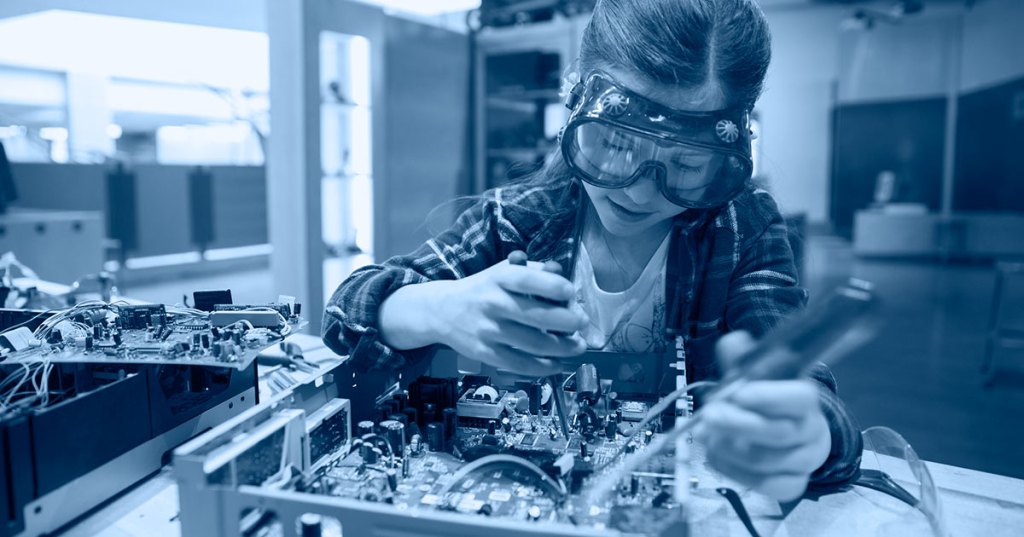
Maker education is an educational philosophy that encourages hands-on learning through creating, exploring, and inventing. It focuses on nurturing the natural curiosity, creativity, and problem-solving abilities of children by providing them with opportunities to design, build, experiment, and collaborate. While it is often associated with older students or adults in makerspaces or fab labs, maker education can also be effectively adapted for early childhood development.
The idea behind maker education for young children is simple: let them explore their world through play and discovery. By engaging in activities that involve designing and building things with their own hands, children not only develop essential motor skills but also enhance their cognitive abilities.
One key aspect of maker education for early childhood development is its focus on open-ended materials. Unlike traditional toys that have a specific purpose or function pre-determined by manufacturers, open-ended materials allow children to use their imagination freely. Examples include blocks of different shapes and sizes, cardboard boxes of various dimensions, fabrics scraps in vibrant colors – anything that can be manipulated or transformed into something else.
These open-ended materials provide endless possibilities for exploration as they invite children to think creatively about how they can be used. A simple set of wooden blocks could become a tower one day; a castle the next; or even a spaceship flying through outer space! This kind of imaginative play fosters divergent thinking skills which are crucial for problem-solving later in life.
Another important element of maker education for early childhood development is the emphasis on process over product. In traditional educational settings where outcomes are often prioritized over the journey itself, this approach might seem counterintuitive at first glance. However, research has shown time and again that focusing on the process of learning rather than the end result leads to greater engagement, motivation, and ultimately, deeper understanding.
Encouraging young children to engage in open-ended activities without any predetermined goals allows them to develop a growth mindset. They learn that it’s okay to make mistakes and that failure is simply an opportunity for learning and improvement. This resilience and perseverance cultivated through maker education are invaluable life skills that will serve children well throughout their lives.
Furthermore, maker education promotes collaboration and social-emotional development. When children engage in hands-on activities together, they naturally learn how to share ideas, negotiate differences, take turns, and work as a team. These interpersonal skills are crucial for success not only in school but also in later stages of life when they enter into the workforce.
In addition to these cognitive and social benefits, maker education can also have a positive impact on physical development. Activities such as building with blocks or manipulating different materials help improve fine motor skills by strengthening hand-eye coordination and manual dexterity. These skills play a vital role in future academic pursuits such as writing or using tools effectively.
Implementing maker education for early childhood development doesn’t require elaborate makerspaces or expensive equipment. It can be easily incorporated into existing classroom settings or even at home with minimal resources. The key lies in creating an environment that encourages exploration, creativity, problem-solving, and collaboration.
Teachers or parents can set up dedicated areas where children have access to a variety of open-ended materials like blocks, art supplies, recycled items like cardboard tubes or bottle caps – anything that sparks curiosity! They can guide the child’s learning experience by asking open-ended questions that prompt critical thinking or encouraging them to document their creations through drawings or photographs.
Ultimately, maker education provides young children with opportunities for holistic growth – intellectually stimulating their minds while nurturing their emotional well-being and physical capabilities. By embracing this approach during early childhood development years when the brain is most receptive to new experiences, we can lay a solid foundation for lifelong learning and creativity. So let’s encourage our little makers to explore, create, and invent – the possibilities are endless!
 Alternative Amie
Leave a comment