Adaptive Learning Technologies: Revolutionizing Education
In today’s rapidly evolving digital age, education is no longer confined to traditional classrooms and textbooks. With the advent of adaptive learning technologies, students now have access to personalized and dynamic learning experiences that cater to their individual needs and abilities. This innovative approach to education is transforming the way we learn and opening doors for a more inclusive and effective educational system.
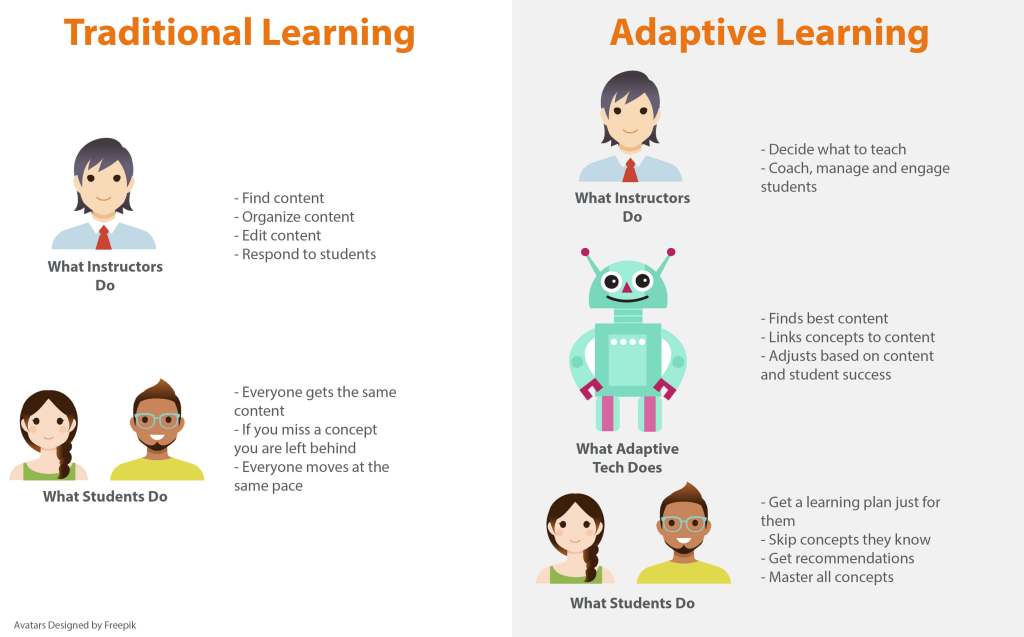
So, what exactly are adaptive learning technologies? These are digital tools designed to adapt and customize the learning experience based on each student’s progress, strengths, weaknesses, and unique learning style. By utilizing artificial intelligence algorithms, these technologies can analyze a student’s performance data in real-time and provide tailored content or recommendations accordingly.
One of the key advantages of adaptive learning technologies is their ability to offer personalized instruction at scale. In a traditional classroom setting with limited resources, it can be challenging for teachers to address each student’s individual needs effectively. However, with adaptive learning platforms, students can work through lessons at their own pace while receiving immediate feedback on their performance. This not only helps struggling students catch up but also allows high-achievers to advance further without feeling held back.
Furthermore, adaptive learning technologies promote active engagement by making the learning process more interactive and enjoyable for students. Through gamification elements such as badges or leaderboards, these platforms incentivize progress while fostering healthy competition among peers. Virtual simulations or immersive virtual reality experiences also enhance retention by providing hands-on practice in complex subjects like science or engineering.
Another significant benefit of adaptive learning technologies is their potential for inclusivity in education. Students with diverse backgrounds or special needs often require tailored approaches that may not be feasible in a traditional classroom environment. Adaptive technology offers accessible content formats such as text-to-speech features or closed-captioning for hearing-impaired learners. Additionally, it provides targeted interventions for struggling students through additional practice exercises or alternative explanations when concepts are not initially grasped.
Moreover, adaptive learning technologies generate vast amounts of data on student performance, allowing educators to gain valuable insights into their teaching methods and the effectiveness of different instructional materials. This data-driven approach enables teachers to make informed decisions about curriculum design and individualized interventions, ultimately improving overall educational outcomes.
However, it is important to acknowledge that adaptive learning technologies are not intended to replace teachers. On the contrary, they work best when integrated into a blended learning model where human guidance and support complement digital tools. Skilled educators play a crucial role in interpreting student data, providing context-specific feedback, and fostering critical thinking skills that technology alone cannot replicate.
In conclusion, adaptive learning technologies have the potential to revolutionize education by personalizing instruction, promoting active engagement, fostering inclusivity, and generating valuable insights for educators. As this innovative approach continues to evolve and become more accessible worldwide, it holds great promise for empowering learners of all ages and backgrounds. By embracing these cutting-edge tools alongside dedicated teaching professionals, we can shape a more effective and inclusive educational landscape for future generations.
 Alternative Amie
Leave a reply to The Future of Instructional Design – The Curious Classroom Cancel reply