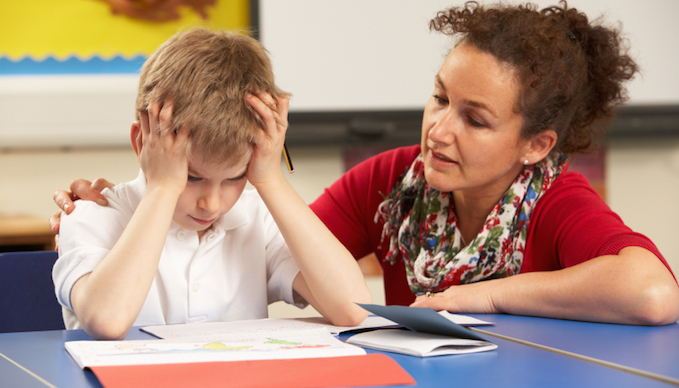
Dyslexia and dyscalculia are two common learning disabilities that affect individuals’ ability to read, write, and understand numbers. These conditions can significantly impact a student’s academic performance and overall confidence in their abilities.
Dyslexia primarily affects reading and language skills. People with dyslexia may have difficulty decoding words, recognizing letters or sounds, comprehending written text, or spelling correctly. They often struggle with tasks that require phonological awareness and may experience challenges in expressing themselves verbally.
On the other hand, dyscalculia is a math-related learning disability. Individuals with dyscalculia may find it challenging to understand mathematical concepts, perform calculations accurately, remember number facts or sequences, or grasp spatial relationships involved in geometry.
Both dyslexia and dyscalculia can be diagnosed through comprehensive evaluations conducted by qualified professionals such as psychologists or educational specialists. Once identified, appropriate interventions can be implemented to support students with these learning disabilities.
Alternative schooling and education options play a crucial role in providing tailored approaches for learners with dyslexia or dyscalculia. Such programs often use multisensory teaching methods that engage multiple senses simultaneously to enhance understanding and retention of information. Additionally, assistive technologies like speech-to-text software or specialized calculators can aid students in compensating for their challenges.
By adopting inclusive practices within alternative schools and educational settings, we create an environment where students with dyslexia or dyscalculia receive the support they need to thrive academically and personally. With proper intervention strategies in place, individuals living with these learning disabilities can develop their strengths while gaining confidence in areas previously seen as obstacles.
 Alternative Amie
Leave a comment