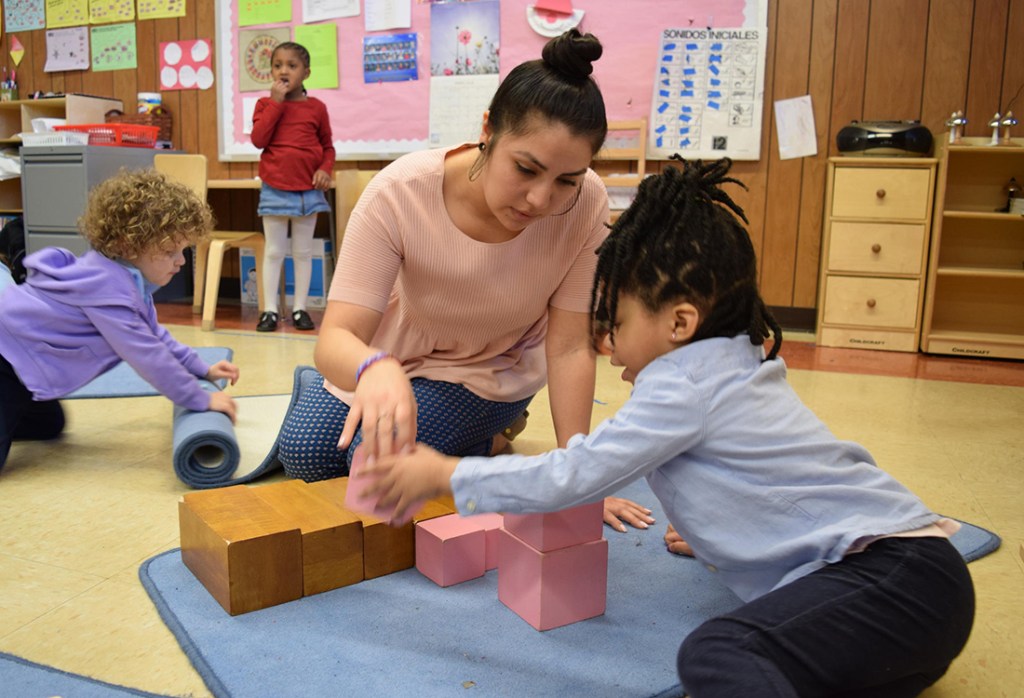
The Montessori method is an educational approach developed by Italian physician and educator Maria Montessori. It emphasizes individualized learning, hands-on activities, and independence for children. While initially designed for typically developing children, the Montessori method has proven to be highly effective for children with special needs as well. In this article, we will explore how the Montessori method can be adapted to support the unique learning needs of these children.
1. Montessori Method for Children with Special Needs:
The Montessori approach provides a holistic and inclusive environment that supports all learners, including those with special needs. The key principles of the Montessori method can be tailored to meet the specific requirements of each child’s developmental challenges.
For example,
– Sensory materials: The use of specially designed sensory materials allows children with sensory processing disorders to engage in purposeful activities that promote self-regulation and cognitive development.
– Individualized instruction: With its focus on individualized learning, the Montessori method allows teachers to adapt lessons according to each child’s abilities and pace.
– Practical life skills: Practical life activities such as pouring water or buttoning clothes not only develop fine motor skills but also enhance independence and self-confidence in children with physical disabilities.
– Mixed-age classrooms: Children with special needs benefit from interacting with peers who may serve as role models or provide social support in mixed-age classrooms where they are able to learn at their own pace without feeling pressured or left behind.
2. Incorporating Technology in the Montessori Classroom:
While traditional Montessori classrooms emphasize hands-on learning experiences using tangible materials, incorporating technology can complement and enhance student engagement in several ways:
– Assistive technology: For students with physical disabilities or communication difficulties, assistive technologies like touch screens or speech-to-text software can enable them to access educational resources more independently.
– Virtual field trips: Technology enables students to explore virtual environments beyond their immediate surroundings, expanding their horizons and providing experiential learning opportunities.
– Digital resources: Online platforms and educational apps can offer personalized learning experiences tailored to individual needs, allowing children with special needs to practice skills at their own pace.
3. Montessori-Inspired Outdoor Education:
Outdoor education plays a vital role in the Montessori approach, fostering a deep connection between children and nature. This is especially beneficial for children with special needs:
– Sensory integration: Outdoor environments provide rich sensory experiences that support the development of sensory integration skills for children with sensory processing disorders.
– Physical activity: Engaging in outdoor activities like climbing, running, or gardening helps promote gross motor skills development for students with physical disabilities.
– Emotional well-being: The calming effect of being surrounded by nature supports emotional regulation and mental well-being for all students.
4. The Role of Art and Creativity in Montessori Education:
Artistic expression is an important component of the Montessori curriculum as it encourages creativity, self-expression, and cognitive development:
– Therapeutic benefits: Art therapy can be particularly beneficial for children with special needs as it provides them with a non-verbal outlet to express themselves.
– Fine motor skill development: Engaging in art activities such as painting or sculpting helps develop fine motor skills necessary for everyday tasks.
– Multisensory exploration: Through artistic mediums like clay or collage-making, children are encouraged to explore different textures, colors, and materials.
5. Montessori Approach to Teaching Mathematics:
Mathematics is taught using concrete materials in the Montessori classroom before moving on to abstract concepts:
– Manipulative materials: Math manipulatives like number rods or golden beads assist students in understanding mathematical concepts by providing hands-on experiences.
– Visual representations: The use of visually appealing materials helps make mathematical concepts more accessible and engaging for learners who struggle with abstract thinking.
6. Implementing the Montessori Method in Homeschooling:
The Montessori approach can be successfully implemented within a homeschooling environment, providing children with special needs the opportunity for personalized learning:
– Prepared environment: Creating a dedicated space that is organized and free from distractions allows children to focus on their activities.
– Individualized instruction: Parents can adapt lessons and materials based on their child’s specific strengths and challenges.
– Collaborative learning: Siblings or other homeschooling families can engage in cooperative learning activities, simulating the social interaction found in traditional Montessori classrooms.
In conclusion, the Montessori method offers a flexible and adaptable framework for educating children with special needs. By incorporating individualized instruction, sensory integration techniques, practical life skills, and technology when appropriate, educators can create inclusive learning environments that support the unique needs of each child. Whether in a traditional classroom setting or through alternative schooling methods like homeschooling or online learning, the principles of Maria Montessori provide valuable guidance for fostering holistic development and lifelong love for learning in all children.
 Alternative Amie
Leave a comment