Tag: multiple means of representation
-
Empowering Learning: The Impact of Differentiated Instruction

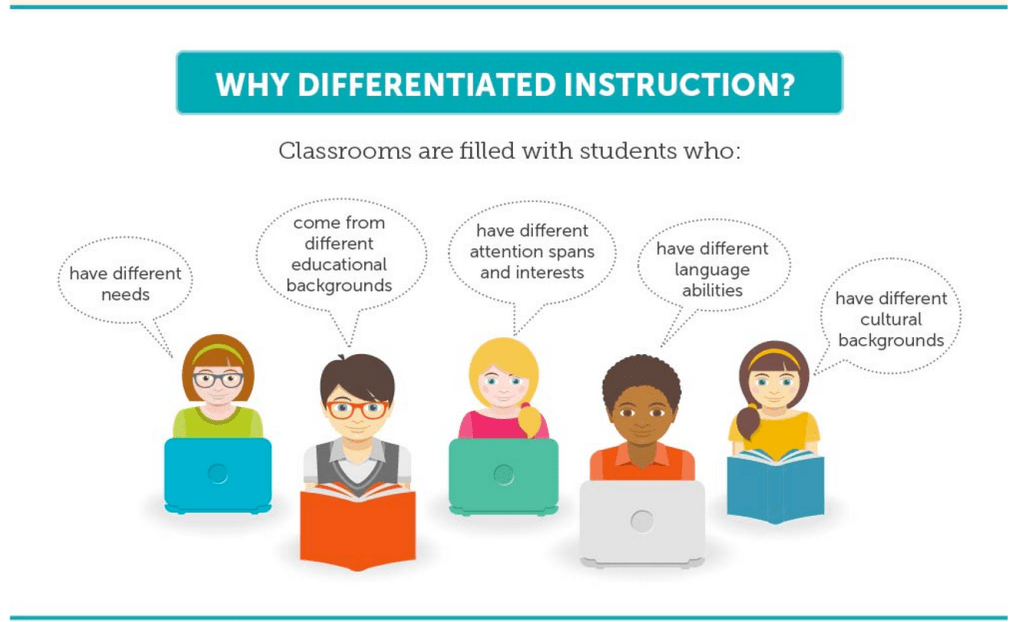
Differentiated instruction is a teaching approach that recognizes and embraces the diverse learning needs, interests, and abilities of students in a classroom. This method aims to provide personalized learning experiences that cater to each student’s unique strengths and challenges. By tailoring instruction to meet individual needs, differentiated instruction creates an inclusive learning environment where all…
-
Empowering Neurodiverse Learners: Effective Strategies for Differentiated Instruction
Differentiated Instruction Strategies for Neurodiverse Learners Introduction: In today’s diverse classrooms, it is essential to recognize and address the unique learning needs of neurodiverse learners. Neurodiversity refers to the natural variation in human neurological traits, including individuals with conditions such as autism spectrum disorder (ASD), attention deficit hyperactivity disorder (ADHD), dyslexia, and other learning differences.…
-
Unlocking Potential: Differentiated Instruction for Students with Learning Disabilities

Differentiated instruction for students with learning disabilities: In education, one size does not fit all. Every student has unique strengths and challenges, and this is particularly true for students with learning disabilities. To meet their diverse needs, educators employ differentiated instruction strategies that tailor teaching methods and materials to individual students. Differentiated instruction recognizes that…
-
“Breaking Barriers: Universal Design for Learning Promotes Equal Opportunities in Education”

Universal design for learning (UDL) is an educational framework that aims to provide all students with equal opportunities in the learning environment. It recognizes that students have diverse needs, abilities, and backgrounds, and seeks to create flexible instructional approaches that can be customized to meet individual requirements. UDL promotes inclusive education by removing barriers to…
-
“Breaking Barriers: Universal Design for Learning Ensures Equity in Education for All Students”

Universal Design for Learning (UDL) is an educational framework that aims to provide all students with equal opportunities to learn by removing barriers and increasing accessibility. UDL emphasizes the need for teachers to design their instruction in a way that accommodates different learning styles, abilities, and needs of students. The concept of Universal Design originated…
-
“Universal Design for Learning: Creating an Inclusive Classroom Environment for All Learners”

As a writer and journalist, I have had the pleasure of exploring the concept of Universal Design for Learning (UDL) and its impact on education. UDL is an approach to teaching that takes into account the diverse needs of learners in the classroom. It is designed to help educators create a flexible learning environment where…
 Alternative Amie