Tag: emotional regulation strategies
-
Embracing Neurodiversity: Strategies for Inclusive Education Success
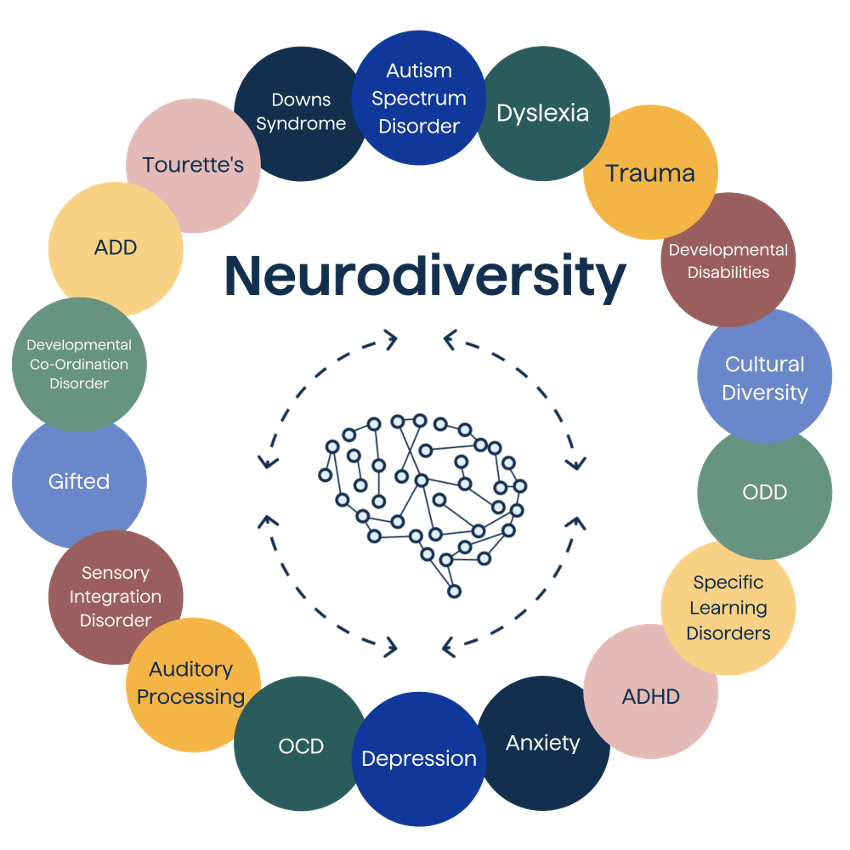
Neurodiversity is a concept that acknowledges and celebrates the unique neurological differences among individuals. In educational settings, neurodiversity encompasses a wide range of conditions, including sensory processing differences, executive functioning challenges, social communication difficulties, hyperfocus and special interests. Understanding and catering to the needs of neurodiverse students is crucial for creating inclusive learning environments where…
-
Unlocking the Potential: Creating Inclusive Learning Environments for Neurodiverse Learners

Sensory processing differences refer to the way in which individuals process and respond to sensory information from their environment. For some neurodivergent learners, such as those with autism spectrum disorders or ADHD, sensory processing differences can have a significant impact on their ability to focus and learn effectively. Understanding these differences and implementing strategies to…
-
“Unlocking Potential: Nurturing Neurodiversity in Education for Success and Inclusion”

Sensory processing differences, also known as sensory processing disorder (SPD), refer to difficulties in how the nervous system receives and responds to sensory information from the environment. This can affect individuals across various age groups and may manifest differently for each person. Sensory processing differences can impact daily life activities, including learning and social interactions.…
 Alternative Amie