Tag: Critical thinking skills
-
World Schooling: Education Beyond Borders

World schooling, a growing trend in alternative education, is gaining popularity among families seeking to provide their children with a well-rounded and experiential learning experience. This approach combines travel and education, allowing students to learn from the world around them through hands-on experiences and immersion in different cultures. While traditional schooling has its place, world…
-
Boosting Engagement: The Power of Think-Pair-Share in Alternative Education
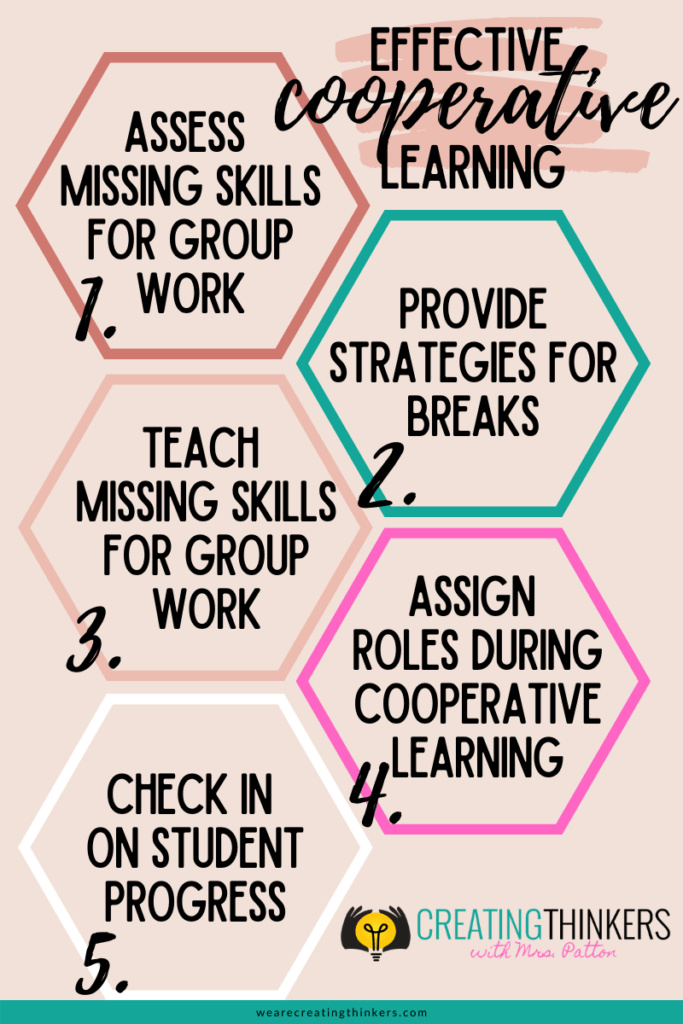
Think-pair-share is a widely-used teaching strategy that fosters active learning and student engagement in the classroom. Originally developed by social psychologist Frank Lyman and his colleagues in the 1980s, this collaborative learning technique has since gained popularity across various educational settings, including alternative schools. The think-pair-share strategy involves three main steps: thinking, pairing, and sharing.…
-
Igniting Curiosity: Engaging Science Experiments in Alternative Education

Alternative schooling and education offer unique opportunities for students to engage in hands-on learning experiences that may not be possible in traditional classroom settings. One of the most exciting aspects of alternative education is the emphasis on experiential learning, which allows students to explore concepts through direct observation and experimentation. Science experiments are a fantastic…
-
Embracing Cultural Diversity in Alternative Education: Enriching Minds for a Globalized World

Cultural diversity is an essential aspect of education that enriches the learning experience for students and prepares them to thrive in a globalized world. In alternative schooling and education settings, embracing cultural diversity is even more crucial as it fosters inclusivity, broadens perspectives, and encourages open-mindedness among students. One of the key benefits of cultural…
-
Unleashing the Power of Logical-Mathematical Learners

Logical-mathematical learning style is one of the eight types of intelligence identified by Howard Gardner in his theory of multiple intelligences. Individuals who excel in this area have a strong aptitude for reasoning, problem-solving, and analyzing complex information. In an educational setting, understanding and catering to students with a logical-mathematical learning style can greatly enhance…
-
Empowering Students Through Inquiry-Based Learning: Fostering Curiosity, Collaboration, and Independence

Inquiry-based learning is a dynamic and student-centered approach to education that empowers learners to actively engage with the material through asking questions, investigating problems, and exploring solutions. Instead of passively receiving information from teachers, students are encouraged to take ownership of their learning by driving the process themselves. At the heart of inquiry-based learning is…
-
Empowering Education: The Power of Student-Led Discussions

Student-led discussions are a powerful tool in alternative schooling and education settings. Traditional education often relies on lectures, textbooks, and teacher-centered activities to impart knowledge to students. However, student-led discussions offer a more interactive and engaging way for students to learn and explore topics in depth. One of the main benefits of student-led discussions is…
-
“Transformative Tales: Harnessing Character Arcs to Engage and Educate Students”

Character arcs are an essential element in storytelling that can be a powerful tool in engaging and educating students. By understanding the concept of character arcs, educators can create meaningful learning experiences that help students develop empathy, critical thinking skills, and emotional intelligence. In literature and film, a character arc refers to the transformation or…
-
Exploring Alternative Education: Project-Based Learning, Self-Directed Learning, Unschooling & More

Today, we have gathered a panel of experts to discuss various aspects of alternative education, focusing on project-based learning, self-directed learning, unschooling vs traditional schooling, and more. Let’s dive into these topics and explore the benefits and challenges associated with each approach. Project-based learning is a hands-on educational method where students learn by actively engaging…
-
Empowering Students Through Democratic Decision-Making in Education

Democratic decision-making is a crucial aspect of alternative schooling and education that empowers students to take ownership of their learning journey. In a democratic setting, students are actively involved in the decision-making process, allowing them to have a voice in shaping their educational experience. This approach fosters a sense of autonomy, responsibility, and collaboration among…
 Alternative Amie