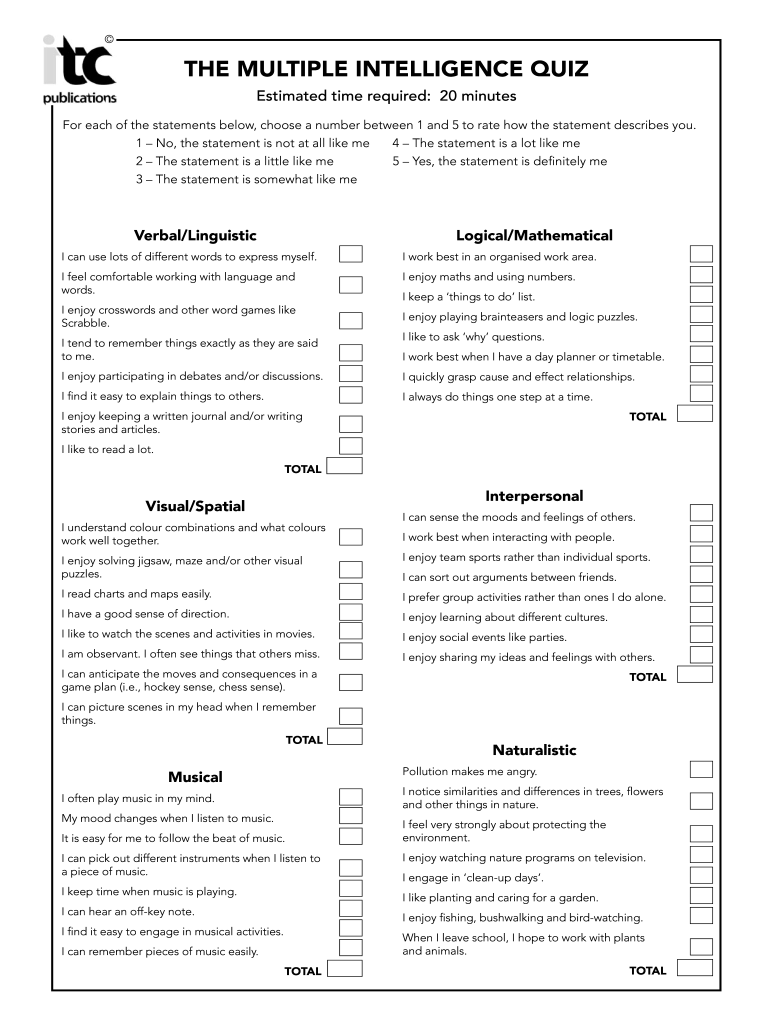
Multiple Intelligences (MI) assessments are a valuable tool that can provide insights into individuals’ unique strengths and learning styles. Originally proposed by psychologist Howard Gardner in 1983, the theory of multiple intelligences suggests that intelligence is not solely measured by traditional IQ tests but instead encompasses a range of abilities.
MI assessments aim to identify and measure these different types of intelligence, allowing educators and learners to better understand how they process information and engage with the world around them. By recognizing and nurturing diverse intelligences, educators can create more inclusive and effective learning environments for all students.
In this article, we will explore the concept of multiple intelligences, discuss how MI assessments work, highlight their benefits in educational settings, and provide practical tips for using MI assessments effectively.
### Understanding Multiple Intelligences
According to Gardner’s theory, there are eight distinct types of intelligences:
1. **Linguistic Intelligence:** This type involves sensitivity to language, words, and meanings. People with high linguistic intelligence excel in reading, writing, speaking, and listening.
2. **Logical-Mathematical Intelligence:** Individuals with strong logical-mathematical intelligence are adept at reasoning logically and solving mathematical problems.
3. **Musical Intelligence:** Those with musical intelligence have a deep appreciation for music; they may excel in playing instruments or composing songs.
4. **Spatial Intelligence:** Spatially intelligent individuals exhibit a keen awareness of space and their surroundings. They often excel in activities such as drawing or navigating maps.
5. **Bodily-Kinesthetic Intelligence:** People with bodily-kinesthetic intelligence possess excellent coordination and control over their body movements. They may thrive in sports or dance activities.
6. **Interpersonal Intelligence:** Interpersonally intelligent individuals have strong social skills; they are adept at understanding others’ emotions and motivations.
7. **Intrapersonal Intelligence:** Intrapersonal intelligence relates to self-awareness and introspection. Those high in this type understand their own feelings, motivations, strengths, weaknesses.
8. **Naturalist Intelligence:** Naturalistically intelligent people have a deep connection to nature; they may be skilled at identifying plants or animals.
Each individual possesses a unique blend of these intelligences in varying degrees.
### How Multiple Intelligences Assessments Work
MI assessments typically involve a series of questions or tasks designed to evaluate an individual’s strengths across different intelligences areas mentioned above through self-reflection exercises or hands-on activities like puzzles or creative projects.
These assessments help individuals recognize their dominant intelligences while also shedding light on areas where they may need further development or support.
Educators can use MI assessments results to tailor instruction methods that align with students’ preferred learning styles – whether it be incorporating music into lessons for musically inclined learners or using visual aids for spatial thinkers.
### Benefits of Using Multiple Intelligences Assessments
1. **Promotes Individualized Learning**: By recognizing students’ diverse strengths through MI assessments teachers can personalize learning experiences catering to each student’s needs which ultimately boosts engagement levels.
2**Enhances Self-Awareness**: MI assessment results encourage self-awareness among learners by helping them understand how they best process information which leads to improved confidence levels as well as effective decision-making skills.
3**Fosters Inclusivity**: Embracing multiple intelligencies promotes inclusivity within educational settings as it acknowledges that every student has something unique valuable bring contributing towards fostering an environment where diversity is celebrated.
4**Supports Differentiated Instruction**: Teachers who utilize MI assessment data can adapt instructional strategies based on students’ varied learning preferences facilitating better understanding retention rates amongst pupils.
5**Encourages Collaboration & Teamwork**: Recognizing diverse talents through MI assessment encourages collaboration teamwork amongst peers promoting an atmosphere mutual respect support within classroom settings
Using Multiple Intelligiences Assessment Effectively
To make the most out using multiples intellignces assesment consider below tips;
1**Provide Diverse Learning Opportunities**: Offer various opportunities where students can engage apply their different inteligence strenghts whether its through art music math science etc
2*Encourage Self-Reflection*: Encourage students reflect upon their learnig progress discuss how certain activites cater appealed diffrent inteligince aspects promote deeper understanding subject matter
3*Embrace Flexibility*: Be open flexible when designing lesson plans assignments accommodate differnt intelingce preferences ensure all learners feel included supported
4*Cultivate Collaborative Environments*: Foster collaborative group projectstasks allow stduents leverage combine difftent strenghts intelingeces achieve common goal
By embracing the concept multiple intelleigencess utilizing related assessment tools educators empowerlearners realize full potential while creating dynamic inclusive learining enviroments that celebrate diversity foster growth developmentacross allintellignce domains
 Alternative Amie
Leave a comment