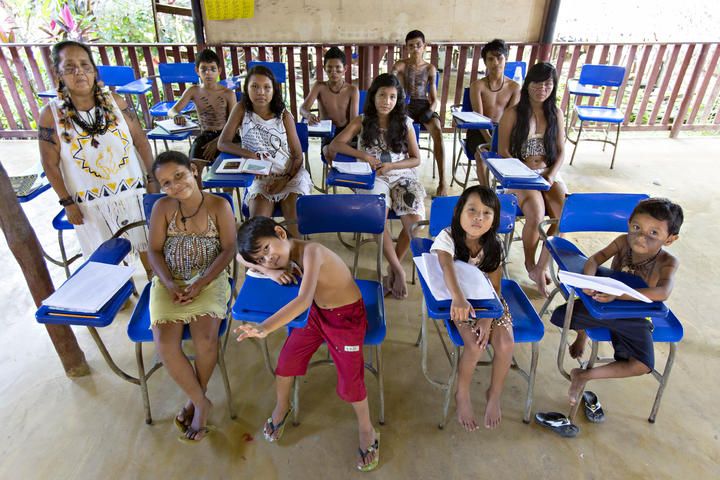
Brazil is a vibrant and diverse country known for its rich culture, stunning landscapes, and warm hospitality. In addition to its natural beauty and lively celebrations, Brazil also offers a unique educational landscape that is worth exploring. From innovative alternative schools to community-based learning initiatives, there are various opportunities for children and young people to experience education in a different way.
One of the key aspects of alternative schooling in Brazil is the emphasis on experiential learning. Many schools in the country have adopted hands-on approaches to education, allowing students to learn through practical experiences rather than traditional classroom lectures. This approach not only helps students better understand complex concepts but also fosters creativity, critical thinking, and problem-solving skills.
Another important aspect of alternative schooling in Brazil is the focus on holistic education. Many schools prioritize the well-being of students by incorporating physical activities, arts and music programs, mindfulness practices, and environmental education into their curriculum. By nurturing all aspects of a child’s development – including intellectual, emotional, social, and physical growth – these schools aim to create well-rounded individuals who are prepared for success in all areas of life.
In recent years, there has been a growing interest in alternative education models such as homeschooling and unschooling in Brazil. Homeschooling allows parents to take more control over their children’s education by designing personalized learning plans tailored to their interests and abilities. Unschooling takes this concept even further by letting children direct their own learning experiences based on their passions and curiosity.
Community-based learning initiatives are also gaining popularity in Brazil as a way to provide educational opportunities outside traditional school settings. These programs often involve partnerships between local organizations, businesses, universities, and government agencies to offer enriching experiences such as workshops, internships, mentorship programs, cultural exchanges, and service-learning projects. By engaging with the community in meaningful ways, students can gain valuable skills while making a positive impact on society.
One notable example of alternative schooling in Brazil is Escola da Ponte (Bridge School) located near São Paulo. Founded on principles of autonomy,
collaboration,
and democratic decision-making,
Escola da Ponte provides an environment where students are encouraged
to take ownership
of their learning
by setting goals,
managing their time effectively,
and working both independently
and cooperatively with peers.
This student-centered approach empowers learners
to develop self-confidence,
critical thinking skills,
and a sense
of responsibility for their own education.
By fostering
a sense
of agency among students,
Escola da Ponte demonstrates how alternative schooling models can inspire lifelong learners who are motivated
to explore new ideas
and pursue knowledge beyond traditional boundaries.
Another innovative project reshaping education
in Brazil is Projeto Âncora (Anchor Project) located
in Cotia.
Focused on providing access
to quality education for underprivileged children from surrounding communities,
Projeto Âncora offers holistic support services such as healthcare,
nutrition assistance,
psychological counseling,and extracurricular activities alongside academic instruction.
The project aims
to break cycles of poverty
by empowering children througheducation andrebuilding networks
of social support within families.
By addressing multiple dimensions
of child development,
Projeto Âncora exemplifies howalternative schooling initiatives can create inclusive environmentswhere every childhas the opportunity
to thrive.
Overall,Brazil offersa dynamic landscapefor those seekingalternative approaches
toeducation.Throughexperientiallearning,hollisticdevelopment,homeschooling,
unschooling,and community-basedinitiatives,the countryprovidesdiverse pathwaysforstudents todiscoversupporttheirindividualinterestsandtalents.Inspiredbyprinciplesofautonomy,collaboration,self-directedlearning,andcommunityengagement,
alternative schoolingspacesin Brazilempowerlearners tobethearchitectsoftheireducationalexperienceswhilecultivating valuesofsocialresponsibility,inclusivity,andlifelonglearning.Whet herit’sexploringthewondersofthenaturalworldthroughoutdooradventures,solvingreal-worldproblems throughproject-basedlearning,pursuingpassion-drivenprojectsorcontributingtosocialchangeinlocalcommunities,Brazilianalternativeschooldemonstratethepowerofoffer inginnovativeandexcitingspacedforchildrenandyouthtobecomecurious,criticalandcompassionateindividualsreadytotransformtheworldaroundthem
 Alternative Amie
Leave a comment