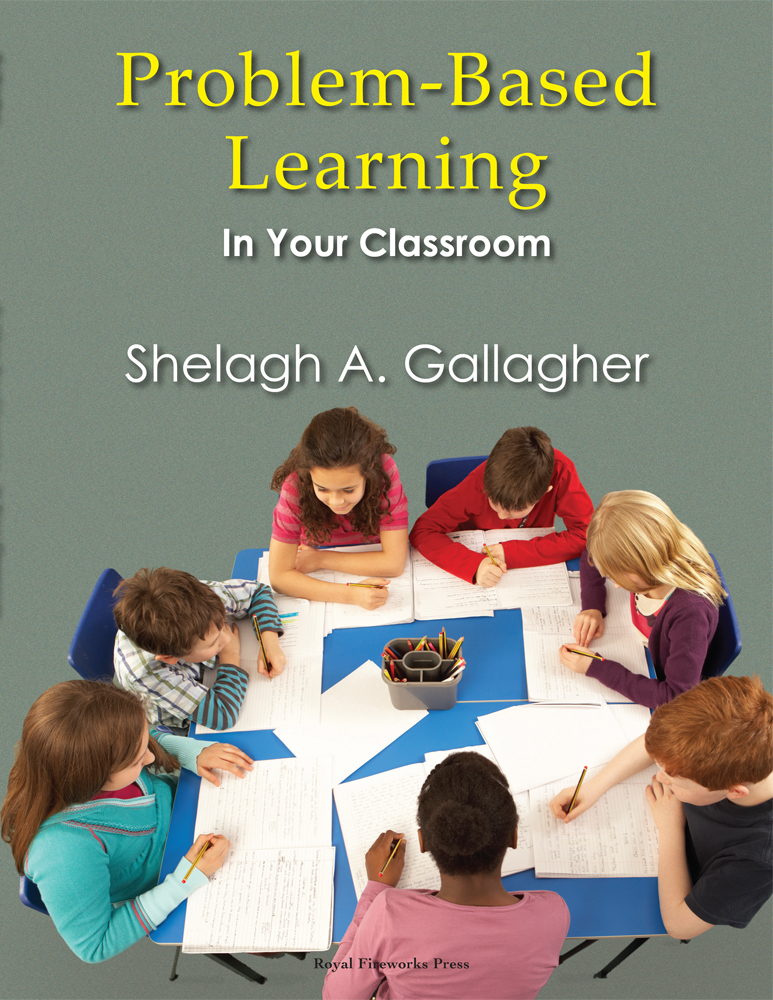
Problem-based learning (PBL) is a student-centered pedagogy that encourages active learning through the exploration and solution of complex, real-world problems. It is an educational approach that empowers students to develop critical thinking skills, collaborative abilities, and practical knowledge by engaging them in authentic challenges.
Originating from medical education in the 1960s, PBL has since expanded into various disciplines and educational settings across the globe. This method focuses on presenting learners with open-ended questions or scenarios that require them to analyze information, identify relevant concepts, propose solutions, and reflect on their decision-making processes. By immersing students in hands-on problem-solving experiences, PBL aims to foster deep understanding, enhance retention of knowledge, and cultivate transferable skills essential for success in today’s dynamic world.
One of the key principles of PBL is its emphasis on inquiry-driven learning. Instead of passively receiving information from teachers or textbooks, students are actively involved in constructing their own understanding through investigation and discovery. This process not only stimulates curiosity but also instills a sense of ownership over their learning journey. By grappling with authentic problems that mirror real-world challenges, learners are motivated to delve deeper into subject matter and seek out multiple perspectives to arrive at well-informed conclusions.
Moreover, PBL promotes interdisciplinary connections by integrating diverse content areas within a single problem scenario. Students are encouraged to draw upon knowledge from various subjects such as science, mathematics, language arts, social studies, and more to address multifaceted issues comprehensively. This holistic approach mirrors the complexities of modern society where solutions often require interdisciplinary insights and collaborative efforts across different domains.
In addition to fostering academic growth, PBL nurtures essential soft skills such as communication, teamwork, creativity, adaptability, and resilience. Collaborative problem-solving tasks challenge students to effectively communicate ideas with peers, negotiate differing viewpoints constructively, delegate responsibilities based on individual strengths,
and collectively work towards common goals. These interpersonal skills are invaluable not only in academic settings but also in future careers where teamwork and effective communication are crucial for professional success.
Another significant benefit of PBL is its focus on developing critical thinking skills among learners. Through analyzing complex problems,
evaluating evidence-based solutions,
and justifying their reasoning,
students hone their ability
to think critically,
make informed decisions,
and solve intricate challenges creatively.
These cognitive abilities transcend
traditional rote memorization
and regurgitation of facts
by encouraging deep comprehension
of concepts.
By engaging in iterative cycles
of questioning assumptions,
seeking new information,
testing hypotheses,
and refining strategies,
students become adept at navigating ambiguity
and embracing intellectual challenges without fear.
This growth mindset cultivates lifelong learners who are resilient in the face of uncertainty
and adaptable amidst rapid change.
Furthermore,
PBL fosters intrinsic motivation by offering students autonomy over their learning process.
Instead of relying solely on external rewards or punishments as motivators for engagement’,
P BL taps into individuals’ innate curiosity’,
desire for mastery’,
a nd thirst fo r relevance ‘
by presenting compelling real-world problems that resonate with learners’
personal interests or societal concerns .
When students perceive the significance o f what they’re studying ‘,
feel empowered t o contribute meaningfully toward s solving pressing issues ‘,
a nd see tangible outcomes fro m their efforts ,
t hey becom e intrinsically motivated t o invest time , energy ,
a nd creativity i nto delving deeper int o complex topics .
Thi s internal drive fuels sustained effort “,
persistence ‘, a nd enthusiasm for learnin g beyond traditional classroom boundaries .
Despite its numerous benefits , implementing PB L effectively poses certain challenges fo r educators . Teachers transitioning fro m traditional instructional methods t o a more facilitative role ma y struggle wit h letting go o f control ‘, adapting t o student-led inquiries ‘,
a nd providing scaffolded support without imposing rigid structures .
Creating authentic proble m scenarios tha t resonate with diverse learner backgrounds , interests ,
a nd skill levels als o requires careful planning ‘, thoughtful curation ‘, an d ongoing reflection t o ensure relevancy “,
rigor ‘,
a n d inclusivity .
Furthermore , assessing student performance within th e context o f PB L can be challenging given it s non-linear nature “, emphasis on process rather than product ‘”,
a n d focus on collaborative outcomes instead individua l achievements .
To address these implementation hurdles “,
educational institutions ca n provide comprehensive professional development opportunities fo r teachers `,
embed supportive structures suc h as coaching systems ‘”, mentorship programs “‘, an d resource libraries”‘,
an d establish communities-of-practice where educators can share best practices “, seek advice “, an d collaborate meaningfully “.
Additionally”, investing i n robust technology tools designed specifically fo r PB L environments ca n streamline administrative tasks”,” facilitate communication among stakeholders”, an d enable data-driven insights int o student progress “,
engagement’”,
a nd collaboration patterns”.
In conclusion’, Problem-Based Learning offers a transformative educational paradigm rooted i n inquiry ‘, collaboration “, critical thinking’”, a nd intrinsic motivation”.
By placing students at the center `of their own learning journey’, empowering them tO tackle re al-world challenges head-on’, a
nD equipping them wit h transferrable skil ls essential fo r success i n today’s rapidly evolving landscape”‘, PB L prepares learners
to thrive iN ambiguity’”, embrace complexity ‘”, communicate effectively’”, think critically’”, collaborate productively ‘”‘,
AND persist resolutely through setbacks’.
As educational institutions continue tO innovate pedagogical approaches’” embracing PB L ca N catalyze profound shifts iN teaching
AND le arning paradigms”‘. Empowering future generations wit h thE skil ls needed TO navigate uncertainty’”, solve intricate problems’”,
AND effect positive chanGe globally”.
 Alternative Amie
Leave a comment