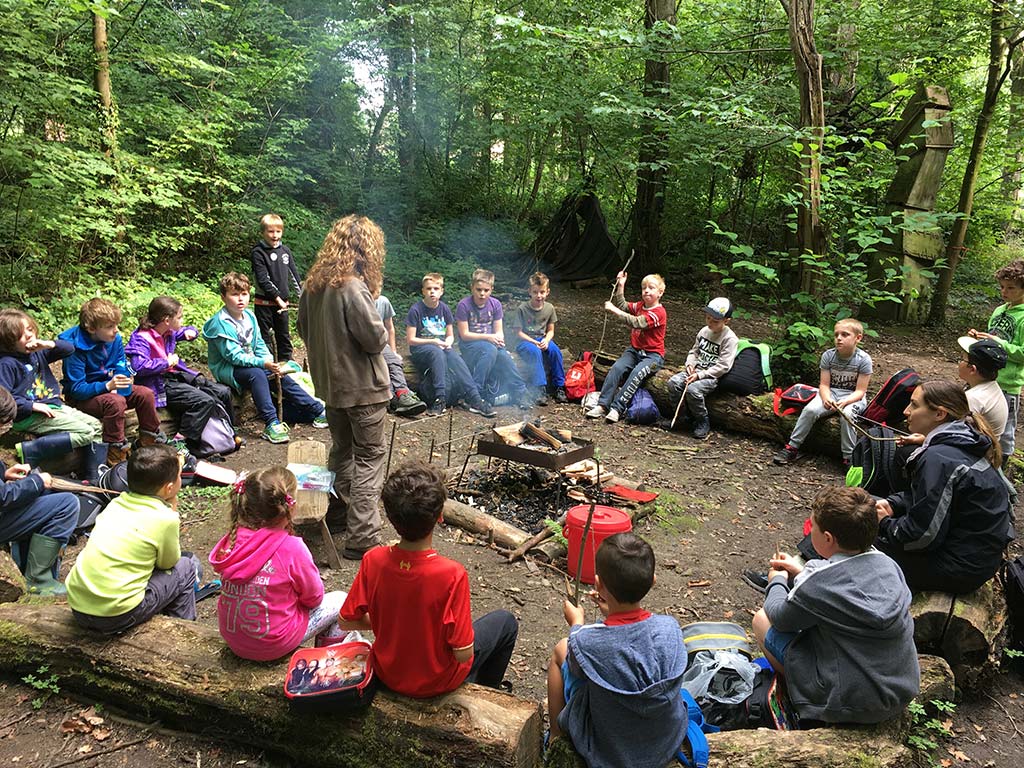
In recent years, there has been a growing interest in alternative forms of education that prioritize outdoor learning experiences and nature-based activities. One such model that has gained traction is the forest school approach, which originated in Europe but has found a home in North America as well. Forest schools offer a unique educational experience that emphasizes hands-on exploration, environmental stewardship, and holistic child development.
The concept of forest schools can be traced back to Scandinavia, where outdoor education has long been a part of early childhood education practices. The first official forest school was established in Denmark in the 1950s by Ella Flautau, who believed that children learn best through direct experience with nature. The idea gradually spread to other European countries before making its way across the Atlantic to North America.
One of the key principles of forest schools is the belief that children benefit greatly from spending time outdoors and engaging with natural environments. Research supports this notion, showing that exposure to nature can have numerous positive effects on physical health, mental well-being, and cognitive development. By providing regular opportunities for children to explore forests, meadows, streams, and other natural settings, forest schools aim to foster a deep connection with the natural world.
Unlike traditional classrooms, which are often structured around desks and textbooks, forest schools take place primarily outdoors in natural settings such as parks or wooded areas. Children are encouraged to play freely and follow their interests while educators act as facilitators rather than instructors. This approach allows for more spontaneous learning experiences based on real-world interactions with plants, animals, weather patterns, and ecosystems.
At forest schools, children engage in a wide range of activities designed to cultivate curiosity and creativity while building important skills like teamwork and problem-solving. These activities may include building forts out of branches and leaves; identifying different plant species; tracking animal footprints; creating art using materials found in nature; storytelling around a campfire; or participating in sensory games that heighten awareness of the environment.
Another hallmark of forest schools is their focus on fostering independence and resilience among students. Spending time outdoors exposes children to risks inherent in natural environments – such as uneven terrain or unpredictable weather – which helps them develop confidence in navigating challenges on their own terms. This emphasis on self-reliance not only builds character but also equips children with valuable life skills that can serve them well into adulthood.
In addition to promoting individual growth and development, forest schools also prioritize community-building within groups of learners. Through collaborative projects like building shelters or preparing meals over an open fire, children learn how to work together towards common goals while respecting each other’s contributions and perspectives. These shared experiences create strong bonds among classmates and foster a sense of belonging within the larger group.
Furthermore,
Forest schools also emphasize environmental awareness and instill values related to sustainability and conservation at an early age.
By immersing themselves in natural settings regularly,
children develop a deep respect for the earth
and gain an understanding
of their role as stewards
of the planet.
This ecological perspective underscores
the interconnectedness
of all living beings
and highlights
the importance
of preserving biodiversity
for future generations.
Through hands-on experiences like planting trees,
cleaning up litter,
or observing wildlife habitats,
children learn firsthand about
the fragility
and beauty
of our natural world.
These lessons go beyond textbook knowledge;
they inspire empathy,
compassion,
and action
in young minds,
instilling lifelong values
related
to environmental responsibility.
Additionally,
forest schools offer benefits beyond academic learning by supporting overall well-being
and mental health among participants.
Spending time outdoors has been shown
to reduce stress levels,
improve mood,
increase attention span,
boost immune function,
and promote physical fitness—all essential components
of holistic wellness.
By prioritizing outdoor play
and experiential learning over rote memorization
and standardized testing,
forest schools provide an antidote
to the pressures
faced by many students today—allowing them
to thrive
in an environment
that nurtures both mind
and body.
As interest
in alternative forms
of education continues
to grow,
forest
schools
have become increasingly popular
across North America—offering families
an innovative
approach
to early childhood education
that embraces
the wonders
of nature.
While not without challenges—including securing suitable outdoor locations,
maintaining safety standards,
and meeting regulatory requirements—
forest
schools
have proven
their worth
as effective
educational models
that cater
to diverse
learning styles
and needs.
In conclusion,
the rise
of
forest
schools
in
North
America
represents
a
welcome
shift
in
contemporary
education—toward
more
holistic
and
experiential
approaches
that
nurture
the
whole
child.
The enduring appeal
of
forest
schools lies
in
their ability
to
connect
children
with
nature
in
a
meaningful
and
memorable
way—creating
lifelong
memories
and
instilling
values
that
will
last
a
lifetime.
Furthermore,
this
model
of
outdoor
education
has
the
potential
to
transform
not
only
the
lives
of
individual
children
but
society
as
a
whole
—by
nurturing
a
generation
of
youth
who
are
rooted
in
nature
and
dedicated
to
preserving
it
for
future
generations.
In this fast-paced
world
where
children
can
spend
more
time
on
screens
than
outside—a
return
to
the
basics
of
play
and
exploration
in
natural
settings
is
truly
priceless.
So whether you’re looking for an educational option
that aligns
with your family’s values or simply seeking
an enriching experience for your child—you may find
that one
of these
North American
forest
schools (insert word count)
has what you’re looking for.
So pack up your backpack
grab your raincoat—and let’s head out into
the great wilderness
for some unforgettable adventures!
 Alternative Amie
Leave a comment