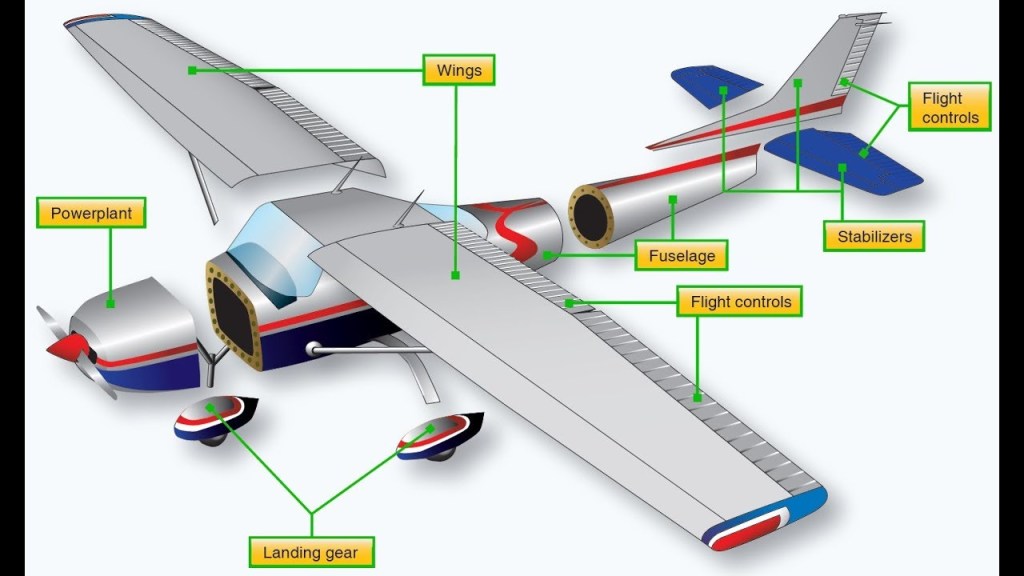
Aerospace engineering is a fascinating field that combines cutting-edge technology, physics, and mathematics to design and develop aircraft and spacecraft. Students who are interested in pursuing a career in aerospace engineering will find themselves immersed in a world of innovation, problem-solving, and limitless possibilities.
One of the key aspects of aerospace engineering is aerodynamics – the study of how air flows around objects such as airplanes or rockets. Understanding aerodynamics is crucial for designing efficient aircraft that can travel at high speeds while maintaining stability and control. Aerospace engineers use principles such as Bernoulli’s equation and Newton’s laws of motion to analyze airflow patterns and optimize the shape of their designs.
In addition to aerodynamics, aerospace engineers also delve into propulsion systems – the engines that power aircraft or spacecraft. Developing efficient propulsion systems is essential for achieving high speeds and altitudes, whether it’s a commercial airliner cruising at 35,000 feet or a rocket blasting off into space. Engineers must consider factors such as fuel efficiency, thrust-to-weight ratio, and environmental impact when designing propulsion systems.
Another critical aspect of aerospace engineering is materials science. Aircraft and spacecraft are subjected to extreme conditions during flight – from temperature changes to vibrations to high-speed winds. Aerospace engineers must select materials that can withstand these conditions without compromising performance or safety. Advanced composites, alloys, ceramics, and other materials play a crucial role in ensuring the structural integrity of aerospace vehicles.
Moreover, aerospace engineers work on avionics – the electronic systems that control navigation, communication, and monitoring on aircraft or spacecraft. Avionics include instruments like radar systems, GPS receivers, autopilots, and flight management computers. These systems are essential for ensuring the safety and efficiency of flights by providing pilots with real-time data on their surroundings and vehicle performance.
Furthermore,aerospace engineers collaborate closely with other professionals such as mechanical engineers (for designing moving parts), electrical engineers (for developing electronic systems), computer scientists (for programming simulations), mathematicians (for analyzing complex equations), physicists (for studying fundamental laws), technicians (for building prototypes), pilots (for testing prototypes) among others.
The field of aerospace engineering offers numerous specializations for students who wish to focus on specific areas within the industry:
– Aeronautical Engineering: Focuses on designing aircraft that operate within Earth’s atmosphere.
– Astronautical Engineering: Concentrates on developing spacecraft for missions beyond Earth’s atmosphere.
– Propulsion Engineering: Specializes in designing engines for aircraft or spacecraft.
– Structural Engineering: Focuses on designing lightweight yet durable structures for aerospace vehicles.
– Avionics Engineering: Specializes in developing electronic systems for navigation and communication.
– Systems Engineering: Involves coordinating different components within an entire aircraft or spacecraft system.
Each specialization requires knowledge of specific technologies and methodologies tailored to its area within aerospace engineering.
Students interested in pursuing a career in aerospace engineering should consider enrolling in programs offered by universities known for their strong aviation programs:
1.Massachusetts Institute Of Technology
2.Stanford University
3.California Institute Of Technology
4.Georgia Institute Of Technology
5.University Of Michigan
These institutions offer comprehensive curricula covering topics such as fluid dynamics,
aerodynamics ,propulsion ,controls ,materials science ,avionics,and more.Theoretical coursework is complemented by hands-on projects,simulations,laboratory experiments,and internships with leading companies in the aviation industry.
In conclusion,aerospace engineering presents an exciting opportunity for students who have a passion for exploring new frontiers,pushing boundaries,and solving complex problems.This dynamic field offers endless possibilities,to contribute towards advancements,in aviation technology,could lead you towards groundbreaking innovations,in space exploration.So if you’re dreaming about soaring through the skies(or even journeying beyond them!),consider embarking,on this thrilling educational path toward becoming an ace,aerospace engineer!
 Alternative Amie
Leave a comment