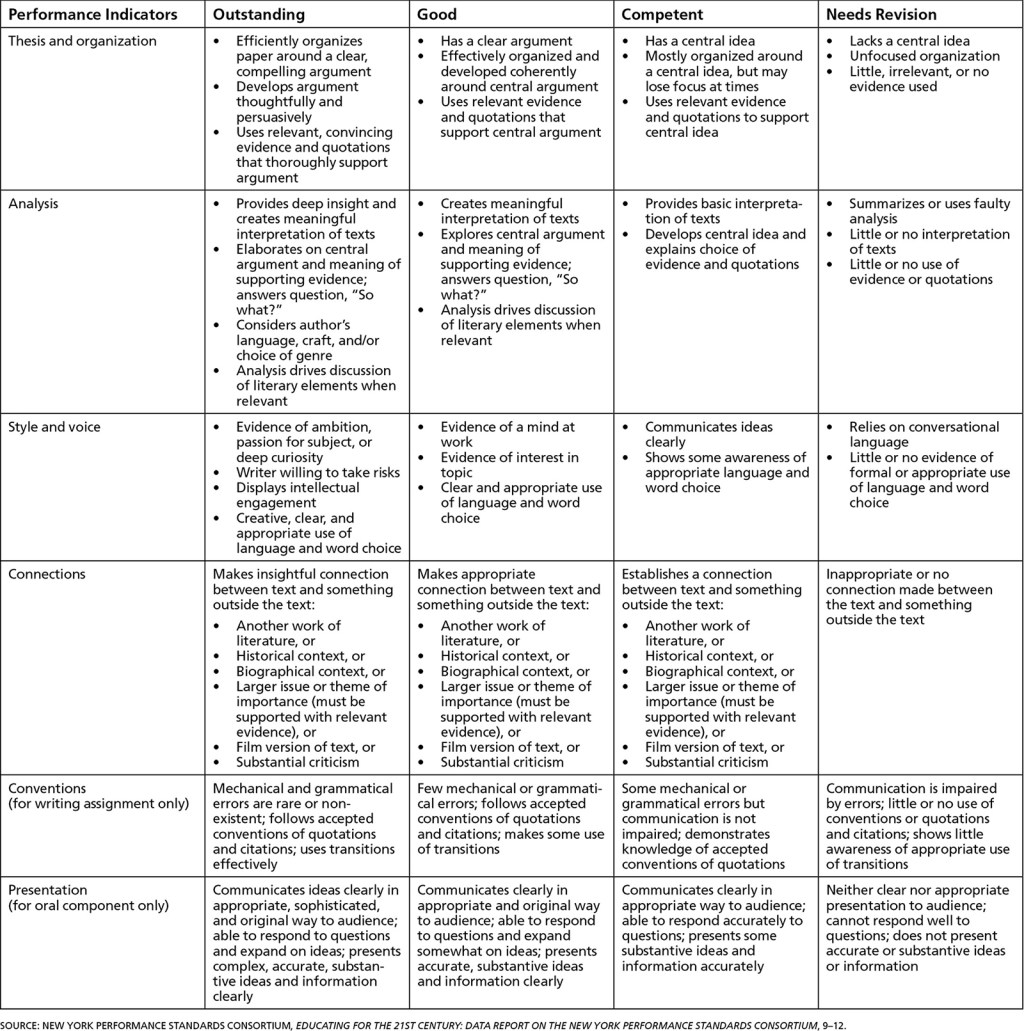
Rubrics are essential tools in education that provide clear guidelines and criteria for assessing students’ work. They help both educators and students understand what is expected, enabling more objective evaluation of performance. Rubrics can be used across various assessment methods, including student self-assessment, peer assessment, authentic assessment, performance tasks, and project-based assessments.
Student self-assessment is a process where students evaluate their own work against set criteria. This approach encourages metacognition and helps students take ownership of their learning. By using rubrics for self-assessment, students can reflect on their strengths and areas for improvement independently.
Similarly, peer assessment involves students providing feedback to one another based on predetermined criteria. Rubrics play a crucial role in this process by ensuring consistency in evaluations and guiding constructive feedback among peers. Peer assessment not only enhances collaboration but also strengthens critical thinking skills as students analyze each other’s work through the lens of the rubric.
Authentic assessment focuses on real-world applications of knowledge and skills rather than traditional tests or exams. Rubrics tailored to authentic tasks enable educators to assess how well students can apply their learning in practical scenarios. By aligning rubrics with authentic assessments such as case studies or simulations, educators can better measure students’ abilities beyond memorization.
Performance tasks are hands-on activities that require application of concepts learned in class. Rubrics for performance tasks outline specific criteria related to task completion, creativity, communication skills, and problem-solving abilities. These detailed guidelines facilitate fair evaluation of diverse student performances while promoting engagement with the material through active participation.
Reflection journals serve as spaces for students to record thoughts about their learning experiences over time. When combined with rubrics designed for reflective writing, these journals become powerful tools for tracking personal growth and development. By referring to established criteria within the rubric, students can structure their reflections effectively while identifying areas where they have made progress or need further support.
Goal setting is an integral part of personalized learning journeys as it empowers students to strive towards specific objectives aligned with their interests and aspirations. Rubrics associated with goal setting help clarify expectations around target achievement by breaking down complex goals into measurable components. As students monitor their progress using these rubrics, they gain a deeper understanding of what success looks like in relation to their individual aims.
Progress monitoring involves regularly assessing student advancement towards predefined learning outcomes throughout a period of study. With progress-monitoring rubrics in place, educators can track each student’s development systematically while providing timely feedback on areas needing improvement or reinforcement. The use of data-driven insights from these rubrics enables targeted interventions tailored to individual student needs.
Digital portfolios offer dynamic platforms for showcasing student achievements across various subjects or projects digitally curated over time.
By incorporating rubric-based assessments into digital portfolios,
educators can provide detailed feedback linked directly
to specific competencies or standards demonstrated within each artifact.
This approach not only facilitates comprehensive documentation
of student growth but also promotes reflection
on strengths and areas requiring further attention
through interactive multimedia representations
Exhibition nights are events where
students present their projects
or accomplishments publicly
before an audience typically comprising parents,
peers,
and community members.
To ensure consistent evaluation during these showcases,
rubrics aligned with presentation skills,
content knowledge,
and overall impact
can guide assessors’
feedback effectively.
Moreover,
by integrating multiple intelligences
within exhibition night assessments via specialized scoring criteria per intelligence type (e.g., verbal-linguistic,
visual-spatial),
educators acknowledge diverse talents among learners
while fostering inclusive recognition
of varied strengths displayed during presentations
Project-based assessments involve designing extended assignments that require application
of interdisciplinary skills toward solving real-world problems.
Rubric-based evaluations play a pivotal role here by outlining key project components along with corresponding proficiency levels expected at each stage.
Students benefit from clear guidance provided by project-based rubrics regarding task requirements;
they also appreciate transparency surrounding grading procedures linked directly back to established benchmarks
Student-led conferences empower learners
to discuss academic progress directly with parents/guardians/caregivers through guided presentations highlighting achievements; challenges; future goals;
using evidence compiled beforehand such as grades;
artifacts;
self-reflections.
Rubric-supported preparations assist participants – both presenters & audience members –
in structuring conference dialogues cohesively around defined talking points tied explicitly back…
to competency levels outlined within the scoring guides given out before meetings
Formative assessment occurs continuously throughout instruction aimed at gauging current understanding levels so teachers may adjust teaching strategies accordingly:
with formative-focused rubric usage…
teachers efficiently identify gaps hindering learner comprehension then address those promptly via differentiated instruction techniques tailored individually per child’s unique needs…
Summative Assessment evaluates overall mastery level after instructional units conclude:
enabling determination whether educational objectives have been met adequately…
through summative-rubric implementation alongside culminating activities/tests/projects… ensuring comprehensive coverage across assessed domains tied explicitly back..
to standards-based grading systems reflecting proficiencies attained consistently..
Feedback loops close instructional gaps between identified deficits & desired outcomes via ongoing communication channels linking evaluators (e.g., teachers) & recipients (e.g., learners):
with iterative review cycles facilitated efficiently using feedback-loop-centric-rubric models… allowing stakeholders involved.. opportunities continually refine strategies improve educational delivery effectiveness…
Multiple Intelligences theory posits individuals possess distinct cognitive capacities necessitating diverse means reaching every learner effectively:
thus applying intelligence-specific-rubric measures differentiates instruction more purposefully catering uniquely styled lessons approaches attuned particular intelligences prevalent among classroom populations…
Differentiated Instruction tailors pedagogical approaches suit varying learning styles preferences aptitudes evident among pupils:
incorporating differentiation-oriented-rubric schemes ensures equitable access quality education regardless diversely gifted backgrounds represented within schools classrooms…
Standards-Based Grading structures evaluations align national/state educational standards deemed essential mastering grade-appropriate content subject matter proficiently:
via standard-aligned-rubric utilization instructors maintain fidelity anchoring grading practices rigorously outlined benchmarks reinforcing consistent accountability across all scholastic assessments conducted…
Competency-Based Education centers on discrete skill acquisition proving mastery solely upon demonstration ability execute designated competencies satisfactorily:
complementing competency-targeted-rubric frameworks affords explicit guidance measuring meeting requisite skill-levels validating attainment readiness advancing onto subsequent higher-level proficiencies…
Growth Mindset philosophy fosters belief intellectual capabilities expand develop overtime effort resilience dedication perseverance applied diligently: nurturing growth-mindset-promoting-rubric adherence underscores valuing incremental progress embracing failures stepping stones eventual successes achieved persistently honed craftmanship refinement…
In conclusion,
the integration effective application robustly structured clearly communicated evaluative tools like RUBRICS represent cornerstone optimizing educational practices yielding favorable outcomes enriching academic experiences benefiting all involved parties – be it educators administrators families communities collectively striving foster nurturing environments conducive lifelong learning flourishing potentiality unlocked abundantly therein…
 Alternative Amie
Leave a comment