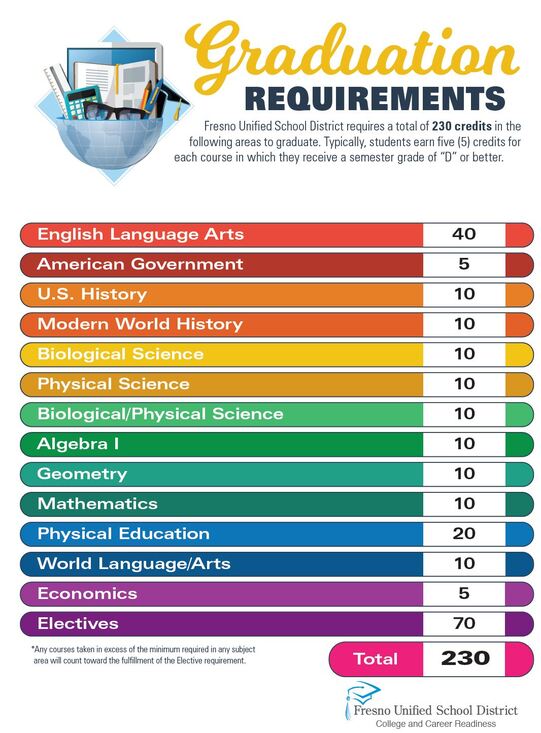
High school graduation requirements play a critical role in shaping the educational experience of students. These requirements are set by state education departments and school districts to ensure that students have acquired the necessary knowledge and skills to succeed beyond high school. While these requirements vary from state to state, they generally consist of a combination of core academic subjects, elective courses, standardized testing, and sometimes additional criteria such as community service or senior projects.
One of the primary goals of high school graduation requirements is to prepare students for college or career pathways after graduation. To achieve this goal, most states mandate that students complete a certain number of credits in core academic subjects such as English, math, science, social studies, and foreign language. These courses provide students with a strong foundation in essential subjects and help them develop critical thinking skills, problem-solving abilities, and effective communication skills.
In addition to core academic courses, many states also require students to take elective courses in areas such as fine arts, physical education, technology, or career and technical education (CTE). These electives give students the opportunity to explore their interests and passions outside of traditional academics. They can also help students develop valuable skills that are relevant to specific careers or fields of study.
Standardized testing is another common component of high school graduation requirements. Most states administer standardized tests in key subject areas such as English language arts and math to assess student proficiency levels. These tests serve as a measure of student achievement and help identify areas where additional support may be needed. In some cases, passing certain standardized tests may be required for graduation.
Beyond coursework and testing requirements, some states also include additional criteria for graduation such as community service hours or completion of a senior project. Community service helps instill values such as civic responsibility and compassion in students while providing them with opportunities to make a positive impact on their communities. Senior projects typically involve independent research or creative work on a topic of interest chosen by the student.
While high school graduation requirements are designed with good intentions—to ensure that all students receive a well-rounded education—they are not without criticism. One common concern is that these requirements can be too rigid or inflexible, leaving little room for personalized learning experiences tailored to individual student needs and interests. Some argue that a one-size-fits-all approach does not adequately address the diverse strengths and challenges that each student brings to their educational journey.
Another critique is that high-stakes testing associated with graduation requirements can place undue stress on students and teachers alike. Critics argue that an excessive focus on test scores may narrow the curriculum at the expense of other important learning outcomes such as creativity, critical thinking, collaboration skills, and emotional intelligence.
Additionally,
the emphasis on meeting specific course credit
requirements may limit opportunities for
students who wish
to pursue alternative paths towards post-graduation success,
such as entrepreneurship,
creative pursuits,
or vocational training.
These non-traditional pathways
may not align neatly with
traditional graduation standards but
can lead
to fulfilling careers
and personal fulfillment nonetheless.
Despite these criticisms,
high school graduation requirements continue
to evolve
as educators,
policymakers,
and stakeholders seek ways
to better prepare
students for success after high school.
Some states have implemented initiatives
such as competency-based education models,
which focus on mastery
of specific skills rather than seat time;
personalized learning plans;
which allow flexibility in course selection based
on individual goals; dual enrollment programs; which enable
students earn college credit while still in high school;
and career pathway programs;
that provide hands-on training
in specific industries.
As we look toward the future
of high school graduations,
it is essential
to strike
a balance between ensuring
that all students
receive a rigorous,
well-rounded education
while also allowing flexibility
for personalized learning experiences
and alternative pathways
toward post-graduation success.
Ultimately,
the goal should be
to empower
all learners
with the knowledge,
skills,
and confidence needed
to thrive
in an ever-changing world.
 Alternative Amie
Leave a comment