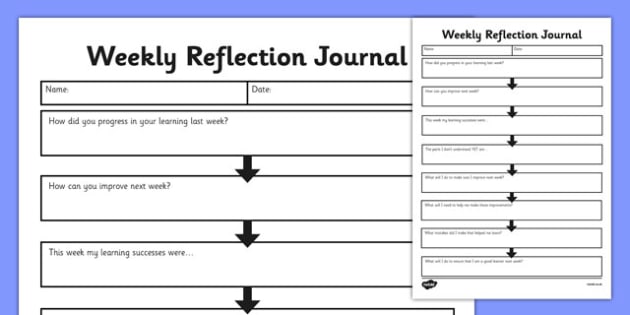
Reflection journals have become a popular tool in alternative schooling and education as a means to encourage self-awareness, critical thinking, and personal growth. While traditional academic assessments like exams and essays focus on measuring knowledge retention and understanding of material, reflection journals offer students the opportunity to delve deeper into their thoughts, feelings, and experiences related to their learning journey.
So what exactly is a reflection journal? Essentially, it is a type of diary or journal where students can record their thoughts, reactions, insights, and observations about their learning process. Unlike traditional academic assignments that have specific guidelines or rubrics to follow, reflection journals are more open-ended and allow students the freedom to explore their ideas without the pressure of meeting predefined criteria.
One of the key benefits of using reflection journals in education is that they promote metacognition – an awareness and understanding of one’s own thought processes. By regularly reflecting on their learning experiences through writing, students can develop a deeper understanding of how they learn best, what challenges they face, and how they can improve their study habits.
Moreover, reflection journals provide an opportunity for students to make connections between different subjects or concepts. For example, a student may realize that certain skills learned in math class are applicable in solving real-life problems encountered during a science experiment. This ability to integrate knowledge from various sources enhances critical thinking skills and fosters interdisciplinary understanding.
In addition to promoting self-awareness and critical thinking, reflection journals also encourage emotional intelligence development. Students are encouraged to not only reflect on what they have learned but also on how they feel about it. This emotional aspect adds depth to the learning experience as students learn to recognize and manage their emotions in relation to their academic pursuits.
Furthermore, keeping a reflection journal helps students track their progress over time. By looking back at earlier entries, students can see how far they have come since starting the course or project. This sense of accomplishment can boost motivation and confidence levels as learners realize the tangible results of their efforts.
Another advantage of using reflection journals is that they provide educators with valuable insights into each student’s individual learning process. By reading through student reflections regularly, teachers can gain a better understanding of each student’s strengths,
weaknesses,
and preferences.
This information allows educators
to tailor instruction
to meet each student’s unique needs effectively.
It also enables teachers
to identify areas
where additional support may be required,
helping them provide targeted interventions when necessary.
Despite all these benefits,
implementing reflection journals
in educational settings comes with its challenges.
For starters,
some students may find it challenging
to express themselves effectively through writing.
Educators need
to provide guidance
and support
to help such learners articulate
their thoughts clearly
and coherently
in their reflections.
Additionally,
encouraging consistent journaling practices among all students may require ongoing motivation strategies
from teachers.
To address these challenges,
educators can incorporate creative prompts or exercises
into the journaling process.
For instance,
asking open-ended questions such as “What surprised you most about today’s lesson?” or “How do you think this concept applies outside the classroom?” can stimulate deeper reflections from students.
Furthermore,
teachers should emphasize
that there are no right or wrong answers in reflection journals;
the goal is simply for students
to engage actively with
their own learning experiences.
Finally,
integrating peer feedback sessions into the useofreflectionjournalscanenhancestudents’learningexperience.Followingeachjournalentry,studiantscanexchangereflections witha partneror small group.Thispeerreviewprocessnotonlyprovidesanopportunityforstudentstoofferconstructivecriticismbutalsoallows themtobenefitfromothers’perspectivesandonlineeducation.
Overall,flectionjournalsareapowerfultoolforencouragingself-awareness,criticalthinking,andpersonalgrowth.Intraditionalacademicsettingswherestudentsareoftenmeasuredbytheirownperformanceonstandardizedtestsorassignments,reffectionjournalsofferavaluablealternativeforstudents’toengageintentionallywiththeirlearningexperiencesandanopportunityforteachers togaininsightsintostudents’individualneedsandchallenges.Byembracingthereflectionjournalasapracticetoincorporateintoalternativeschoolingeducafionprograms,theeducationcommunitycancultivateamoreholisticapproacht
 Alternative Amie
Leave a comment