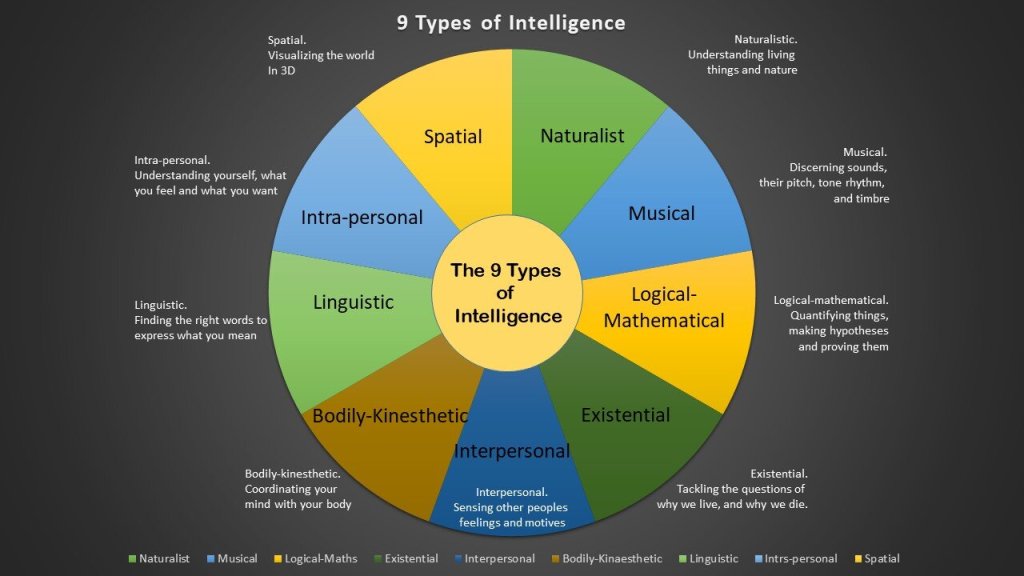
Multiple Intelligences (MI) theory, developed by psychologist Howard Gardner in 1983, suggests that intelligence is not a singular entity measured by traditional IQ tests. Instead, Gardner proposed that there are multiple intelligences that individuals possess to varying degrees. These intelligences include linguistic, logical-mathematical, musical, spatial, bodily-kinesthetic, interpersonal, intrapersonal, and naturalist intelligences.
The concept of Multiple Intelligences has gained popularity in education as it recognizes and values the diverse talents and abilities of students beyond academic performance. By understanding and leveraging different intelligences, educators can provide more personalized and effective learning experiences for students. One way to identify an individual’s strengths across these various intelligences is through Multiple Intelligences assessments.
Multiple Intelligences assessments are tools designed to help individuals discover their dominant intelligences and areas of strength. These assessments typically involve a series of questions or activities that allow participants to reflect on their preferences, skills, and tendencies in different areas such as verbal communication, problem-solving abilities, artistic expression, physical coordination, social interactions, self-awareness, and connection with nature.
One commonly used assessment tool based on the Multiple Intelligences theory is the MI Inventory developed by Thomas Armstrong. This inventory consists of a series of statements related to each intelligence area where participants rate how well each statement describes them on a scale from 1 to 5. At the end of the assessment process, individuals can identify their primary intelligences based on their responses.
Another popular tool for assessing Multiple Intelligences is the Multiple Intelligence Development Assessment Scales (MIDAS) developed by Dr. Branton Shearer. The MIDAS assessment provides a comprehensive analysis of an individual’s strengths across all eight intelligences outlined in Gardner’s theory. It offers insights into how one might excel in certain fields or professions based on their unique combination of intelligences.
Apart from formal assessments like those mentioned above, educators can also observe students’ behaviors and preferences in various learning tasks to infer their dominant intelligences informally. For example,
a student who excels at solving complex puzzles may exhibit high logical-mathematical intelligence,
while another student who enjoys writing stories or poems might have strong linguistic intelligence.
By recognizing these patterns in students’ behaviors and interests over time,
educators can tailor instruction methods,
assignments,
and projects
to cater to individual students’ strengths
and foster holistic development across all intelligence areas.
Understanding one’s Multiple Intelligencess has several benefits for both educators and learners alike.
For educators,
knowledge about students’ dominant intellligence profiles can inform instructional strategies
that leverage diverse teaching approaches such as visual aids for spatial learners
or hands-on activities for kinesthetic learners.
It also promotes inclusive practices that value every student’s unique abilities
and encourages collaborative learning environments where each student contributes based on their strengths.
For learners themselves,
identifying their primary intellligence areas can boost self-confidence
as they recognize and appreciate their own talents rather than solely comparing themselves against traditional academic standards.
Moreover,
understanding one’s multiple intellligence profile can guide career choices later in life
by highlighting fields or occupations that align with one’s natural aptitudes.
In conclusion,
Multiple Intelligencess assessments serve as valuable tools for identifying individuals’
strengths across various intellligence domains beyond traditional measures like IQ tests.
By acknowledging these diverse capacities within oneself
and others;
educators
can create more engaging
personalized
learning experiences tailored
to meet the needs
of each learner effectively while promoting holistic development across all domains.
As we continue
to embrace diversity
in education;
the recognition
of multiple ways
of being smart;
will play an essential role
in shaping inclusive; equitable learning environments;
that empower every individual;
to thrive academically; socially; emotionally;
and professionally.”
 Alternative Amie
Leave a comment