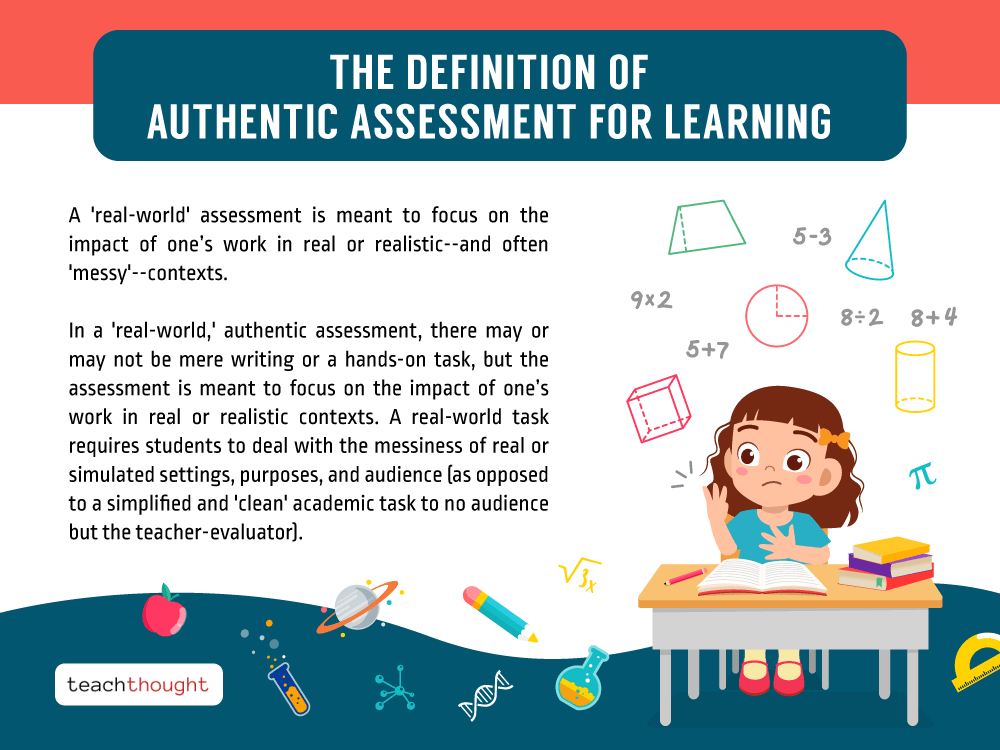
Authentic assessments are a crucial component of alternative education as they provide a more holistic and accurate measure of students’ knowledge, skills, and abilities compared to traditional standardized tests. By incorporating real-world tasks and scenarios into the assessment process, educators can better evaluate students’ understanding and application of concepts in meaningful contexts. In this Q&A style post, we will explore the importance of authentic assessments in alternative schooling and how they benefit both students and teachers.
Q: What are authentic assessments?
A: Authentic assessments are performance-based evaluations that require students to demonstrate their knowledge and skills by completing real-world tasks or projects. Unlike traditional multiple-choice exams, authentic assessments mirror the types of challenges individuals may encounter in professional settings or everyday life. These assessments can take various forms, such as presentations, portfolios, case studies, simulations, debates, exhibitions, performances, or projects.
Q: Why are authentic assessments important in alternative education?
A: Authentic assessments align with the principles of alternative education by emphasizing hands-on learning experiences that promote critical thinking, creativity, problem-solving skills, collaboration, communication skills, and self-directed learning. These assessments encourage students to apply their knowledge in practical situations rather than simply memorizing facts for a test. This approach fosters deeper understanding and retention of information while preparing students for success beyond the classroom.
Q: How do authentic assessments benefit students?
A: Authentic assessments empower students to take ownership of their learning by engaging them in meaningful tasks that reflect real-world challenges. By working on projects that have relevance and significance to their lives or interests, students become more motivated to invest time and effort into mastering complex concepts. Additionally, authentic assessments allow for personalized feedback from teachers based on individual strengths and areas for growth.
Q: How do teachers implement authentic assessments effectively?
A: To implement authentic assessments effectively in alternative education settings:
1. Align assessment tasks with learning goals: Design assessment activities that directly relate to the curriculum objectives and desired outcomes.
2. Provide clear instructions: Clearly communicate expectations regarding task requirements, evaluation criteria,
deadlines,and resources available to support student success.
3.Design rubrics for assessment criteria:
4.Include detailed rubrics outlining specific standards for evaluating student work
5.Offer opportunities for reflection:
6.Encourage self-assessment through reflections on their accomplishments,challenges faced,and lessons learned during
the assessment process
By following these guidelines,t eachers can create an environment conducive to meaningful learning experiences that prioritize deep understanding over rote memorization.
Q;What is the role of technology in facilitating authentic Assessments?
A; Technology plays a significant role in facilitating authentic assessmnets by providing platforms,s tools,and resources fo conducting ,managing,and assessing performance-based activities.Technology enables educators t ocreate interactive multimedia presentations,videos,collaborative online projects,digital portfolios,and virtual simulations thast replicate real-world scenarios.These digital tools not only enhance engagement but also streamline t heassessment proceess b yallowing stduents ot submit work electronically,receive immediate feedback,a ndcollaborate with peers remotely.Technology also offers innovative ways t oassess studnets’ competencies s uch as through gamification,machine-learning algorithms,augmented reality applications,and data analytics.Teachers can leverage these technological advancements t oenhance authenticity ,personalization,rlevance,inclusivity,e fficiency,and scalability i nthe assessement process within alterantive educaton environments.
In conclusion ,authentic assesments play a vital role i nalternative schooling b yproviding am eaningfuland effective waytoevaluate studnets’ knwoledgeandskills.The emphasis on rea-lifetasksandpracticalapplicationsofconceptsenhancesstudents’motivation,enagement,criticalthinking,socialskills,self-direction,a ndpreparednessforsuccessb eyondtheclassroom.Byimplementingauthenticassesments effectivleywithclearlearninggoalsinstructions,rubricsreflectio,nandtechnologysupportteacherscanenrichthelearninexperienceforstduentsinalternativeeducatinsettings.
 Alternative Amie
Leave a comment