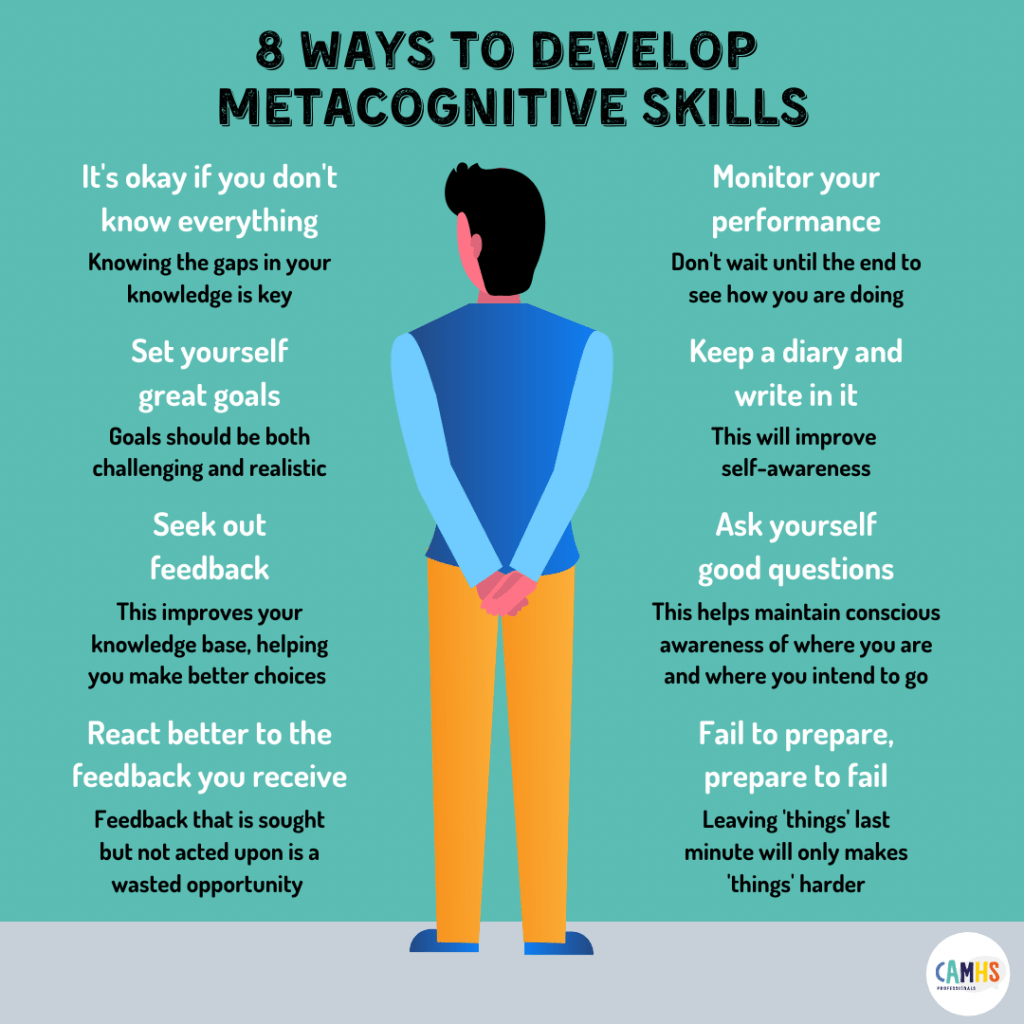
Metacognition, or thinking about one’s own thinking processes, is a valuable skill that can greatly enhance learning and problem-solving abilities. In the realm of education, metacognitive strategies have gained significant attention as they empower students to take control of their learning, monitor their understanding, and make adjustments to improve their performance.
One effective metacognitive strategy is setting goals and planning. By establishing clear objectives for what they aim to achieve in a particular task or assignment, students are able to focus their efforts more effectively. This process involves breaking down larger tasks into smaller, manageable steps, which can help prevent feelings of being overwhelmed and increase motivation.
Another key aspect of metacognition is monitoring comprehension. This involves actively assessing one’s understanding of the material being learned by asking questions such as “Do I understand this concept?” or “Can I explain it in my own words?” Students who engage in this practice are better equipped to identify areas where they may be struggling and seek additional support or resources to improve their understanding.
Reflection is also an essential component of metacognition. Encouraging students to reflect on their learning experiences – what worked well, what could have been done differently, and how they can apply these insights moving forward – fosters greater self-awareness and continuous improvement. Journaling or keeping a reflective log can be helpful tools for students to track their progress over time.
Metacognitive strategies also encompass regulating one’s cognitive processes during tasks. This includes techniques such as self-monitoring (checking work for errors), self-questioning (asking oneself clarifying questions), and self-testing (quizzing oneself on key concepts). These practices not only aid in identifying areas for improvement but also strengthen memory retention through active engagement with the material.
Collaboration with peers can further enhance metacognitive skills by providing opportunities for discussion, feedback, and perspective-taking. Working together on group projects or engaging in peer tutoring allows students to verbalize their thought processes, gain new insights from others’ perspectives, and refine their own understanding through dialogue.
Incorporating metacognitive strategies into classroom instruction requires intentional planning by educators. Providing explicit instruction on these strategies, modeling how they can be applied in different contexts, and offering opportunities for guided practice are all essential components of supporting students’ development of metacognitive skills.
Ultimately, cultivating metacognition empowers learners to become more independent thinkers who are capable of navigating complex challenges with confidence and resilience. By equipping students with the tools to reflect on their own thinking processes, set goals strategically manage their cognitive resources effectively regulate their learning behaviors teachers foster a culture of lifelong learning that extends far beyond the classroom walls.
 Alternative Amie
Leave a comment