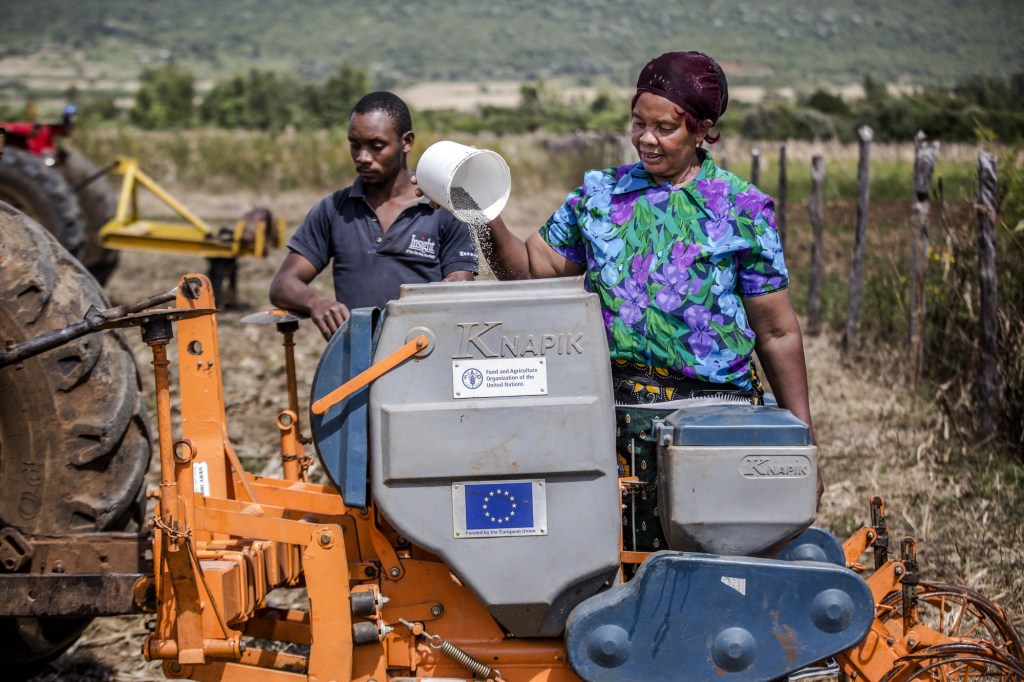
Sustainable agriculture in Africa is a crucial topic that encompasses various practices and principles aimed at promoting environmental, economic, and social sustainability in the agricultural sector. With the challenges posed by climate change, population growth, and food security concerns, sustainable agriculture has become increasingly important in ensuring that African countries can meet their current needs without compromising the ability of future generations to meet theirs.
1. **Challenges Facing Agriculture in Africa**: Before delving into sustainable agriculture practices, it’s important to understand the challenges facing conventional farming methods in Africa. These include land degradation due to overuse of chemical fertilizers and pesticides, deforestation for agricultural expansion, water scarcity exacerbated by erratic rainfall patterns, and soil erosion leading to poor crop yields.
2. **Defining Sustainable Agriculture**: Sustainable agriculture can be defined as a way of farming that seeks to produce food while preserving the environment’s natural resources for future generations. It involves employing techniques that minimize negative impacts on ecosystems while optimizing productivity and profitability for farmers.
3. **Key Principles of Sustainable Agriculture**:
– **Soil Health**: Healthy soils are fundamental for sustainable agriculture as they support plant growth and biodiversity. Practices like cover cropping, crop rotation, composting, and reduced tillage help improve soil structure and fertility.
– **Water Conservation**: Given water scarcity issues in many parts of Africa, efficient water management is essential for sustainable agriculture. Techniques such as drip irrigation systems, rainwater harvesting, contour plowing, and mulching help conserve water resources.
– **Biodiversity Preservation**: Maintaining biodiversity on farms contributes to ecosystem resilience against pests and diseases. Intercropping diverse crops or incorporating agroforestry systems are ways to promote biodiversity.
– **Integrated Pest Management (IPM)**: IPM emphasizes using a combination of cultural practices, biological controls (like introducing natural predators), and targeted pesticide applications only when necessary to manage pest populations sustainably.
– **Agroecology**: This interdisciplinary approach combines ecological principles with traditional knowledge of local communities to design resilient farming systems that work with nature rather than against it.
4. **Examples of Sustainable Farming Practices**:
– *Conservation Agriculture*: This practice involves minimal soil disturbance through reduced tillage or no-till methods combined with permanent soil cover such as cover crops or mulch. Conservation agriculture helps prevent soil erosion while improving soil health.
– *Organic Farming*: Organic farming avoids synthetic inputs like chemical fertilizers or pesticides in favor of organic alternatives such as composts or biopesticides derived from natural sources.
– *Permaculture*: Permaculture is a design system that mimics natural ecosystems’ patterns to create productive landscapes while enhancing biodiversity and sustainability.
– *Agroforestry*: Integrating trees into agricultural landscapes provides multiple benefits such as improved soil fertility from leaf litter decomposition; shade regulation affecting microclimates; carbon sequestration; increased crop diversity; windbreaks; fodder production; timber supply; fruit/nut harvests
5. **Case Studies & Success Stories**:
– The Nyumbani Village project in Kenya exemplifies how sustainable agriculture can improve livelihoods in rural communities through integrated aquaculture-agriculture systems providing food security year-round along with income generation opportunities.
– Farmer-led initiatives like the Sasakawa Global 2000 program have helped smallholder farmers across several African countries adopt conservation agriculture practices resulting in increased yields despite challenging climatic conditions
6 .**Policy Recommendations & Future Outlook**
Governments play a vital role in promoting sustainable agricultural practices through policy incentives like subsidies for organic inputs or training programs on conservation methods
Investment from international organizations focusing on capacity building support research development extension services access markets financial credit
Promoting consumer awareness about supporting locally sourced sustainably produced foods encourages demand-driven market shifts toward more environmentally friendly products
In conclusion achieving sustainability within African agriculture requires systemic changes addressing socio-economic political environmental factors collaboration stakeholders including government NGOs researchers local communities private sector commitment innovation adaptation continuous learning evolution towards truly regenerative resilient food system benefit people planet prosperity long term harmonious balance between human activities ecosystems fostering healthy societies vibrant economies thriving environments where future generations thrive flourish prosper together true essence sustainability realized through harmonizing human actions ecology honoring interconnectedness interdependence all life forms embracing stewardship responsibility caretakers Earth shared home mutual respect reciprocity gratitude abundance created nurtured cherished sustained perpetuity
 Alternative Amie
Leave a comment