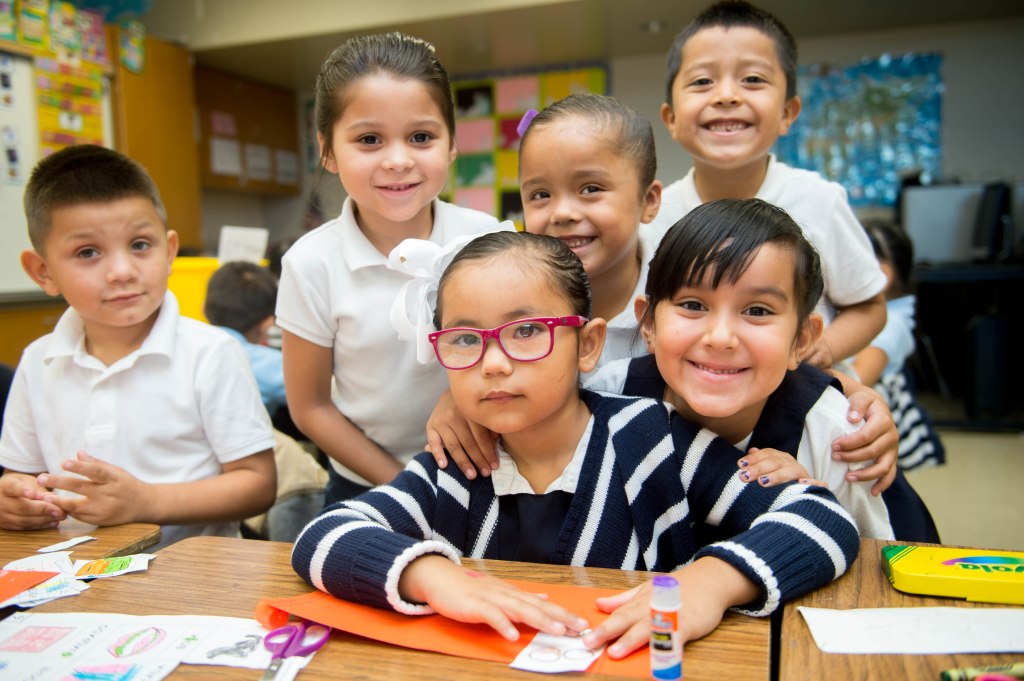
Dual language immersion programs have gained popularity in recent years as more and more parents seek out innovative educational opportunities for their children. These programs offer a unique approach to learning that allows students to become bilingual and biliterate while receiving a high-quality education.
In a dual language immersion program, students are taught academic content in two languages. Typically, one language is the student’s native or dominant language, while the other is a target language that they are learning. The goal of these programs is to help students develop proficiency in both languages, enabling them to communicate effectively and think critically in multiple linguistic contexts.
There are several key benefits of dual language immersion programs that make them an attractive option for many families:
1. **Bilingualism**: One of the most obvious benefits of dual language immersion programs is that students become fluent in two languages. Research has shown that being bilingual has cognitive benefits, such as improved problem-solving skills, better multitasking abilities, and increased creativity.
2. **Cultural Competence**: By learning another language, students also gain exposure to different cultures and perspectives. This can help foster empathy, understanding, and appreciation for diversity among students.
3. **Academic Achievement**: Studies have shown that students in dual language immersion programs often outperform their peers academically. Bilingualism has been linked to better academic performance overall, including higher test scores and improved reading comprehension.
4. **Long-Term Benefits**: The advantages of being bilingual extend beyond the classroom. Bilingual individuals have greater job opportunities and earning potential later in life compared to monolinguals.
5. **Global Citizenship**: In an increasingly interconnected world, being able to speak multiple languages is a valuable skill that can open up opportunities for communication and collaboration on a global scale.
6. **Enhanced Cognitive Skills**: Learning two languages simultaneously requires cognitive flexibility and problem-solving skills, which can benefit students’ overall cognitive development.
7. **Social Skills Development**: Being part of a diverse classroom where multiple languages are spoken can help students develop strong social skills such as empathy, communication skills, and adaptability.
When considering enrolling your child in a dual language immersion program, there are some important factors to keep in mind:
1-**Language Balance**:
It is essential that the program provides equal emphasis on both languages so that students can achieve proficiency in both languages by the time they complete the program.
Some schools may offer different ratios depending on grade level or specific goals of the program (e.g., 50:50 English-Spanish vs 80:20 Mandarin-English).
2-**Qualified Teachers**
The success of any educational program depends largely on the quality of its teachers.
Look for educators who are not only proficient in both languages but also trained specifically in teaching bilingual education.
Teachers should be culturally competent and able to create an inclusive environment where all students feel valued regardless of their background or primary language spoken at home
3-**Support Services**
Dual Language Immersion Programs should provide appropriate support services for English Language Learners (ELL) who may need additional assistance with acquiring academic vocabulary or literacy skills
Schools should have resources available for parents who may not be fluent speakers themselves so they can stay informed about their child’s progress
4-**Parental Involvement**
Parents play a crucial role in supporting their child’s linguistic development outside school hours
Participate actively by reading books together daily speaking both home nd target languags at home
Seek out community resources like cultural events or organizations related o he second lanugage being learned
5-**Assessment & Monitoring**
Programs should regularly assess student progressin boh langauges o ensure they’re meeting benchmarks n academic achievement nd linguisic competence
Provide ongoing feedback o parents abut heir chldren’s proress nd areas f growth
6-**Diversity & Inclusion**
Look fr schools hat value diversity nd inclusivity by celebrating all cultures represented n hei
 Alternative Amie
Leave a comment