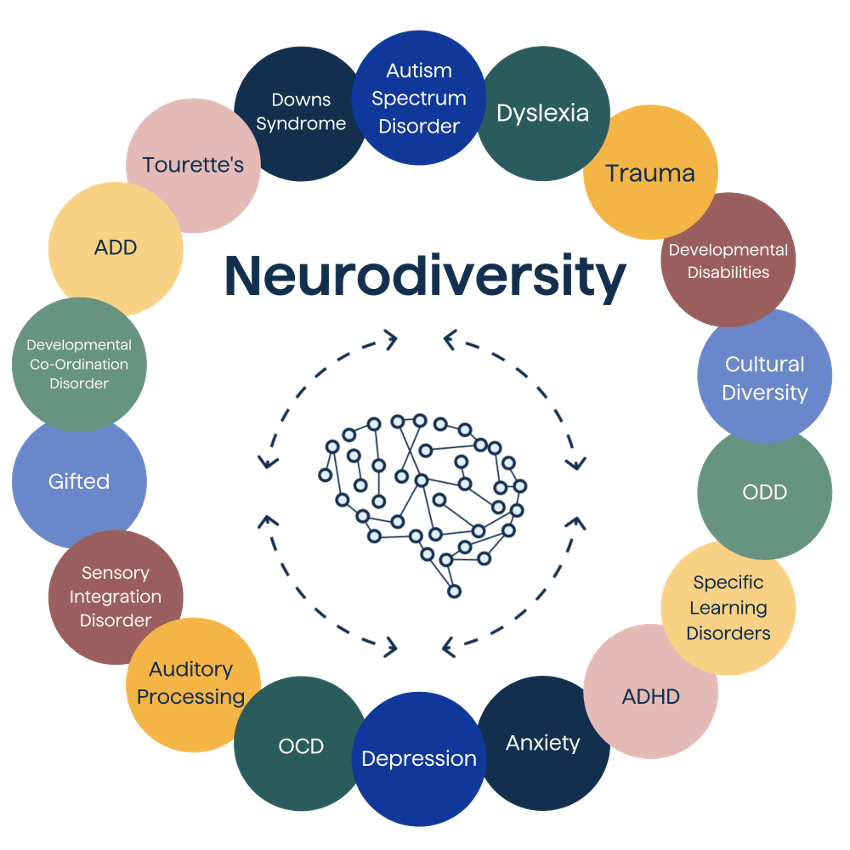
Neurodiversity is a concept that acknowledges and celebrates the unique neurological differences among individuals. In educational settings, neurodiversity encompasses a wide range of conditions, including sensory processing differences, executive functioning challenges, social communication difficulties, hyperfocus and special interests. Understanding and catering to the needs of neurodiverse students is crucial for creating inclusive learning environments where all learners can thrive.
One common aspect of neurodiversity is sensory processing differences. Some students may be hypersensitive to stimuli such as noise, lights, or textures, while others may seek out sensory input to regulate their emotions and attention. Educators can support these students by providing quiet spaces for breaks, using visual schedules and timers to help with transitions, and offering alternative seating options like fidget tools or flexible seating arrangements.
Executive functioning challenges are another key component of neurodiversity. These challenges can manifest in difficulties with organization, planning, time management, and self-regulation. Students with executive functioning issues may benefit from clear routines, explicit instruction in organizational skills, breaking tasks into smaller steps, and utilizing visual supports such as checklists or graphic organizers.
Social communication difficulties are also common among neurodiverse students. Challenges in understanding social cues, maintaining conversations, or interpreting nonverbal communication can impact academic performance and social interactions. Teachers can support these students by teaching explicit social skills through role-playing exercises or social stories, fostering peer relationships through structured activities like cooperative learning projects or buddy systems.
Hyperfocus on specific topics or special interests is a trait often seen in neurodiverse individuals. While this intense focus can be a strength academically or creatively, it may also pose challenges when trying to shift attention to other tasks. Educators can harness this passion by incorporating student interests into lessons whenever possible or allowing opportunities for independent research projects related to their special interests.
Individualized Education Plans (IEPs) play a vital role in supporting neurodiverse students in the classroom. These personalized plans outline specific goals and accommodations tailored to each student’s unique needs. By collaboratively developing IEPs with parents/guardians and specialists like occupational therapists or speech-language pathologists, educators can ensure that each student receives the individualized support they require to succeed academically and socially.
Strengths-based learning approaches focus on identifying and building upon students’ strengths rather than solely addressing deficits. By recognizing the diverse talents and abilities of neurodiverse learners – whether it be exceptional memory skills,
creative problem-solving abilities,
or artistic talents – educators can create opportunities for success
and foster self-confidence
Assistive technology plays a crucial role in supporting neurodiverse students’ academic success.
From text-to-speech software
to graphic organizers
to specialized apps for organization
assistive technology tools help level the playing field by providing additional supports
and accommodations based on individual needs.
Emotional regulation strategies are essential for helping neurodiverse learners manage feelings of anxiety,
frustration,
or overwhelm.
Mindfulness practices such as deep breathing exercises,
guided imagery,
or progressive muscle relaxation techniques
can help students develop self-awareness
and coping mechanisms
Neurodiversity has been linked to increased creativity
in various fields such as art,
music,
technology,
and science.
By embracing diverse ways of thinking
and problem-solving within the classroom setting,
educators not only nurture innovation but also promote acceptance
of different perspectives
Non-traditional learning styles
are often more effective for many neurodiverse learners compared
to traditional lecture-based instruction.
Hands-on activities,
visual aids,
group projects,
and experiential learning opportunities engage
students on multiple levels
while catering
to different learning preferences.
Neurodiversity intersects
with giftedness
in complex ways.
Many highly gifted individuals exhibit traits associated with being neurologically diverse,
such as intense focus,
unconventional thinking patterns,
or heightened sensitivities.
Educators must recognize
that giftedness does not negate the need
for specialized support based on neurological differences.
Inclusive education practices emphasize creating classrooms where all learners feel valued,
respected,
and supported.
By implementing strategies like differentiated instruction,
Universal Design for Learning (UDL),
collaborative problem-solving,
peer mentoring programs
culturally responsive teaching methods
neurotypical peers learn alongside their neuro-divergent classmates
Transition planning is crucial
for ensuring successful outcomes beyond school settings
for Neuro-Diverse youth.
Whether transitioning
from high school
to post-secondary education,
vocational training programs,
or entering the workforce,
individualized transition plans should address areas such as independent living skills,
career exploration,
self-advocacy training
Differentiated instruction recognizes that every learner is unique
with varying strengths
needs
learning styles.
Educators who employ differentiation strategies tailor their teaching approaches
materials
assessments
based on individual student profiles
ensuring that all learners have access
to appropriate challenge
support
Universal Design for Learning (UDL) principles aim
at creating flexible
accessible educational environments
that accommodate diverse learner needs.
By proactively designing instructional materials
curriculum elements
assessment methods following UDL guidelines
educators promote inclusivity
equitable access
for all learners.
Collaborative problem-solving encourages teamwork
communication among students
tasks/projects requiring creative solutions.
This approach fosters critical thinking
social-emotional development while honoring diverse perspectives
Alternative assessment methods go beyond traditional tests/quizzes
acknowledge varied forms of demonstrating knowledge/skills.
Such assessments might include portfolio presentations
project-based evaluations
performance assessments
reflect real-world applications.
Culturally responsive teaching requires educators
understand appreciate cultural diversity
students bring into classroom settings.
By acknowledging cultural backgrounds
experiences
incorporating culturally relevant materials/activities into lessons
teachers create inclusive environments promoting mutual respect
engagement among all learners.
Mindfulness practices offer valuable tools
helping Neuro-Diverse individuals manage stress
build emotional regulation skills.
Incorporating mindfulness activities into daily routines
as breathing exercises
mindful walking meditation
body scans helps cultivate present-moment awareness
reduce anxiety levels.
Overall
the integration of mindful practices promotes well-being
positive mental health outcomes within school communities.
Peer mentoring programs pair Neuro-Diverse students mentor peers who understand similar struggles/challenges.
These partnerships provide invaluable support
encouragement reciprocity between mentors mentees.
Peer mentoring enhances socialization skills
promotes sense community belongingness among participants.
In conclusion
embracing Neuro-Diversity within educational settings requires thoughtful consideration implementation varied strategies approaches.
From assistive technologies emotional regulation techniques mindfulness practices
inclusive pedagogical approaches transitional planning steps
school communities play pivotal roles advocating empowering Neuro-Diverse individuals.
Through commitment collaboration across stakeholders
we pave way towards equitable inclusive education system benefits all learners regardless neurological diversities.
 Alternative Amie
Leave a comment