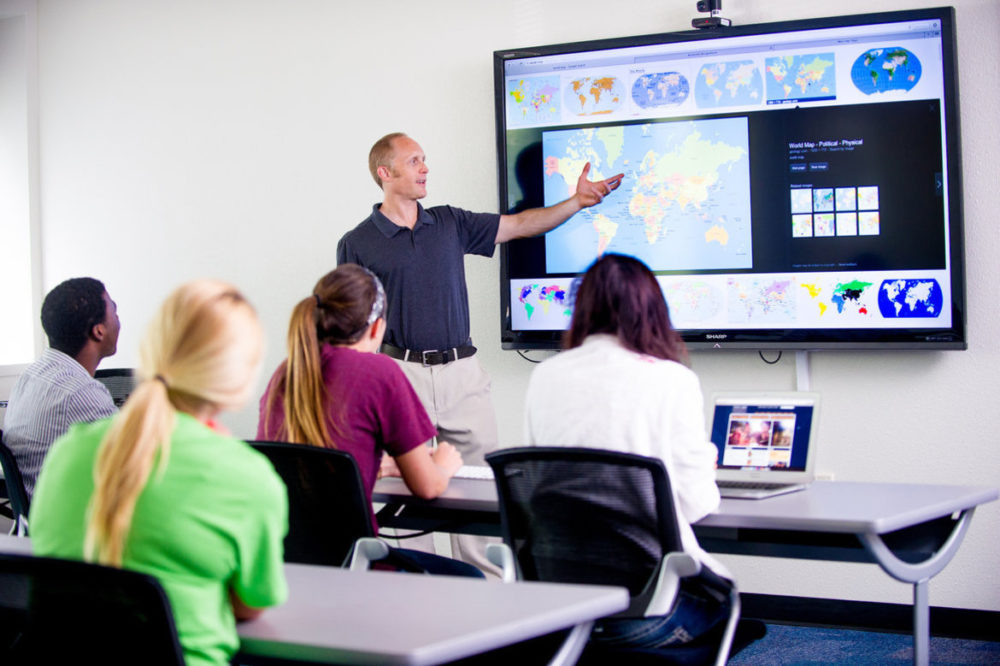
As a writer and journalist who has closely followed the evolution of education over the years, I have witnessed firsthand the significant impact that technology has had on the way we teach and learn. In this memoir-style post, I want to share my experiences and insights into how technology in education has transformed traditional teaching methods and opened up new possibilities for students around the world.
I remember a time when classrooms were filled with chalkboards, textbooks, and overhead projectors. The teacher stood at the front of the room, delivering lectures while students furiously scribbled notes in their notebooks. It was a one-size-fits-all approach to education that left little room for individualized learning or creativity.
But as technology began to seep into our daily lives, it also started to make its way into our schools. Computers became more affordable and accessible, leading to computer labs being set up in schools across the country. Suddenly, students had access to a wealth of information at their fingertips – they could research topics online, collaborate with classmates on projects, and even take virtual field trips to far-off places.
One of my most vivid memories is watching a group of elementary school students using iPads in their classroom. They were completely engrossed in an interactive learning game that was teaching them math skills in a fun and engaging way. The teacher moved around the room, guiding them through different levels of difficulty based on their individual abilities. It was clear that these students were not just passively absorbing information – they were actively participating in their own learning process.
As I continued to explore how technology was being integrated into education settings, I came across virtual reality (VR) headsets being used in high school science classes. Students were able to don these devices and be transported inside the human body to explore its inner workings firsthand. This immersive experience brought complex biological concepts to life in a way that textbooks never could.
Another groundbreaking development I witnessed was the rise of online learning platforms like Khan Academy and Coursera. These websites offered free courses taught by experts from around the world on a wide range of subjects – from algebra to zoology. Students could learn at their own pace, pause videos for clarification, and even participate in online forums with peers facing similar challenges.
Furthermore, as someone who believes strongly in inclusive education practices, I was heartened by how technology was leveling the playing field for students with disabilities. Assistive technologies like screen readers for visually impaired individuals or speech-to-text software for those with dyslexia were empowering these students to excel academically alongside their peers.
The integration of technology into education hasn’t been without its challenges though. One major concern is ensuring equitable access for all students regardless of socioeconomic background. Not every student has access to high-speed internet at home or can afford a personal laptop or tablet device. As such, there is still work to be done in bridging this digital divide so that all students can benefit from technological advancements equally.
Moreover, there are valid concerns about screen time and its potential negative effects on children’s cognitive development and mental health. As educators grapple with finding the right balance between utilizing technology as a tool for learning without allowing it to become a distraction or detrimentally impact social interactions among students.
Despite these challenges though, it’s clear that technology has fundamentally changed how we approach education today comparedto decades past—a change mirrored by society’s increasing reliance upon digital tools & platforms both within & beyond academic settings alike.
In conclusion,
Technology’s role will continue evolving over time but one thing remains certain: it will play an increasingly integral part shaping future generations’ educational experiences reflecting broader societal shifts toward digitization impacting nearly aspect modern life including schooling practices themselves.
 Alternative Amie
Leave a comment