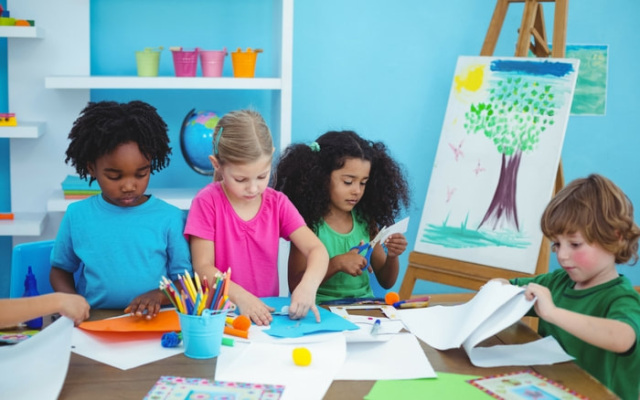
Art exploration is a fundamental aspect of alternative schooling and education. It allows students to discover their creativity, express themselves, and develop critical thinking skills. To gain more insights into the importance of art exploration in education, we sat down with Sarah Adams, an art teacher at a progressive school that emphasizes creative learning.
Q: How do you incorporate art exploration into your curriculum?
A: At our school, we believe that art is not just about drawing or painting; it’s about exploring different mediums and techniques. We encourage our students to experiment with various materials such as clay, found objects, digital tools, and even performance art. By providing them with diverse opportunities for self-expression, we help them discover their unique artistic voice.
Q: What are some benefits of engaging in art exploration for students?
A: Art exploration offers numerous benefits for students. Firstly, it fosters creativity by encouraging them to think outside the box and explore new ideas. It also promotes problem-solving skills as they navigate challenges while creating their artworks. Additionally, art helps students develop emotional intelligence by expressing their feelings through visual means.
Q: How does art exploration contribute to holistic education?
A: Art exploration plays a crucial role in holistic education as it nurtures various aspects of a student’s development. Through creating art, students enhance their fine motor skills and hand-eye coordination. Moreover, engaging in artistic activities boosts self-esteem and confidence by showcasing their unique talents and perspectives.
Q: In what ways does art exploration promote critical thinking among students?
A: Art exploration requires students to analyze visual information critically and make decisions based on aesthetic principles. When experimenting with different techniques or styles, they learn how to evaluate the effectiveness of their choices and adapt accordingly. This process enhances their analytical skills and encourages them to approach problems from multiple perspectives.
Q: Can you share a memorable experience where art exploration had a significant impact on a student?
A: One particular student stands out in my mind – let’s call her Lily. Initially shy and reserved, Lily struggled to communicate her thoughts verbally. However, when she started delving into mixed-media collage projects during our art classes,
she discovered a powerful outlet for self-expression.
Through layering images and textures,
Lily conveyed emotions she couldn’t articulate verbally.
This transformative experience boosted her confidence
and allowed her peers
to understand her perspective better,
highlighting the profound impact of arts-based learning on personal growth.
Q: How can parents support their children’s engagement in art exploration at home?
A:
Parents play a crucial role
in nurturing children’s interest
in art exploration.
Encourage your child
to experiment with various materials
and techniques at home.
Provide them with access
to basic supplies like paints,
crayons,
or recycled materials.
Engage in creative activities together,
such as painting,
collaging,
or sculpting.
Ask open-ended questions about their artwork
to spark discussions about creativity and imagination.
Attend local exhibitions or museums together
to expose your child
to different forms of artistic expression
In conclusion,
art ex ploration is an invaluable component
of alternative schooling
and education,
offering
students
diverse opportunities
for self-discovery,
creativity,
critical thi nking,
and personal growt h.
By embracing
artistic expression
as an integral part
of the educational journey,
we empower studen ts
to unlock t heir full potential
and cultivate lifelong appreciation
fo r the arts.”
 Alternative Amie
Leave a comment