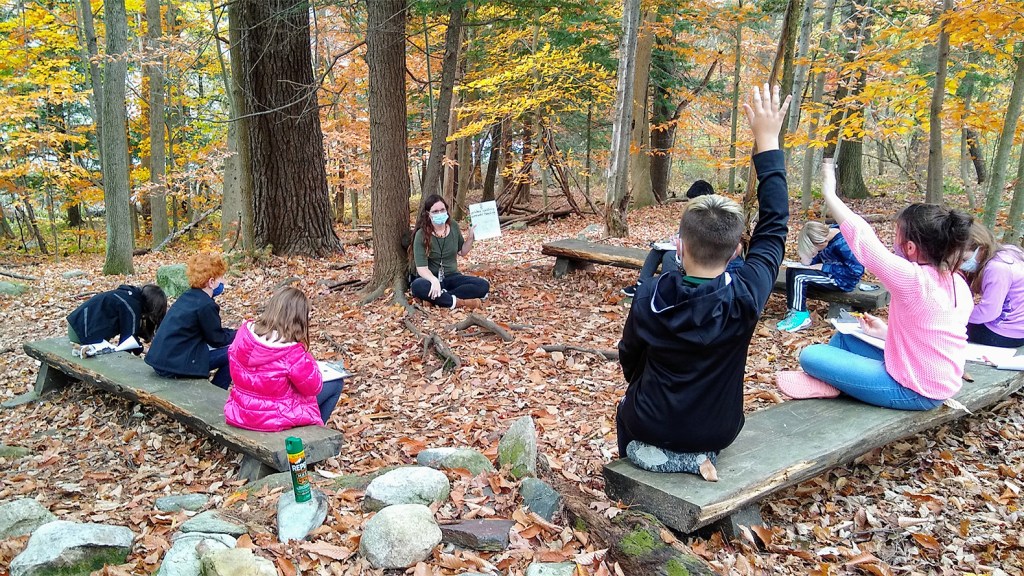
Outdoor education is a powerful approach to learning that takes place outside the traditional classroom setting. By engaging students in hands-on experiences in nature, outdoor education helps them connect with the natural world, develop important skills, and foster a sense of stewardship for the environment.
Project-based learning (PBL) is an instructional approach that allows students to explore real-world problems and challenges through projects. This method encourages collaboration, critical thinking, and problem-solving skills as students work towards creating tangible outcomes.
Experiential learning focuses on providing students with firsthand experiences to enhance their understanding of concepts and ideas. By engaging in activities such as experiments, field trips, and simulations, students can actively participate in their own learning process.
Place-based education emphasizes connecting learning to local environments and communities. By incorporating local history, culture, and resources into the curriculum, students gain a deeper appreciation for their surroundings while developing a stronger sense of identity and belonging.
The Reggio Emilia approach is an educational philosophy that values student-led exploration and creativity. With a focus on experiential learning through art and play-based activities, this approach aims to nurture each child’s unique interests and abilities.
The Montessori method is based on the principles of self-directed learning and individualized instruction. Through hands-on materials and guided exploration, Montessori education empowers children to learn at their own pace while fostering independence and curiosity.
Waldorf education integrates academics with arts-based activities to engage students holistically. With an emphasis on creativity, imagination, and emotional intelligence, Waldorf schools aim to cultivate well-rounded individuals who are capable of critical thinking and self-expression.
Unschooling is a form of homeschooling that prioritizes student autonomy over structured curriculum. By allowing children to pursue their interests freely without formal lessons or grades, unschooling supports self-directed learning based on individual passions.
Self-directed learning places the responsibility for education on the learner themselves. By encouraging autonomy in choosing what to learn and how to learn it, this approach fosters intrinsic motivation while promoting lifelong growth mindset development.
Holistic education seeks to educate the whole child by addressing academic needs alongside social-emotional well-being. By considering physical health, emotional intelligence,
and interpersonal relationships within the educational framework,
holistic education aims
to nurture all aspects
of a student’s development
Inquiry-based
learning encourages
students
to ask questions,
explore topics,
and seek solutions
through investigation
and research.
By promoting curiosity,
critical thinking,
and problem-solving skills,
inquiry-based
learning empowers
students
to become active participants
in their own educational journey
Gamification in Education uses elements of game design such as competition,collaboration,and rewards,to engage learners.By making lessons interactive,challenging,and fun,gamification motivates studnetswhile enhancing retention andretrievalof information
Maker Education promotes hands-on creation innovation,and experimentation.By providing access tomakerspaces tools.and technology,makereducationempowerstudentsto design,builddtestprojectswhile developingcriticalthinkingskill sandcreativity
Nature-Based Learning immersesstudentsinnatureenvironments,suchasforests,parks,andgardens,toenhancelearningexperiences.Whileconnectingwiththenaturalworld,studenetsdevelopanunderstandingofecologyandsustainabilitywhilefosteringappreciationfortheenvironment
Art-Integrated Curriculum incorporatesartforms,suchasvisualarts,music,drama,intoacademicinstruction.Thisapproachencouragescreativeexpression,criticalthinking,andculturalappreciationwhileenhancingstudents’overalllearningexperience
Mindfulnessintheclassroom involvespractices,suchasbreathingexercises,bodyawarenessmeditation,tocultivatepresentmomentawarenessself-regulation.Mindfulnesshelpsstudentstomanagestress,focusbetter,andimprovesocial-emotionalskillsleadingtobetteracademicperformance
Social-EmotionalLearning(SEL)focusesonbuildingemotionalintelligence,self-awareness,resilienceinterpersonalrelationshipskills.SELcurriculumsteachesempathycommunicationnegotiationsuccessfulconflictresolutiontocreateapositivelearnenvirnomentthatnurturesoverallwell-being
CulturallyResponsiveTeachingacknowledgesdiversebackgroundsexperiencesamongstudentsinteachingpractices.CRTpromotesinclusivecurriculumrepresentation,respectfordifferentperspectivesvalueformulitpleidentitiesinsupportiveclassroomculturethatacknoweldgescelebratesdiversity
Student-LedConferencesengagesthelearnerintheassessmentprocessbyhavingthemtakeownershipoftheirprogressgoals.Studentspresentportfoliosreflectionsoftheireducationaljourneytoparentsandteachersdemonstratinggrowthachievementsthroughouuttheyear.
CommunityPartnershipsineducationcollaborationsbetweenschoolsandlocalorganizationsbusinessesnon-profits.Communitypartnershipsenhancestudentlearningbyprovidingreal-worldexpeirencesconnectionswithprofessionalsmentorsresourcesoutsidetheclassroomsetting.
In conclusion,the diverse approaches discussed above offer alternative pathways for educators seeking innovative methods for teaching today’s learners.The key lies indesigningcurriculumsandexperiences that cater topersonalizedneedsinterestsofeachchildratherthanadoptone-siz-fits-allapproach.Educationisavastlandscapeoffereducationalopportunitiesanditiscrucialthatweseektoincorporatethesediversemethodsintoourteachingpracticestomeettheneedsandsuitabilitiesofalllearnersindividually
 Alternative Amie
Leave a comment