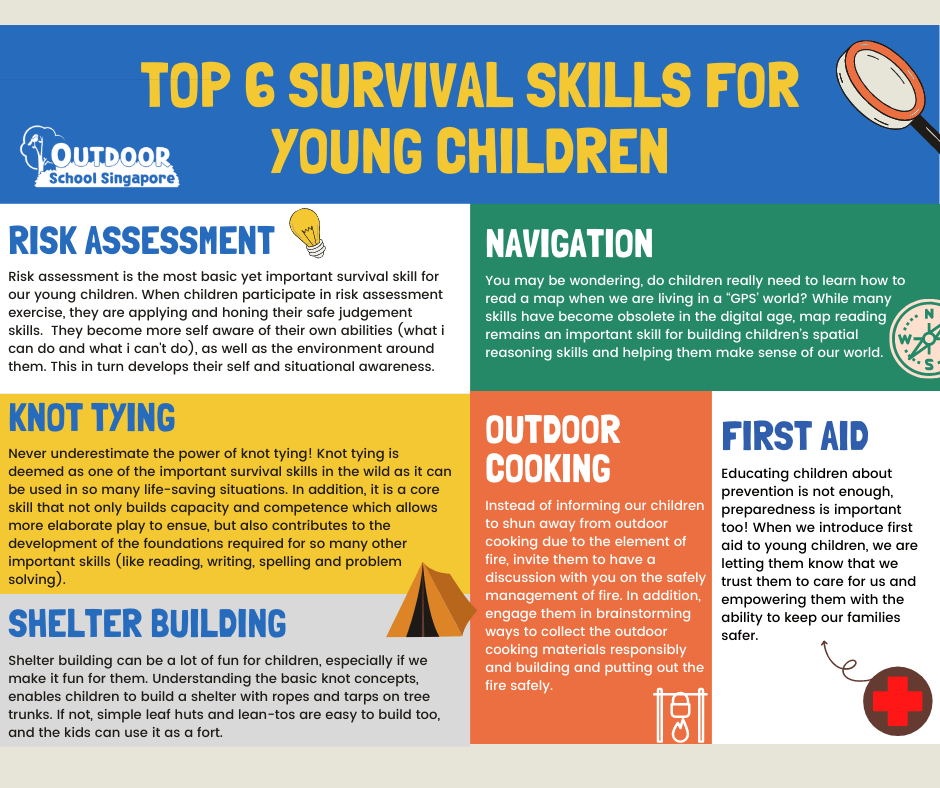
Survival skills are essential for anyone to have, no matter their age or background. These skills go beyond just knowing how to start a fire or build a shelter – they encompass a wide range of abilities that can help individuals navigate through challenging situations and environments. In alternative schooling and education settings, where students often have the opportunity to learn outside of traditional classrooms, teaching survival skills can be incredibly valuable. Here are ten key survival skills that every student should learn:
1. **Basic First Aid:** Knowing how to administer first aid is crucial in any emergency situation. Students should be taught how to clean and dress wounds, perform CPR, and treat common injuries like sprains and cuts.
2. **Fire Starting:** Being able to start a fire without matches or a lighter is an important skill in survival situations. Students can learn various methods such as using flint and steel, friction-based techniques, or even sunlight with magnifying glasses.
3. **Shelter Building:** Understanding how to construct a shelter using natural materials is vital for staying safe in the wilderness. This skill involves finding suitable locations, creating sturdy structures, and insulating them properly against the elements.
4. **Navigation:** Teaching students how to read maps, use a compass, and orient themselves based on landmarks can prevent getting lost while hiking or exploring new areas.
5. **Water Sourcing & Purification:** Finding clean water sources in the wild and purifying them effectively is essential for staying hydrated and healthy. Students should know methods like boiling water, using purification tablets, or building simple filtration systems.
6. **Wilderness Food Foraging:** Learning about edible plants, fungi, insects, and other sources of food in nature can be invaluable when resources are scarce.
7. **Emergency Signaling:** Knowing how to signal for help using tools like whistles, mirrors, smoke signals, or even Morse code can increase the chances of being rescued in remote locations.
8. **Self-Defense Techniques:** While physical confrontation should always be avoided if possible; learning basic self-defense moves can empower students to protect themselves if necessary.
9. **Knot Tying:** Mastering different types of knots is useful for securing shelters,tarps,distress signals,and more.Students should practice tying knots such as figure-eight knots,half-hitches,bowlines,and square knots among others.
10 .**Psychological Resilience Training**: Developing mental toughness,facing fears,and managing stress levels are critical components of surviving challenging situations.Students could benefit from mindfulness exercises,journaling,self-reflection sessions among others.
Incorporating these survival skills into alternative schooling programs not only equips students with practical knowledge but also fosters independence,resilience,critical thinking,and problem-solving abilities.Simulated scenarios,outdoor expeditions,survival workshops,and guest speakers from related fields could enhance learning experiences.Most importantly,reinforcing an attitude of preparedness,responsibility towards oneself,others,and nature,is fundamental.
By integrating these survival skills into alternative education curriculums,young learners will not only gain confidence but also acquire competencies that will serve them well throughout their lives—whether they find themselves in the great outdoors facing challenges head-on—or navigating complexities within society itself.
 Alternative Amie
Leave a comment