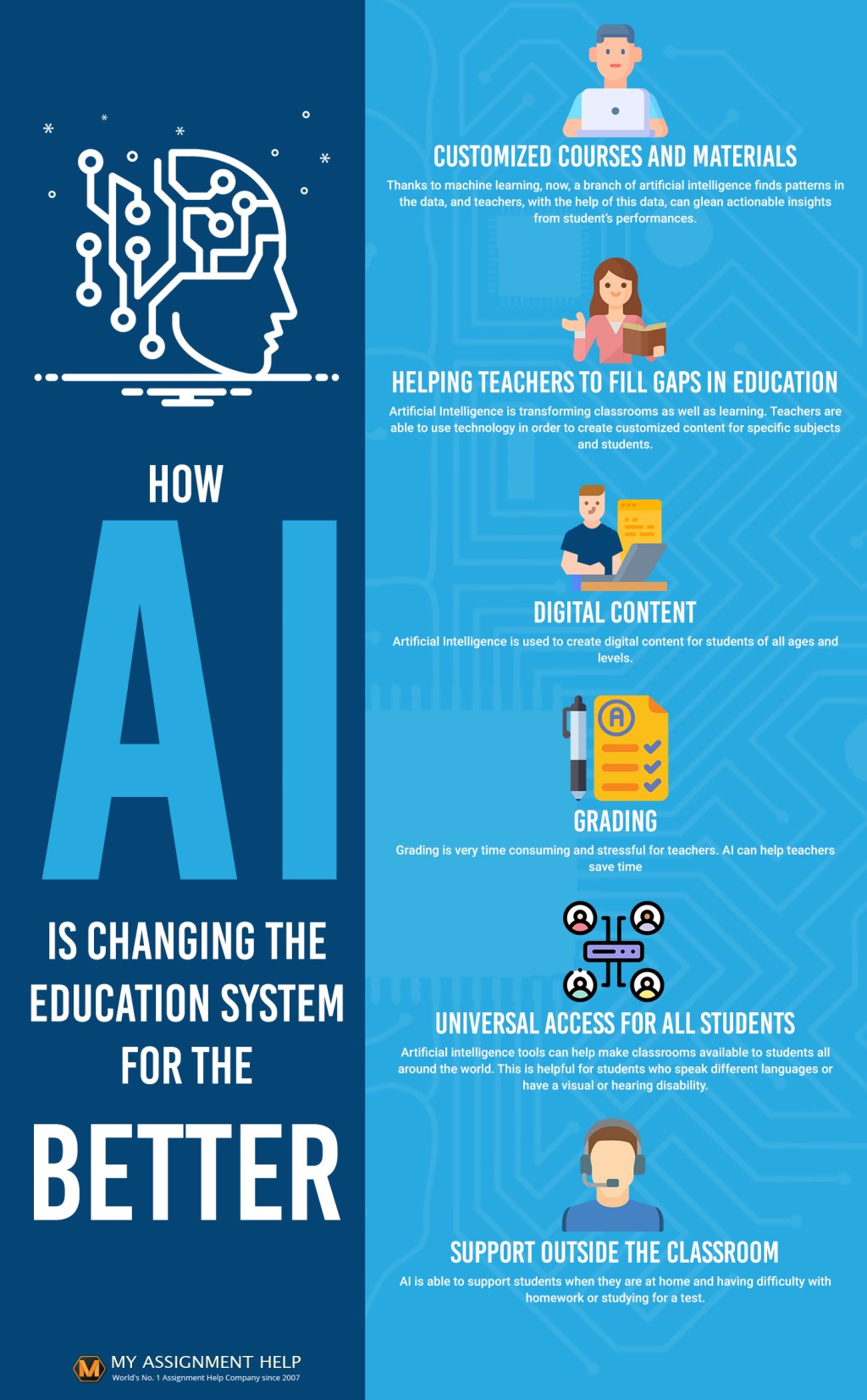
In recent years, Artificial Intelligence (AI) has become a ubiquitous topic in discussions about the future of technology and education. With its potential to revolutionize various industries, including education, AI is often hailed as a game-changer that can enhance learning experiences and make education more personalized and accessible. While there are certainly numerous benefits to integrating AI into educational settings, it is crucial to critically examine the implications of this technology on students, teachers, and the overall educational landscape.
One of the key promises of AI in education is its ability to personalize learning experiences for students. By analyzing vast amounts of data on individual student performance and behavior, AI-powered systems can tailor instruction to meet each student’s specific needs and learning preferences. This level of personalization has the potential to address the diverse learning styles and abilities present in any classroom setting, ensuring that all students receive targeted support to help them succeed academically.
Furthermore, AI can provide valuable insights for educators by analyzing student data trends and identifying areas where additional support may be needed. Teachers can use this information to adapt their instructional strategies and interventions accordingly, ultimately leading to more effective teaching practices. Additionally, AI tools such as chatbots or virtual tutors can offer real-time assistance to students outside of regular classroom hours, providing immediate feedback and guidance on assignments or concepts they may be struggling with.
Another advantage of incorporating AI into education is its potential to automate routine administrative tasks, thus allowing teachers more time to focus on engaging with students individually. Grading assignments, managing attendance records, or even generating lesson plans can be streamlined through AI technologies, freeing up educators’ time for more meaningful interactions with their students. This shift towards automation could also lead to greater efficiency within educational institutions, reducing administrative burdens and improving overall productivity.
However beneficial these advancements may seem at first glance, it is essential not only to consider their potential advantages but also their limitations and ethical implications. One major concern surrounding the use of AI in education is data privacy and security. As these systems collect vast amounts of sensitive information about students’ academic performance and behavior patterns, there is a risk that this data could be misused or compromised if not adequately protected.
Moreover, there are concerns about equity issues related to the adoption of AI in education. Not all schools have equal access to advanced technologies or resources needed for implementing AI-powered systems effectively. As a result, there is a risk that disparities in educational outcomes could widen further if certain groups of students are left behind due to lack of access or training opportunities related to these technologies.
Additionally,
the reliance on AI for personalizing learning experiences raises questions about the role of human teachers in the educational process. While technology can undoubtedly enhance teaching practices by providing valuable insights and support mechanisms,
it should not replace the essential relationship between teachers
and their students.
The emotional connection,
motivation,
and mentorship provided by human educators play an irreplaceable role
in shaping
students’ holistic development.
Therefore,
it is crucial
to strike a balance between leveraging
AI tools effectively while preserving
the fundamental aspects
of human-centered pedagogy
Furthermore,
as with any rapidly evolving technology,
there are risks associated with over-reliance on algorithms
or automated decision-making processes.
Bias embedded within algorithms—whether unintentional or systemic—can perpetuate existing inequalities within educational systems.
For example,
if an algorithm consistently recommends advanced courses only
to certain groups based on historical data patterns,
it could reinforce stereotypes or limit opportunities available
to other marginalized communities.
It becomes imperative for developers
and policymakers alike
to ensure transparency
and accountability
in how these systems are designed
and deployed
Lastly,
while embracing new technologies like artificial intelligence offers exciting possibilities for transforming education,
it should always be done thoughtfully
with careful consideration given
to both its benefits
and potential drawbacks.
By fostering open dialogues among stakeholders—including educators,
students,
parents,
administrators,
technology developers,
policy makers—about how best
to integrate
AI responsibly into our educational practices,
we can harness
its full potential
for creating inclusive,
engaging,
and innovative learning environments.
In conclusion,
artificial intelligence has significant promise
in revolutionizing
education
by enhancing personalized learning experiences,
streamlining administrative tasks,
providing valuable insights
for educators,
And offering additional support mechanisms
for both teachers
And learners.
However,
a critical lens must always be applied when evaluating
the impact
of artificial intelligence
on our educational systems
To ensure equity,
privacy,
And ethical considerations
are prioritized.
Ultimately,
finding ways
To leverage
AI effectively
While preserving
human-centered pedagogy
will be key
To realizing
Its transformative potential
In shaping
The future
 Alternative Amie
Leave a comment