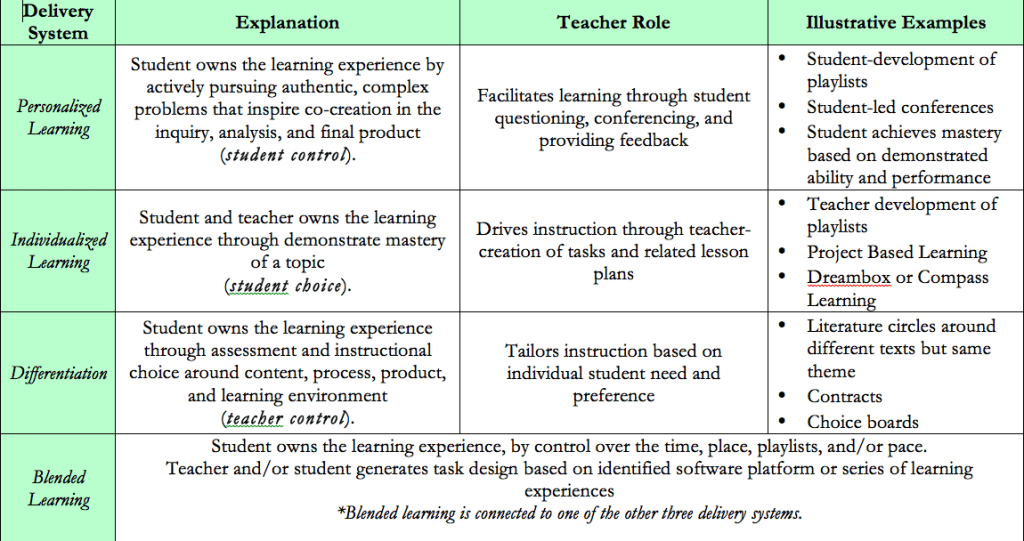
Personalized learning plans have emerged as a revolutionary approach to education, empowering students to take control of their learning journey and tailor their educational experiences to meet their unique needs and goals. This innovative method moves away from the traditional one-size-fits-all approach and emphasizes individualized instruction, allowing students to learn at their own pace, focus on areas of interest, and receive targeted support where needed.
At the heart of personalized learning plans is the recognition that every student is unique with different strengths, weaknesses, interests, and learning styles. By acknowledging these differences and designing customized plans for each student, educators can create a more engaging and effective learning experience that fosters academic growth and personal development.
One key feature of personalized learning plans is flexibility. Students are given the freedom to progress through the curriculum at a pace that suits them best. This means that they can move more quickly through material they grasp easily or spend extra time on challenging concepts without feeling rushed or held back by the pace of their peers. This flexibility allows students to take ownership of their learning process and build confidence in their abilities.
Another important aspect of personalized learning plans is individual goal setting. By working closely with teachers or mentors, students can identify specific academic or personal goals they want to achieve within a certain timeframe. These goals serve as benchmarks for progress and motivation for students to stay focused on their objectives. With clear goals in place, students are better able to track their own growth and celebrate achievements along the way.
In addition to setting goals, personalized learning plans often include regular assessments to measure student progress accurately. These assessments may take various forms such as quizzes, projects, presentations, or portfolios depending on the subject matter and student preferences. By collecting data on student performance regularly, educators can identify areas where additional support may be needed or adjust instructional strategies accordingly.
Adapting instruction based on assessment results is another critical component of personalized learning plans. If a student struggles with a particular concept or skill, teachers can provide targeted interventions such as extra practice opportunities, reteaching sessions, or alternative teaching methods until mastery is achieved. Similarly, if a student excels in certain areas, educators can offer advanced materials or enrichment activities to keep them challenged and engaged.
Technology plays a significant role in supporting personalized learning plans by providing access to online resources, interactive tools, adaptive software programs,and virtual classrooms that cater specifically to individual needs.Teachers also use digital platforms for tracking progress,assigning tasks,and facilitating communication between students,reducing administrative burdens,and enabling more meaningful interactions during face-to-face instructional time.The integration of technology enhances collaboration,fosters creativity,and promotes self-directed learningskills essential for successin today’s rapidly changing world.
Collaboration among stakeholders – including teachers,support staff,families,and even community members –is crucialfor implementing successfulpersonalizedlearningplans.Working together ensures alignmentof efforts,maximizes availableresources,and provides holistic supportforstudents’academicandsocial-emotionalgrowth.Parents play an especially vital role insupportingtheir children’spersonalizedlearningjourneysby staying informed about progress,prompting discussionsabout interestsandgoals,discussingeffectivelearningstrategiesat home,and advocatingforadditional supportsif necessary.Students themselvesalso needto be actively involvedin shapingtheir educational experiencesby reflectingontheir strengths,challengesoninterestsandengagingopenlywithteachersabouttheirprogressandneeds.Additionally,collaboratingwithpeerswithin smallgroupsettingsorproject-basedactivitiescanfosteracommunityof learnerswhoencourage,motivateandlearnfromone another
Ultimately,personalizedlearningplansare designedto empowerstudentsto become lifelonglearnerswhoare capableof criticalthinking,independentproblem-solving,self-regulation,resilienceandintrapreneurship.Suchapproachesnotonlypromoteacademicachievementbutalsodevelopessential21st-century skillsneededto thriveinadynamicandrapi changingworld.Byembracinginnovativeeducationalpracticesandplacingstudentsatthecenterofthelearningexperience,personalizedlearningplanslaythefoundationforequity,inclusivityandexcellenceinschoolsacrossdiversecommunitiesaroundtheworld.
 Alternative Amie
Leave a comment