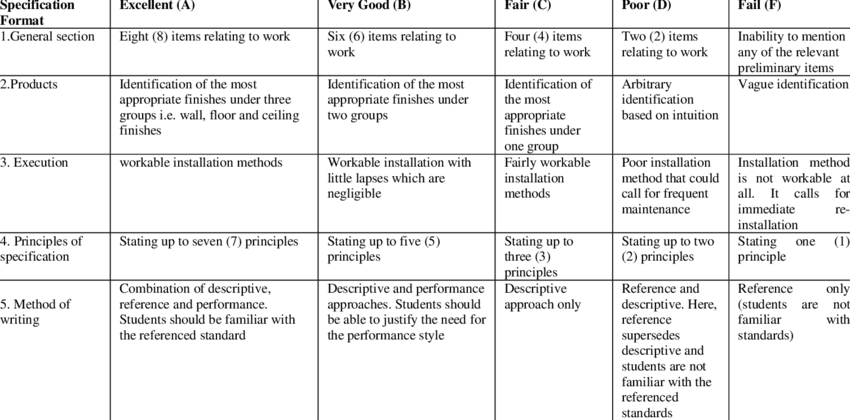
Rubrics are essential tools in alternative schooling and education settings to assess student performance against predetermined criteria. They provide a clear framework for both educators and students to understand expectations, evaluate progress, and communicate feedback effectively. By establishing specific criteria for success, rubrics help create a fair and consistent assessment process that fosters accountability and transparency.
One key advantage of using rubrics is their ability to make the grading process more objective. Instead of relying solely on subjective opinions or impressions, educators can base their evaluations on defined criteria that focus on the desired learning outcomes. This ensures that all students are assessed fairly based on their performance relative to established standards, reducing bias and promoting equity in the evaluation process.
Rubrics also serve as valuable instructional tools by outlining expectations upfront and guiding students in understanding what is required to succeed in a given task or assignment. By breaking down complex skills or concepts into manageable components, rubrics help clarify learning objectives and empower students to take ownership of their academic growth. Students can use rubrics as roadmaps for self-assessment, setting goals, tracking progress, and identifying areas for improvement.
In alternative schooling environments where personalized learning approaches are common, rubrics play a crucial role in supporting individualized instruction. By customizing assessment criteria to align with diverse student needs and abilities, educators can tailor feedback and interventions accordingly to meet learners where they are at in their educational journey. Rubrics enable teachers to differentiate instruction effectively by providing clear benchmarks for proficiency while allowing flexibility for accommodating various learning styles.
Furthermore, rubrics promote metacognitive skills development by encouraging students to reflect on their own work critically. When presented with clearly defined criteria for success, learners are prompted to evaluate their performance thoughtfully against those standards rather than merely focusing on grades or scores. This reflective practice cultivates higher-order thinking skills such as self-assessment, goal setting, problem-solving, and decision-making which are vital for lifelong learning success.
Effective rubrics feature well-defined descriptors that articulate different levels of achievement corresponding to varying degrees of competency or mastery within each criterion. These descriptors help make the assessment process more transparent by elaborating on what constitutes exemplary performance versus partial or inadequate execution of tasks. Clear language used in rubric descriptors facilitates meaningful communication between teachers and students regarding strengths and areas needing improvement without ambiguity.
When designing rubrics for alternative schooling contexts, it is crucial to involve stakeholders including educators, administrators, parents/guardians as well as students themselves in the development process. Collaborative input ensures that the criteria outlined reflect the values, priorities, and expectations unique to the school community while fostering buy-in from all parties involved in assessment practices. Additionally
 Alternative Amie
Leave a comment