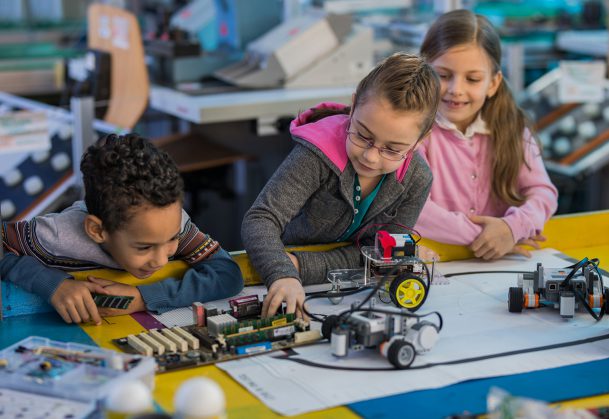
Project-based learning (PBL) is an educational approach that emphasizes hands-on, real-world experiences to engage students in deep learning. Through PBL, students work on projects that are relevant and meaningful to them, allowing them to develop critical thinking, problem-solving, collaboration, and communication skills. This approach encourages creativity and autonomy while fostering a sense of ownership over their learning.
Montessori education is based on the principles developed by Dr. Maria Montessori, emphasizing independence, freedom within limits, and respect for each child’s natural development. In Montessori classrooms, children learn at their own pace through self-directed activities with specially designed materials. This approach promotes a love for learning and encourages curiosity and exploration.
Outdoor education involves taking learning outside the traditional classroom setting and into nature. Students participate in activities such as hikes, camping trips, gardening, or environmental conservation projects to connect with the natural world. Outdoor education enhances physical well-being, fosters environmental stewardship, and promotes experiential learning opportunities.
Homeschooling resources provide parents with the tools they need to educate their children at home. These resources can include curricula guides, lesson plans, online courses, support groups, co-ops for socialization opportunities among homeschoolers. Homeschooling allows for personalized instruction tailored to each child’s unique learning style and interests.
Experiential learning focuses on hands-on experiences to help students make connections between theory and practice. By engaging in real-world tasks or simulations related to their studies or future careers., students deepen their understanding of concepts while developing practical skills applicable in various contexts.
The Reggio Emilia approach originated in Italy after World War II focuses on child-led inquiry-based learning using arts as a medium of expression.. Educators observe children’s interests then create curriculum plans around those interests.. The Reggio Emilia philosophy views children as capable learners who construct knowledge through interactions with others..
Unschooling philosophy advocates for letting children direct their own education based on their individual interests.. Unschooling can involve child-led explorations without formal lessons,, focusing instead on life experiences as valuable educational opportunities..
Waldorf education follows Rudolf Steiner’s teachings emphasizes holistic development by integrating academics,, arts,, music,, movement.. Waldorf schools aim to nurture creativity,, imagination,, critical thinking skills through a balanced curriculum focused not only intellectual growth but also emotional spiritual well-being..
Community-based learning connects classroom content with local community issues challenges promoting civic engagement social responsibility among students., By collaborating with community organizations businesses., schools create authentic meaningful opportunities for students apply academic knowledge solve real-world problems..
Social-emotional learning (SEL) teaches skills like self-awareness empathy conflict resolution enhance student’s emotional intelligence interpersonal relationships., SEL programs promote positive school climate reduce behavioral issues increase academic achievement creating supportive environments where all learners thrive..
Place-based education immerses students into local environment cultural heritage connecting classroom lessons directly regional landmarks ecosystems communities., By grounding teaching place-specific context educators help foster sense belonging appreciation local surroundings develop environmentally conscious citizens..
Self-directed learning empowers students take control own educational journey set goals pursue passions independently guided mentors teachers., Self-directed learners cultivate time management discipline intrinsic motivation essential lifelong success both academia beyond graduation.
Dual language immersion programs offer instruction two languages typically starting early elementary grades continuing throughout schooling,. Immersion program aims bilingualism biliteracy multicultural understanding preparing students succeed diverse global society,.
STEAM (Science Technology Engineering Arts Mathematics) Education integrates these disciplines encourage interdisciplinary problem-solving innovation creative thinking.. STEAM programs often incorporate project-based experiential approaches engage inspire learners develop 21st-century skills demanded modern workforce,.
Special needs education provides tailored support accommodations meet diverse needs exceptional learners including disabilities developmental delays,. Specialized educators therapists work collaboratively families create individualized plans ensure every student reaches full potential thrives academically socially emotionally,.
Cooperative Learning nurtures collaborative skill-building group settings where small teams work together achieve common goal,. Cooperative structures like think-pair-share jigsaw method encourage peer teaching constructive interaction fostering teamwork communication abilities among participants,.
Culturally responsive teaching recognizes values diversity considers cultural backgrounds perspectives designing delivering instruction equitably effectively all students regardless ethnic racial linguistic backgrounds,. Culturally responsive educators strive build inclusive classrooms celebrate differences empower marginalized voices creating safe welcoming spaces conducive optimal academic social growth,
Mindfulness Education incorporates practices promote present-moment awareness stress reduction emotional regulation enhance overall well-being individuals., Mindfulness techniques breathing exercises meditation incorporated daily routines lessons cultivating mindfulness habits beneficial long-term mental health resilience,
Inquiry-Based Learning shifts focus teacher-centered approaches learner-driven investigations questions exploration discovery encouraging curiosity critical thinking information processing analytical reasoning empowering student agency deeper understanding topics concepts taught,
Gifted talented programs cater high-achieving advanced learners providing enriched accelerated curricula special services address cognitive socio-emotional needs gifted population,. Gifted talented programming offers challenging stimulating environments foster intellectual growth talent development ensuring gifted individuals receive appropriate support maximize potentials.
In conclusion Alternative Schooling Education website features variety innovative approaches methods cater diverse needs preferences learners providing comprehensive resource guide navigate alternative educational options effectively choose best fit individual circumstances preferences goal ultimately enhancing quality educational experience promoting lifelong love continuous Learn grow explore discover embrace possibilities alternative schooling bring!
 Alternative Amie
Leave a comment