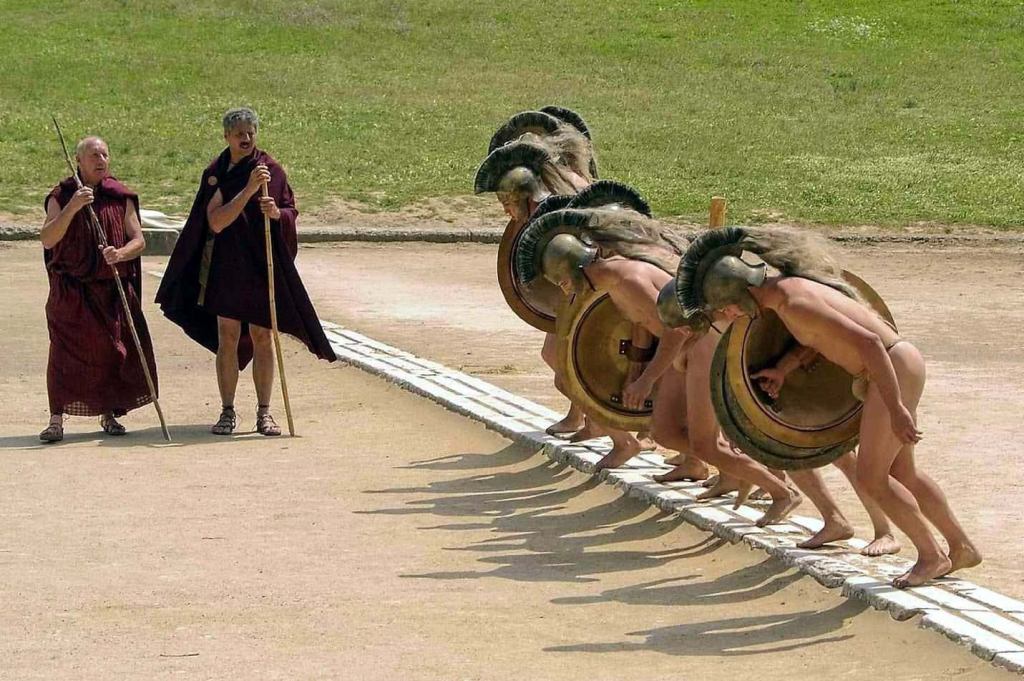
The Ancient Olympic Games: A Glimpse into the Past
Education is not just confined to classrooms or textbooks; sometimes, it can be found in the most unexpected places. One such place where education thrived was in ancient Greece, with the birth of the Olympic Games. These games were more than just a sporting event; they were a celebration of human strength and competition. In this post, we will explore the fascinating world of the Ancient Olympic Games and how they contributed to alternative forms of education.
1. Origins and Evolution
Dating back to 776 BCE, the Ancient Olympic Games took place every four years in Olympia, Greece. The origins of these games are rooted in mythology, as they were believed to have been established by Heracles (Hercules in Roman mythology). Initially, only one event was held: a simple footrace called “stade.” However, over time, new events were introduced, including wrestling, chariot racing, discus throwing, javelin throwing, boxing, and equestrian events.
2. The Spirit of Competition
The Ancient Olympics emphasized not only physical prowess but also mental strength and sportsmanship. Participants had to swear an oath that they would obey all rules and compete fairly without cheating or bribery. This emphasis on fair play provided valuable lessons about integrity and ethics.
3. The Athletes’ Preparation
Athletes preparing for the Olympics underwent rigorous training regimes lasting months or even years before their participation. They trained both physically and mentally under skilled trainers who guided them through exercises focused on endurance training as well as developing specific skills required for each event.
4. Education Beyond Athletics
While athletics played a central role at the Olympics, other aspects of Greek culture were also celebrated during this time. Alongside athletic competitions ran musical contests featuring singing and playing instruments like lyres or flutes – showcasing another form of education through music.
5. Cultural Exchange
The Olympics served as a meeting point for people from various Greek city-states, fostering cultural exchange and understanding. Athletes, spectators, poets, and philosophers gathered at Olympia to witness the games and engage in intellectual discussions. This cross-cultural interaction contributed to the spread of knowledge and alternative forms of education.
6. Women at the Olympics
Contrary to what one might assume about ancient times, women played a crucial role in the Olympic Games. While they were not allowed to compete as athletes due to societal norms, they had their own event called Heraea Games – dedicated solely to female participants. These games provided an opportunity for young girls to showcase their skills in footraces.
7. The Olympic Truce
To ensure peace during the games, a truce known as “Ekecheiria” was declared among all participating Greek city-states. This diplomatic initiative allowed athletes and spectators alike safe passage through potentially hostile territories while attending the Olympics.
8. The Role of Religion
The Ancient Greeks believed that physical strength was closely tied to spirituality; thus, religious rituals were an integral part of the Olympic Games. Participants would offer sacrifices before competing in honor of Zeus, king of gods and patron deity of Olympia.
9. Panhellenic Unity
Apart from promoting individual excellence, the Olympics aimed to foster unity among Greek city-states under a shared identity: Hellenism or being Greek (“Hellas”). This sense of belonging helped create a broader narrative beyond local rivalries and conflicts – teaching valuable lessons about harmony and cooperation.
10. Legacy
The Ancient Olympic Games lasted for over 1000 years until their decline due to political instability within Greece and eventually came to an end when Emperor Theodosius I banned them in 393 CE for their pagan associations.
Although these particular games ceased long ago, they left behind a legacy that continues today with modern-day Olympic Games held every four years since 1896 – reviving some aspects like international competition but with a contemporary twist.
The Ancient Olympic Games were not just about athletics; they were an embodiment of education, cultural exchange, and moral values. They offered an alternative form of education for the ancient Greeks, teaching them about integrity, discipline, and unity. By exploring these games today, we can learn valuable lessons about history and appreciate how alternative forms of education can shape societies throughout time.
 Alternative Amie
Leave a comment