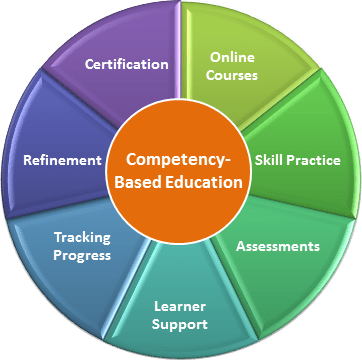
Competency-based education (CBE) is an innovative approach to teaching and learning that focuses on students’ mastery of specific skills and knowledge rather than traditional measures such as seat time or grades. This approach has gained popularity in recent years, especially in career and technical fields, as it allows students to acquire the necessary skills for their chosen professions.
One key aspect of CBE is the use of competency frameworks and standards development. These frameworks outline the specific competencies that students need to demonstrate in order to progress through their education or training programs. By clearly defining these competencies, educators can design targeted instruction and assessments that help students develop the skills they need for success.
Parent and community engagement also play a crucial role in competency-based schools. In these schools, parents are seen as essential partners in their children’s education journey. They are encouraged to actively participate in setting goals, monitoring progress, and providing support at home. Community members, including local businesses and organizations, may also be involved by offering internships or real-world learning opportunities that align with the competencies being taught.
Transitioning from traditional models of education to CBE can be challenging but rewarding. It requires a shift in mindset among both educators and students towards focusing on mastery rather than completion. Teachers must become facilitators of learning rather than deliverers of content alone. Students must take ownership of their learning journey and understand how to set goals, track progress, and self-assess.
Some challenges and barriers exist when implementing CBE. These include resistance from stakeholders who are accustomed to traditional educational models, concerns about standardization versus individualization, lack of resources or infrastructure needed for personalized instruction, as well as assessment strategies that accurately measure competency attainment.
Research on the effectiveness of CBE approaches is still ongoing but shows promising results thus far. Studies have found positive outcomes related to student engagement, motivation, skill acquisition, retention rates,and successful transitions into careers or higher education.
In order to create culturally responsive practices within competency-based classrooms, educators must recognize and value the diverse backgrounds, experiences, and perspectives of their students. They should strive to incorporate culturally relevant materials and teaching strategies that resonate with their learners.
Lastly, collaborative learning environments are critical in CBE schools. Students have opportunities to work together on projects, solve problems collectively, and engage in peer-to-peer feedback. These environments foster collaboration, communication, critical thinking skills,and prepare students for teamwork in real-world settings.
In conclusion, competency-based education offers a unique approach to teaching and learning by focusing on mastery rather than traditional measures of success. It is particularly effective in career and technical fields where specific skills are essential for professional success. However, implementing CBE comes with its challenges such as resistance to change or lack of resources. Nevertheless,the benefits of this approach including increased student engagement,motivation,and skill acquisition make it worth exploring further.
 Alternative Amie
Leave a comment