Learning Styles and Preferences: Understanding How Children Learn Best
Introduction:
Education is not a one-size-fits-all approach. Each child is unique, with their own individual strengths, weaknesses, and learning preferences. Traditional schooling methods often fail to cater to the diverse needs of students, leading many parents to explore alternative approaches that align with their child’s learning style. In this article, we will delve into the concept of learning styles and preferences and discuss how understanding them can shape more effective educational practices.
What are Learning Styles?
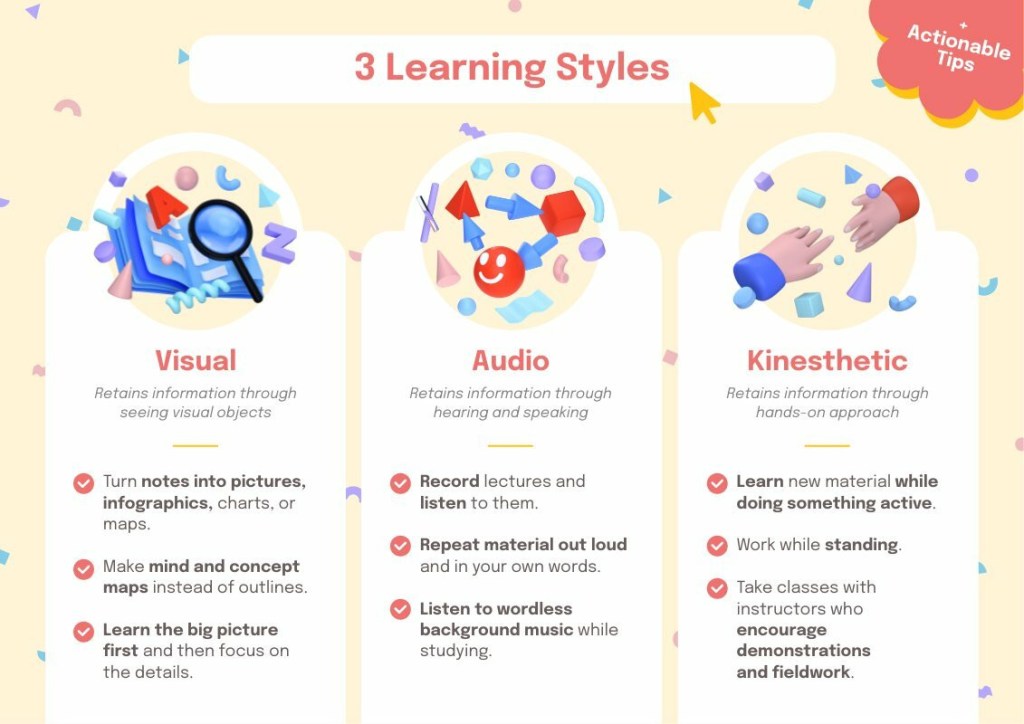
Learning styles refer to the different ways individuals prefer to learn new information or skills. While there are various theories surrounding learning styles, one popular model categorizes learners into three main types: visual learners, auditory learners, and kinesthetic learners.
Visual Learners:
Visual learners comprehend information best through visual aids such as charts, graphs, diagrams, images, or videos. They have a strong preference for seeing information presented in a visually appealing manner. Visual learners benefit from using color-coded notes or flashcards while studying and may find it helpful to draw pictures or create mind maps when trying to understand complex concepts.
Auditory Learners:
Auditory learners process information most effectively through hearing it spoken aloud or engaging in discussions with others. These individuals have an innate ability to absorb knowledge by listening attentively and retaining verbal instructions easily. Auditory learners excel at lectures or audiobooks but might struggle when faced with heavy reliance on written material alone.
Kinesthetic Learners:
Kinesthetic (or tactile) learners grasp new concepts by physically experiencing them through hands-on activities or movement-based exercises. These children thrive in environments where they can engage in role-playing scenarios or participate in interactive experiments that allow them to touch and manipulate objects directly.
Understanding Multiple Intelligences:
While the concept of learning styles has gained popularity over time, critics argue that it oversimplifies the complexity of human cognition. An alternative approach introduced by Howard Gardner suggests that individuals possess multiple intelligences, each allowing them to excel in different areas.
Gardner’s theory of multiple intelligences identifies eight distinct types: linguistic, logical-mathematical, spatial, musical, bodily-kinesthetic, interpersonal, intrapersonal, and naturalistic. According to this theory, educators should embrace a holistic approach that incorporates various teaching methods to accommodate the diverse range of intelligences present within a classroom.
Personalized Learning:
Recognizing and accommodating students’ learning styles or multiple intelligences is at the heart of personalized learning. Personalized learning tailors educational experiences to suit individual needs and preferences. It allows children to explore topics they are passionate about while providing support in areas where they may struggle.
In a personalized learning environment, teachers act as facilitators rather than mere disseminators of information. They work closely with students to develop customized learning plans that consider their unique strengths and weaknesses. Technology plays an integral role in personalized education by providing access to resources tailored to each student’s specific requirements.
The Benefits of Understanding Learning Styles:
1. Increased Engagement: When students learn through methods aligned with their preferences or intelligence type, they tend to be more engaged and motivated in the educational process.
2. Enhanced Retention: By presenting information using techniques that resonate with individual learners’ preferred style or intelligence type (e.g., visual aids for visual learners), retention levels improve significantly.
3. Improved Problem-Solving: Students who are exposed to diverse teaching strategies develop a broader range of problem-solving skills since they have experienced different ways of approaching challenges.
4. Boosted Self-Esteem: Recognizing and validating students’ unique strengths can help build their self-esteem and confidence by showing them that their abilities are valued even if they differ from conventional norms.
5. Fostering Collaboration: A classroom that embraces diverse learning styles promotes collaboration among peers as students discover how others approach tasks differently from themselves.
Challenges in Implementing Learning Styles:
While understanding learning styles has its advantages, it is crucial to acknowledge the challenges associated with implementing this approach.
1. Identifying Individual Preferences: It can be challenging for educators to accurately identify and cater to each student’s learning style or multiple intelligences within a limited timeframe.
2. Fluidity of Preferences: Learning preferences might change over time as students grow and develop. What works for them now may not be effective in the future, requiring constant adaptation by educators.
3. Balancing Approaches: With diverse classrooms, finding a balance between catering to individual needs while maintaining a cohesive learning environment can be complex and requires skilled teaching strategies.
Conclusion:
Recognizing that children have different learning styles and preferences is crucial for creating effective educational experiences. By acknowledging these differences, parents and educators can provide personalized instruction that enhances engagement, retention, problem-solving skills, self-esteem, and collaboration among students. While there are challenges associated with implementing tailored approaches in classrooms, embracing diversity in learning styles ultimately benefits all individuals involved in the educational process – leading to more enriched outcomes for learners everywhere.
 Alternative Amie
Leave a comment