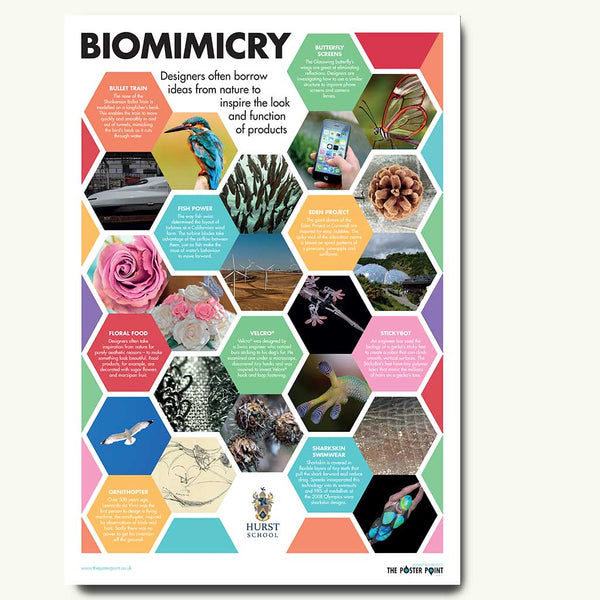
1. Biomimicry in Engineering Education:
Biomimicry is the practice of drawing inspiration from nature to solve engineering problems and design innovative solutions. Integrating biomimicry principles into engineering education can provide students with a unique perspective, encouraging them to think creatively and apply biological concepts to real-world challenges.
Incorporating biomimicry into engineering curriculum can involve studying natural structures, systems, and processes and then applying those principles to design more efficient and sustainable technologies. For example, learning about the structure of bird wings can inspire the development of more aerodynamic aircraft designs. Similarly, understanding how lotus leaves repel water can lead to the creation of self-cleaning surfaces.
By incorporating biomimicry in engineering education, students not only gain technical skills but also develop an appreciation for nature’s ingenuity. They learn to observe and analyze natural phenomena critically, fostering a sense of curiosity and problem-solving mindset.
2. The Role of Art in Computer Science Curriculum:
Computer science is often viewed as a purely technical field without much room for creativity or artistic expression. However, integrating art into computer science curriculum can enhance students’ understanding and engagement with programming concepts.
Artistic elements such as visual design, animation, and interactive interfaces play a crucial role in user experience (UX) design – a growing field within computer science that focuses on creating intuitive software interfaces. By teaching students about the principles of graphic design and aesthetics alongside coding skills, they are better equipped to develop visually appealing applications that are both functional and visually pleasing.
Moreover, art-based projects allow students to explore their creativity while developing computational thinking skills. For instance, asking students to create digital artwork using coding languages like Processing or Python encourages them to experiment with algorithms while expressing themselves artistically.
Integrating art into computer science curriculum also helps bridge the gender gap often seen in technology-related fields by making it more accessible and appealing across different interests.
3. Integrating Music Theory into Mathematics Lessons:
The connection between music and mathematics has long been recognized, with both disciplines relying heavily on patterns, ratios, and logical reasoning. By integrating music theory into mathematics lessons, educators can enhance students’ understanding of mathematical concepts while fostering their musical abilities.
Studying the mathematical principles behind music can help students grasp abstract mathematical ideas more easily. For example, learning about fractions and ratios in the context of musical notes and rhythms provides a tangible application for these concepts.
Additionally, exploring the relationships between different musical scales or chords introduces students to algebraic thinking by examining patterns and formulas. This interdisciplinary approach also helps develop critical-thinking skills as students analyze how different mathematical concepts manifest themselves in music.
Integrating music theory into mathematics lessons not only enhances students’ comprehension but also encourages creativity and self-expression. It allows them to explore their musical talents while deepening their understanding of mathematical principles.
Overall, integrating various disciplines into traditional subjects brings relevance and excitement to education. By incorporating elements from art, history, design, or other fields within STEM subjects (science, technology, engineering, mathematics), educators can create a well-rounded curriculum that fosters creativity and critical thinking among students.
 Alternative Amie
Leave a comment