Project-based learning is a teaching method that emphasizes real-world problem-solving and hands-on experiences. It allows students to engage in deep learning by working on projects that are meaningful and relevant to them. This approach encourages collaboration, critical thinking, creativity, and communication skills.
Research has shown that project-based learning can have numerous benefits for students. A study conducted by the Buck Institute for Education found that students who engaged in project-based learning had higher levels of engagement, higher achievement scores, improved problem-solving skills, and better retention of information compared to traditional classroom instruction.
Design thinking is another approach used in STEAM education. It involves a structured process of problem-solving that focuses on empathy, ideation, prototyping, testing, and iteration. Design thinking encourages students to think creatively and develop innovative solutions to real-world problems.
A study published in the Journal of Engineering Education found that design thinking can improve student motivation and engagement with STEM subjects. Students who participated in design thinking activities showed increased interest in engineering careers and were more likely to pursue advanced STEM courses.
Robotics and coding are essential components of STEAM education as they teach computational thinking skills while also promoting creativity and problem-solving abilities. Learning robotics helps students understand how technology works through hands-on experimentation with building robots or programming them to perform specific tasks.
Coding has become increasingly important in today’s digital age as it empowers individuals to create their own software applications or websites. Research has shown that coding can enhance cognitive skills such as logical reasoning, analytical thinking, pattern recognition, and algorithmic understanding.
Sustainable engineering is an emerging field within STEAM education focused on finding environmentally-friendly solutions to various engineering challenges. By integrating principles of sustainability into engineering practices, students learn how technology can be used responsibly without harming the planet.
Art integration in STEM (STEAM) is an interdisciplinary approach that combines arts with science, technology, engineering, and mathematics subjects. This integration recognizes the value of creativity in scientific and technical fields. By incorporating art into STEM education, students develop a deeper understanding of complex concepts, enhance their problem-solving skills, and foster innovation.
Virtual reality (VR) has gained popularity in recent years as an educational tool that provides immersive learning experiences. VR allows students to explore virtual environments and interact with objects or phenomena that would otherwise be inaccessible or too dangerous to experience in real life. Research suggests that VR can improve student engagement, motivation, and knowledge retention.
Gamification is the use of game elements in non-game contexts such as education. In the context of STEAM education, gamification aims to make learning more enjoyable and engaging by integrating game mechanics like challenges, rewards, leaderboards, and levels into educational activities. Gamification has been shown to increase student motivation and participation while enhancing learning outcomes.
Outdoor STEAM activities take learning outside the classroom by providing hands-on experiences in natural environments. These activities encourage exploration, observation, experimentation, critical thinking, and creativity. Outdoor STEAM activities have been found to promote environmental awareness and appreciation while fostering a sense of curiosity about the natural world.
Bioengineering and biotechnology involve applying engineering principles to biological systems for various purposes such as medical advancements or sustainable agriculture. Bioengineering projects allow students to develop an understanding of how living organisms function while also promoting critical thinking skills related to ethical considerations surrounding these technologies.
Renewable energy exploration focuses on teaching students about sustainable energy sources like solar power, wind energy, hydroelectric power generation through hands-on experiments or simulations. This field helps create awareness regarding climate change issues while encouraging innovative solutions for future energy needs.
STEAM career exploration introduces students to various careers within science, technology,
engineering arts/design,and mathematics fields.
This exposure allows them
to understand different opportunities available
and gain insights into required skill sets
and qualifications
for these professions.
It can inspire them
to pursue further studies or careers
in these areas,
providing a clear pathway
for their future.
3D printing in the classroom is an emerging practice that allows students to turn their digital designs into physical objects. This technology enables students to create prototypes, test ideas, and bring their imaginations to life. 3D printing fosters creativity, problem-solving, and critical thinking skills while also introducing students to the world of manufacturing and design.
Augmented reality (AR) applications in education enhance traditional learning experiences by overlaying virtual information onto real-world surroundings. AR can provide interactive visualizations of complex concepts or historical events, making them more accessible and engaging for students. Research suggests that AR can improve student understanding, motivation, and retention of information.
Mathematical art and patterns combine mathematics with artistic expression. Students explore mathematical concepts like symmetry, geometry, fractals through creating visually appealing artwork or patterns. This interdisciplinary approach helps students develop a deeper understanding of mathematical principles while fostering creativity and aesthetic appreciation.
Environmental science experiments involve hands-on activities that focus on studying various aspects of the natural environment such as water quality testing,
pollution monitoring,
or biodiversity surveys.
These experiments help
students gain practical knowledge
about environmental issues,
scientific methodologies,
and data collection techniques.
It also encourages them
to become environmentally conscious citizens.
STEAM toys and kits are designed to facilitate hands-on learning experiences at home or in classrooms. These educational resources provide children with opportunities for exploration,
problem-solving,
critical thinking,
and creativity.
By engaging with STEAM toys
and kits,
students can develop foundational skills
in science,
technology engineering arts/design,and mathematics fields while having fun.
Music technology involves using digital tools for music composition production recording processing mixing mastering distribution or performance purposes
Students learn about audio engineering sound synthesis music theory software instruments MIDI sequencing digital audio workstations (DAWs) among other topics
Astronomy and space exploration introduce students to the wonders of our universe through observation experimentation simulations or even telescope use This field helps students develop scientific inquiry skills and learn about celestial objects planetary systems and the history of space exploration
Health sciences and anatomy studies allow students to explore the human body through dissections models or virtual simulations This field provides a foundation for understanding how the body functions its structures organs systems and diseases thus fostering an interest in medical professions or biological research
Data visualization and analysis are essential skills in today’s data-driven world Students learn how to collect analyze interpret present complex datasets using various tools like spreadsheets graphs charts visualizations These skills enable them to make informed decisions communicate effectively with data or identify patterns trends associations
STEAM challenges and competitions provide opportunities for students to apply their knowledge skills creativity problem-solving abilities real-world situations Challenges can range from building structures designing experiments creating inventions solving math problems participating robotics coding contests Competitions foster collaboration teamwork resilience perseverance while motivating students excel areas STEM
Coding for social impact focuses on teaching students how to use their coding programming skills tackle societal issues create positive change projects involve developing applications websites software address specific problems poverty environmental sustainability education accessibility healthcare By applying coding solve real-world problems students become aware potential technology making difference lives others communities
Engineering design challenges require students think like engineers solve given problems limitations constraints They engage hands-on activities such building bridges designing vehicles constructing towers These challenges encourage critical thinking teamwork innovation problem-solving while allowing practical application engineering principles concepts
Digital storytelling media production integrate technology creative expression Students use multimedia tools create stories movies animations presentations Digital storytelling enhances communication skills empowers individuals share narratives ideas perspectives promotes digital literacy creativity
Chemistry experiments reactions offer hands-on experiences studying properties matter chemical processes Students conduct experiments understand concepts atomic structure bonding energy changes kinetics equilibrium acid-base reactions oxidation-reduction food chemistry among others Chemistry experiments develop laboratory safety data analysis critical thinking observational skill sets required fields science
Mathematics through puzzles games introduces mathematical concepts engaging interactive ways Puzzles games stimulate logical reasoning spatial visualization problem-solving abilities strategic thinking number sense geometry algebra probability statistics Students learn through playful challenging activities foster love mathematics
Architecture urban planning projects allow students explore principles design aesthetics functionality structures communities They engage hands-on activities designing buildings creating models planning cities These projects develop spatial awareness creativity critical thinking skills while introducing concepts engineering construction sustainability
Electronics involve the study application electrical circuits components devices Electronics education teaches fundamentals voltage current resistance circuit analysis design Students learn build circuits troubleshoot problems hands-on experiments making connections physical world technology
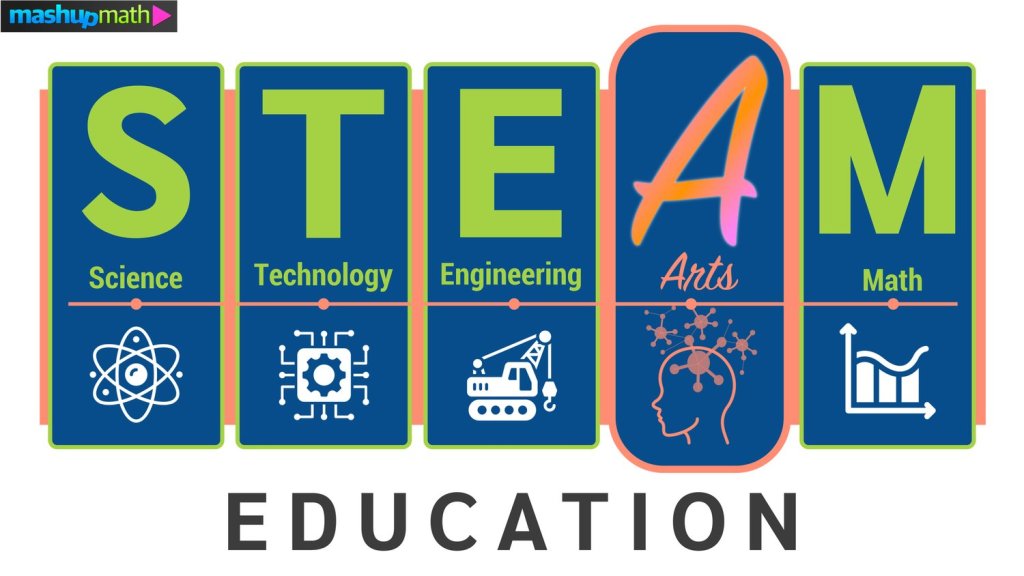
In conclusion, STEAM education encompasses a wide range of subtopics that provide students with opportunities to engage in hands-on, real-world learning experiences. Project-based learning, design thinking, robotics and coding, sustainable engineering, art integration in STEM, virtual reality applications in education, gamification of learning are just some examples of these subtopics. By incorporating these approaches into curriculum and providing access to resources like 3D printing or AR applications, educators can foster creativity,
critical thinking,
collaboration,
and innovation among students.
Furthermore,
STEAM education introduces students
to various fields and career opportunities
related to science,
technology,
engineering arts/design,and mathematics.
This exposure helps them make informed decisions about their future studies
and potentially inspires them
to pursue careers that contribute positively to society.
 Alternative Amie
Leave a comment