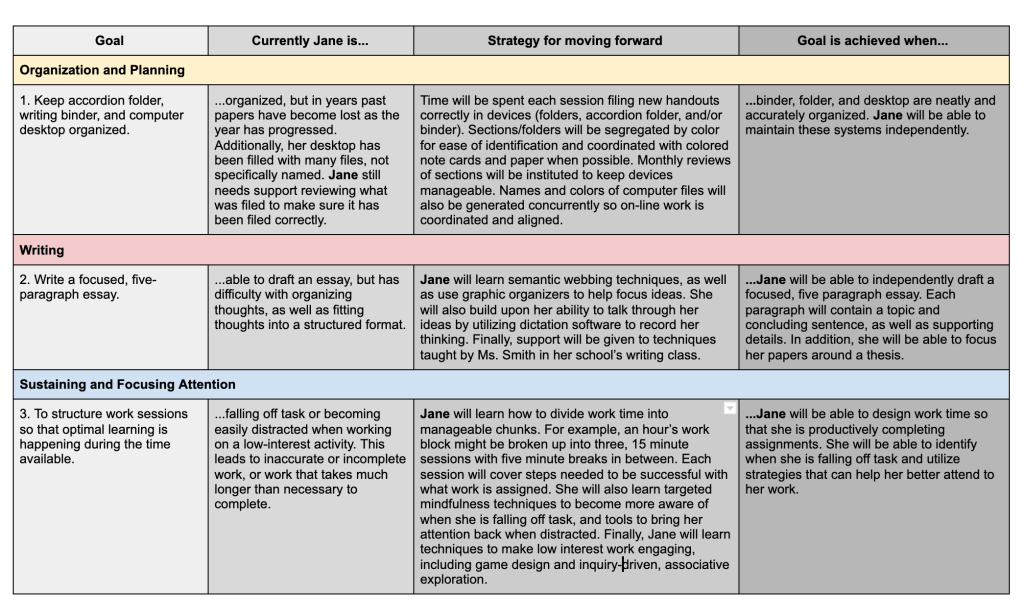
Personalized learning plans have gained significant attention in recent years as a way to meet the diverse needs of students. This approach recognizes that each student has unique strengths, interests, and areas for growth, and aims to tailor their educational experience accordingly. By creating personalized learning plans, educators can provide targeted instruction and support to help students reach their full potential.
One of the key components of personalized learning plans is mastery-based grading. Instead of focusing solely on grades or test scores, this approach emphasizes students’ understanding and mastery of specific skills or concepts. Students are given multiple opportunities to demonstrate their knowledge and are assessed based on their ability to apply what they have learned in real-world contexts.
To facilitate personalized learning, individualized instruction is crucial. This means that teachers need to be able to differentiate their teaching strategies and materials to accommodate different learning styles, abilities, and interests. By tailoring instruction to the specific needs of each student, educators can ensure that all learners are actively engaged and making progress.
Project-based assessments are another important aspect of personalized learning plans. These assessments allow students to showcase their skills by completing real-world projects or tasks rather than traditional tests or quizzes. By engaging in hands-on activities that require critical thinking and problem-solving skills, students develop a deeper understanding of the content while also building valuable 21st-century skills such as collaboration and communication.
Competency-based curriculum design goes hand-in-hand with personalized learning plans by providing clear expectations for what students should know and be able to do at each stage of their education. Instead of progressing through grade levels based on time spent in school, competency-based education focuses on ensuring that students have mastered essential competencies before moving on.
Flexible pacing and scheduling also play a vital role in supporting personalized learning plans. Some students may need more time or additional support to master certain concepts while others may excel at a faster pace. By allowing for flexibility in how quickly or slowly students progress through the curriculum, educators can ensure that each learner is challenged and supported appropriately.
Authentic assessments are an integral part of personalized learning plans as they provide students with opportunities to apply their knowledge and skills in real-world contexts. These assessments may take the form of presentations, portfolios, or performances, allowing students to demonstrate their understanding in meaningful ways.
To implement personalized learning effectively, teachers must receive competency-based training and professional development. This ensures that educators have the necessary skills and knowledge to design personalized learning plans, differentiate instruction, assess student progress accurately, and use data to inform instructional decisions.
Student portfolios and exhibitions of learning serve as valuable tools for documenting student growth over time. By compiling a collection of their best work and reflecting on their achievements, students develop metacognitive skills while also showcasing their abilities to others.
Competency-based assessment rubrics provide clear criteria for evaluating student performance. These rubrics outline specific expectations for each competency or skill area being assessed, helping both teachers and students understand what constitutes proficiency.
Differentiated instruction within competency-based education recognizes that learners have diverse needs. By tailoring instruction based on individual strengths, interests, readiness levels, or learning styles, educators can effectively meet the unique needs of each student.
It is essential to ensure that all learners benefit from personalized approaches to education. Competency-based education should be inclusive and accessible for students with special needs by providing appropriate accommodations or modifications tailored to individual requirements.
Integrating technology into competency-based classrooms enhances teaching and learning experiences. Technology tools can support personalized instruction through adaptive software programs or online resources tailored to individual needs. Additionally, technology facilitates communication between teachers and students while promoting collaboration among peers.
Parental involvement plays a crucial role in supporting competency-based education. Parents can actively participate in setting goals with their children, reviewing progress reports or portfolios together regularly, attending parent-teacher conferences focused on competencies rather than grades alone – fostering a strong home-school partnership centered around personalized learning plans.
Social-emotional learning (SEL) is an essential component of competency-based schooling. By focusing on the development of skills such as self-awareness, self-management, social awareness, relationship skills, and responsible decision-making, educators can support students’ overall well-being and success.
Competency-based education is not limited to traditional K-12 settings; it also has great potential for adult learners. By allowing adults to progress at their own pace and earn credentials based on demonstrated competencies rather than time spent in a classroom, competency-based education offers flexible pathways for career advancement or personal enrichment.
Collaborative learning opportunities within competency-based classrooms foster peer interaction and teamwork. Students can engage in group projects or activities that require cooperation while developing communication and problem-solving skills.
Assessing higher-order thinking skills is a critical aspect of competency-based education. While traditional assessments may focus primarily on rote memorization or recall, competency-based approaches emphasize complex thinking processes such as analysis, synthesis, evaluation – providing a more authentic measure of student understanding.
Competency mapping and progress tracking enable educators to monitor individual student growth systematically. By identifying specific competencies required at each grade level or stage of learning and tracking students’ progress towards mastery over time, educators can provide targeted interventions or additional support when needed.
Implementing competency-based education at the district level requires thoughtful planning and collaboration among administrators, teachers, parents, and community stakeholders. This systemic approach ensures consistent implementation across schools while addressing any challenges or barriers that may arise during the transition process.
Equity and access are significant considerations in competency-based schooling. To ensure that all students have equal opportunities for personalized learning plans regardless of their background or circumstances, schools must actively address structural inequities and provide necessary resources for success.
Teacher-student relationships play a pivotal role in promoting engagement and motivation within competency-based classrooms. When teachers develop strong connections with their students based on trust, respect, care – students feel valued as individuals and are more likely to take ownership of their learning.
Supporting student motivation and engagement is essential in competency-based education. By providing students with meaningful learning experiences, choice, and opportunities for self-direction, educators can foster intrinsic motivation while promoting a love for lifelong learning.
Cultural responsiveness within competency-based schools recognizes the diverse backgrounds and experiences of students. Educators must incorporate culturally relevant materials, perspectives, and instructional strategies that affirm students’ identities while promoting inclusivity.
Transitioning from traditional models of education to competency-based approaches requires careful planning and support. Schools need to provide professional development opportunities for teachers, engage stakeholders in the process, communicate effectively with parents, and ensure a smooth transition for all involved parties.
In conclusion, personalized learning plans have the potential to revolutionize education by tailoring instruction to meet individual student needs. By incorporating mastery-based grading, individualized instruction, project-based assessments, flexible pacing and scheduling, authentic assessments, teacher training and professional development on competency-based education principles – we can create an educational system that supports each learner’s unique journey towards success. Whether implemented at the district level or focused on specific populations such as adult learners or students with special needs – competency-based education holds promise for creating equitable access to high-quality education that prepares students for a rapidly changing world.
 Alternative Amie
Leave a comment