Introduction
In traditional education, students are often expected to learn through reading textbooks, listening to lectures, and completing written assignments. However, this approach may not cater to the needs of all learners. Tactile learning is an alternative method that encourages students to engage their sense of touch in order to enhance their understanding and retention of information. In this article, we will explore the benefits of tactile learning and provide practical tips for incorporating it into your educational practices.
Understanding Tactile Learning
Tactile learning, also known as kinesthetic learning or hands-on learning, emphasizes physical activities that allow learners to touch, manipulate, and interact with objects or materials related to the subject matter. This style of learning can be particularly beneficial for individuals who have a preference for physical engagement or struggle with traditional teaching methods.
Benefits of Tactile Learning
1. Enhanced Engagement: One major advantage of tactile learning is its ability to increase student engagement by making lessons more interactive and dynamic. When students actively participate in hands-on activities, they become more invested in the learning process and are less likely to lose focus or become disinterested.
2. Improved Retention: Research has shown that engaging multiple senses simultaneously enhances memory retention. By involving touch in the learning experience, students can better encode information into long-term memory and recall it when needed.
3. Reinforced Conceptual Understanding: Hands-on activities give learners the opportunity to explore abstract concepts through concrete experiences. This allows them to develop a deeper understanding by connecting theoretical knowledge with real-world applications.
4. Developmental Growth: Tactile learning promotes fine motor skills development as students manipulate various objects during hands-on activities such as building models or conducting science experiments. These skills are not only essential for academic success but also contribute positively towards overall cognitive development.
Practical Tips for Incorporating Tactile Learning
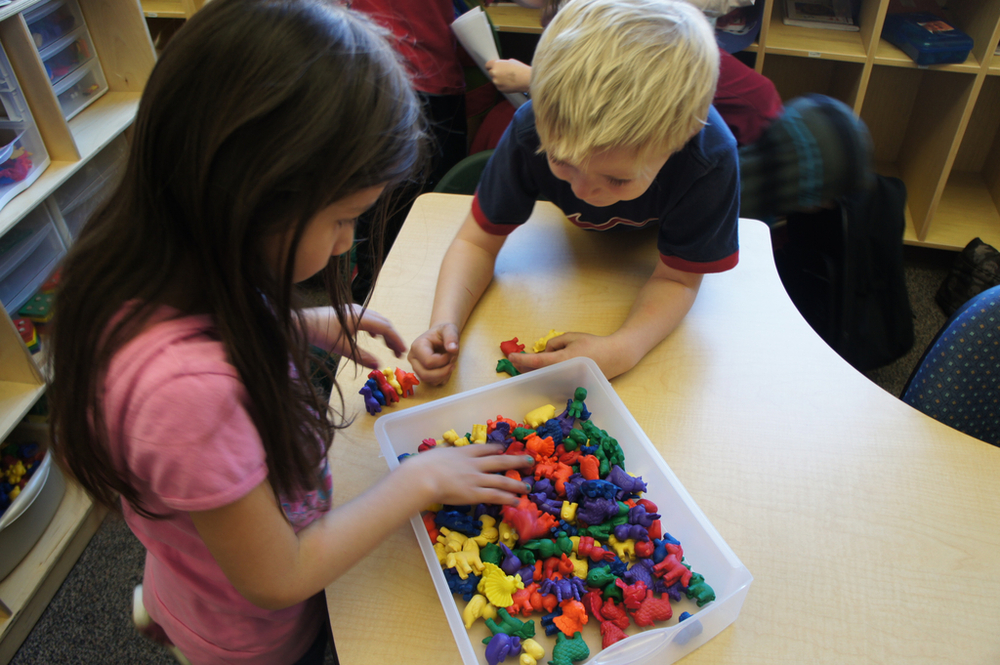
1. Manipulatives: Introduce manipulatives like blocks, counting beads, fraction tiles, or tangrams to teach mathematical concepts. These physical objects provide a tangible representation of abstract ideas, making them easier for students to comprehend and manipulate.
2. Experiments and Demonstrations: Science subjects can greatly benefit from hands-on experiments and demonstrations. Encourage students to actively participate in laboratory activities, such as mixing chemicals or exploring the properties of different materials. This allows them to observe firsthand the cause-and-effect relationships within scientific principles.
3. Role-Play and Simulation: Use role-play scenarios or simulations to engage students in social studies or language arts lessons. By embodying historical figures or fictional characters, students can gain a deeper understanding of their motivations, experiences, and perspectives.
4. Arts and Crafts: Incorporate art projects into various subjects to encourage creativity while reinforcing learning objectives. For example, creating dioramas can help bring history alive while designing visual representations of scientific concepts aids conceptualization.
5. Field Trips: Organize field trips related to classroom topics whenever possible. Visiting museums, historical sites, nature reserves, or factories not only provides an immersive experience but also engages multiple senses through observation and interaction with the environment.
6. Sensory Tools: Consider using sensory tools like textured surfaces, fidget toys, stress balls, or weighted blankets when appropriate for individual learners who may require additional tactile stimulation for focus and engagement during class.
Conclusion
Tactile learning offers numerous benefits by incorporating touch into the educational process. It enhances student engagement, improves retention of information by stimulating multiple senses simultaneously, reinforces conceptual understanding through concrete experiences, promotes fine motor skills development, and contributes towards overall cognitive growth.
By implementing practical strategies such as using manipulatives in math lessons or conducting experiments in science classes along with other hands-on activities across different subject areas like role-playing or art projects – educators can create a more inclusive learning environment that caters to diverse learning styles and maximizes student potential
 Alternative Amie
Leave a comment