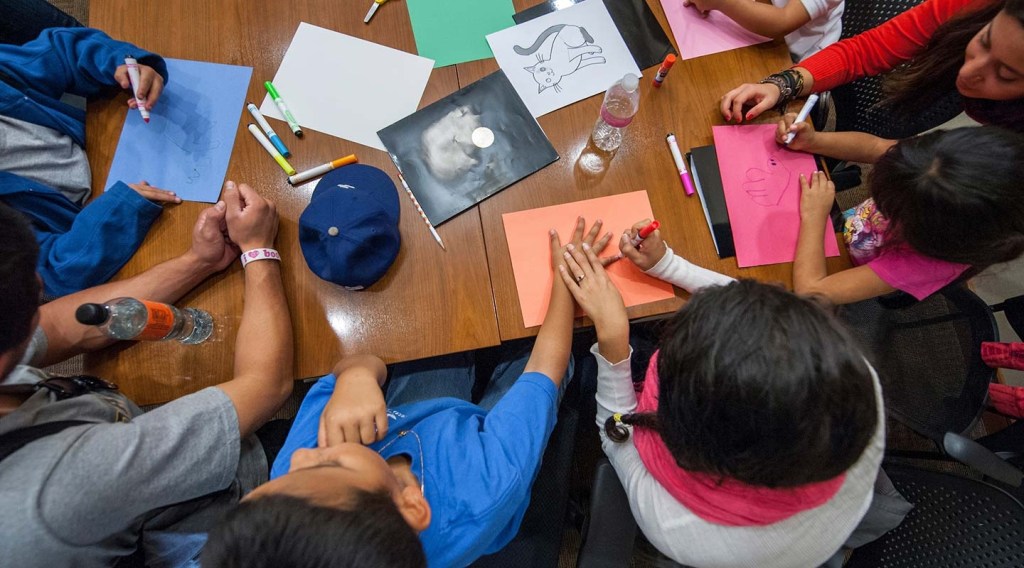
Community-based education is an alternative approach to schooling that focuses on engaging local communities in the learning process. It emphasizes hands-on experiences, real-world connections, and partnerships with community organizations. This type of education seeks to empower students by connecting them with their surroundings and giving them a sense of belonging within their community.
In traditional school settings, the curriculum is often disconnected from real-life situations. Students are confined to classrooms, where they learn abstract concepts that may not seem relevant or applicable to their lives. Community-based education challenges this approach by providing students with opportunities to learn through direct interaction with their environment.
One of the key components of community-based education is experiential learning. Instead of relying solely on textbooks and lectures, students actively participate in projects and activities that allow them to apply what they have learned in practical settings. For example, instead of reading about agriculture in a textbook, students might work on a local farm as part of their science curriculum.
By engaging directly with the community, students develop a deeper understanding of various subjects while also acquiring valuable skills such as problem-solving, critical thinking, and collaboration. These skills are essential for success not only academically but also in future careers and everyday life.
Another important aspect of community-based education is its emphasis on addressing local issues and needs. By involving students in solving problems within their own communities, they become active citizens who feel responsible for making positive changes around them. This type of engagement fosters a sense of civic duty and encourages lifelong involvement in community development.
Community-based education also places value on building strong relationships between schools and local organizations or businesses. These partnerships provide additional resources and expertise for both educators and students alike. For instance, schools might collaborate with museums or art centers to enhance arts programs or partner with environmental organizations for nature-focused initiatives.
Furthermore, community-based education recognizes that learning happens beyond classroom walls; it extends into homes and neighborhoods as well. In this model, parents, caregivers, and community members actively contribute to a child’s education. They are seen as valuable resources who can provide diverse perspectives, skills, and experiences.
This approach also promotes inclusivity by valuing the knowledge and contributions of each individual within the community. It recognizes that learning is not limited to age or formal education but can come from people with different backgrounds and expertise.
Community-based education is not without its challenges. Implementing this model requires strong collaboration between schools, families, and community organizations. It also requires flexibility in curriculum design to accommodate real-world experiences and opportunities for students.
However, numerous success stories highlight the benefits of community-based education. Students who have experienced this approach demonstrate increased motivation to learn, improved academic performance, greater social awareness, and a stronger sense of belonging within their communities.
In conclusion, community-based education offers an alternative way of approaching schooling that emphasizes experiential learning, real-world connections, and active engagement with local communities. By empowering students through practical experiences and partnerships with community organizations, this model fosters lifelong learners who are prepared to make positive contributions to their society.
 Alternative Amie
Leave a comment