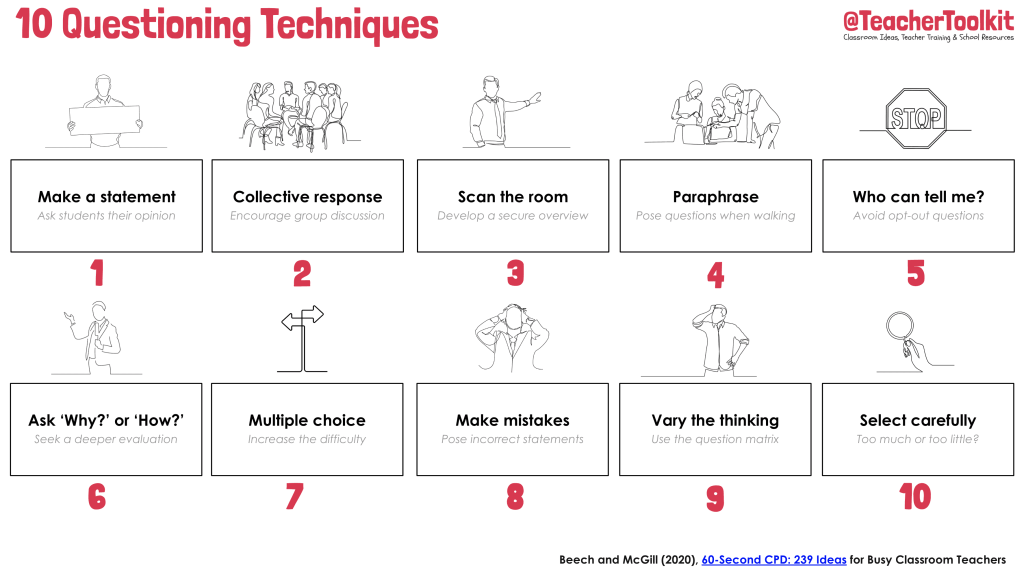
Assessing Student Learning Through Questioning Techniques
Introduction
Assessing student learning is a crucial aspect of education. It helps educators gauge the effectiveness of their teaching methods, identify areas where students may be struggling, and make informed decisions about instruction and curriculum design. One powerful tool that teachers can use to assess student learning is questioning techniques. By asking thought-provoking questions and encouraging active participation, educators can gain valuable insights into their students’ understanding and promote deeper learning experiences.
In this article, we will explore various questioning techniques that teachers can employ to effectively assess student learning in alternative schooling and education settings. We will discuss the benefits of using open-ended questions, probing questions, wait time, and formative assessment strategies such as exit tickets and think-pair-share activities.
Open-Ended Questions
Open-ended questions are designed to elicit more than just a simple “yes” or “no” response from students. These types of questions encourage critical thinking skills by requiring students to provide detailed explanations or share their thoughts on a given topic. Open-ended questions allow educators to assess not only what students know but also how well they understand concepts and can apply them in different contexts.
For example, instead of asking a closed question like “What is the capital city of France?”, an open-ended question might be: “Describe some factors that contributed to the French Revolution.” This type of question invites students to demonstrate their knowledge while also providing insight into their ability to analyze historical events critically.
Probing Questions
Probing questions are follow-up inquiries that build upon a student’s initial response. These types of questions aim to deepen understanding by prompting learners to elaborate further or consider alternative perspectives. Probing questions help teachers assess higher-order thinking skills such as analysis, evaluation, and synthesis.
For instance, if a student responds with a brief answer like “I think pollution harms the environment,” an effective probing question could be: “Can you explain how different types of pollution impact specific ecosystems?” This follow-up question encourages the student to think more deeply and provide a more detailed response, allowing the teacher to assess their understanding of cause-and-effect relationships.
Wait Time
Wait time refers to the period of silence after a question is posed by the teacher. Allowing students enough time to process and formulate their responses is essential for effective assessment through questioning techniques. Research has shown that increasing wait time leads to richer and more thoughtful answers from students, as it provides them with an opportunity to reflect on their thoughts before sharing them with others.
Implementing wait time can be particularly beneficial in alternative schooling environments where learners may need additional processing or contemplation time due to various learning styles or backgrounds. By incorporating adequate wait time, teachers can ensure that all students have an equal chance to participate actively and showcase their understanding.
Formative Assessment Strategies
In addition to open-ended questions, probing questions, and wait time, teachers can employ various formative assessment strategies during classroom discussions or activities. These strategies help educators gauge student learning continuously throughout the learning process rather than relying solely on summative assessments like tests or exams.
One such strategy is exit tickets. Exit tickets are short tasks or questions given at the end of a lesson or class period. They serve as a quick check-in tool for teachers to assess what students have learned during that particular session. Teachers can use exit tickets to identify areas where students may need further clarification or track progress over time by comparing responses from multiple lessons.
Another effective formative assessment technique is think-pair-share activities. During these activities, students first individually consider a question posed by the teacher (think). Then they discuss their thoughts with a partner (pair). Finally, pairs share their ideas with the whole class (share). Think-pair-share activities encourage active engagement while providing opportunities for both self-assessment and peer evaluation.
Conclusion
Assessing student learning through questioning techniques plays a vital role in alternative schooling and education. By using open-ended questions, probing questions, wait time, and formative assessment strategies such as exit tickets and think-pair-share activities, teachers can gain valuable insights into their students’ understanding.
These techniques promote critical thinking skills, encourage active participation, and allow for continuous assessment throughout the learning process. By incorporating effective questioning techniques into their teaching practices, educators can create an inclusive and engaging environment where students feel supported in their learning journey.
 Alternative Amie
Leave a comment