Hola, amigos! Are you ready to dive into the world of bilingualism and cognitive development? Well, grab your dictionaries and let’s have some fun exploring how speaking more than one language can actually make you smarter. That’s right, folks, being bilingual is not just about impressing people at parties with your linguistic skills; it also has numerous benefits for your brain!
Now, before we embark on this linguistic journey, let me clarify one thing: I am by no means a polyglot myself. In fact, my attempts at speaking foreign languages often end up sounding like a mix between baby talk and an alien dialect. But fear not! My lack of proficiency in multiple languages will only add to the entertainment value of this post.
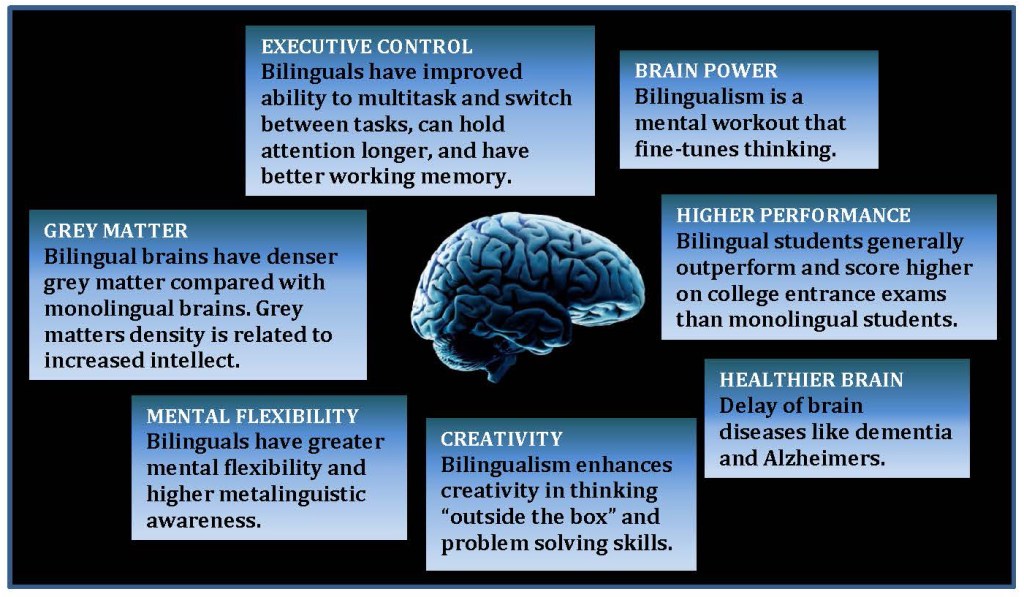
So why bother becoming bilingual? Well, studies have shown that being able to speak more than one language can enhance cognitive abilities such as problem-solving skills and creativity. It’s like giving your brain a superpower! Just think about it: monolingual individuals are limited to one set of vocabulary words for expressing their thoughts and emotions. But when you’re bilingual, you have two whole sets of words at your disposal! It’s like having access to double the amount of Lego blocks – imagine all the amazing creations you could build!
But wait, there’s more! Bilingualism doesn’t stop at simply expanding vocabulary; it also helps improve executive functions. No, I’m not talking about running a fancy corporate office here (although that would be pretty cool). Executive functions refer to higher-level cognitive processes responsible for things like attention control and task-switching.
Imagine yourself juggling tasks while riding a unicycle – quite the spectacle! Well, that’s what happens in our brains when we switch between languages effortlessly. Bilingual individuals have been found to be better at filtering out irrelevant information and focusing on important details—a skill essential for staying on track in today’s fast-paced world.
And let me tell you, speaking multiple languages is like having a secret decoder ring. You can effortlessly switch between different cultures and adapt to different social situations. It’s like being the chameleon of communication! Need to impress your French boss with impeccable pronunciation? Parlez-vous français! Want to connect with your Spanish-speaking neighbors? ¡Habla español!
But it’s not just about impressing people; bilingualism also promotes empathy and understanding. When you learn another language, you gain insight into different cultures, traditions, and ways of thinking. Suddenly, the world becomes a more colorful place – like stepping into a vibrant market full of exotic fruits and intriguing aromas.
So how does all this linguistic magic happen in our brains? Well, when we speak or think in one language, the other language(s) don’t simply fade away into oblivion (although that would make for an interesting sci-fi movie). Instead, they coexist harmoniously in what scientists call “language co-activation.” It’s like having two dance partners on the floor simultaneously – a linguistic tango!
This constant mental juggling creates connections between various brain regions involved in language processing. The result? A stronger brain network capable of tackling complex tasks with ease. Bilingual individuals have been found to exhibit increased gray matter density in areas associated with attention control and working memory – kind of like giving your brain an intense workout at the gym!
Now before I go any further down this rabbit hole of bilingual excitement (and potentially lose myself entirely), let me address some common misconceptions about bilingualism.
Firstly, many people believe that learning multiple languages from a young age can cause confusion or delays in cognitive development. But fear not! Research has shown that children who grow up speaking more than one language actually have enhanced cognitive flexibility and better problem-solving skills compared to their monolingual peers.
Secondly, there is no magical age limit for becoming bilingual. While it is true that children have a natural advantage when it comes to language learning, adults can also reap the cognitive benefits of bilingualism. So don’t let age deter you from embarking on your linguistic adventure – it’s never too late to join the bilingual party!
So there you have it, amigos! Bilingualism is not just about ordering croissants in Paris or tacos in Mexico City (although those are pretty delicious endeavors). It’s about expanding your horizons, enhancing your cognitive abilities, and connecting with people from different cultures.
So go ahead, dust off those dictionaries and embark on your own journey towards bilingual brilliance. And remember, even if you end up sounding like a babbling baby or an alien linguist at times (like yours truly), embrace the laughter and enjoy the process – because being bilingual is one heck of a brain-boosting adventure!
 Alternative Amie
Leave a comment