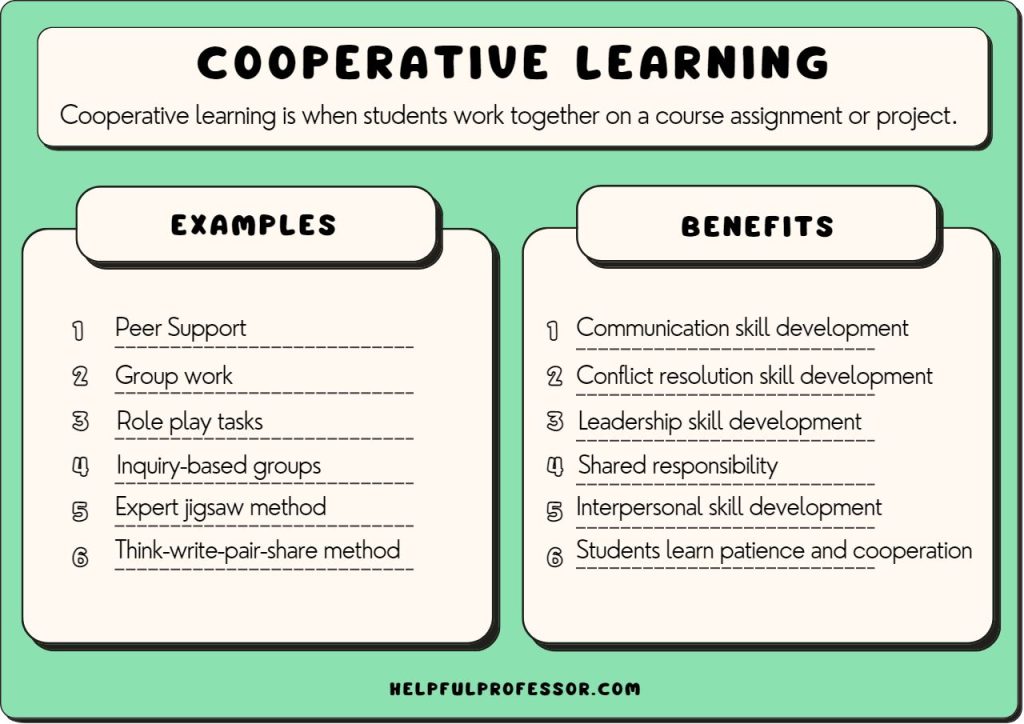
Cooperative learning is an innovative and effective teaching approach that promotes active engagement, collaboration, and critical thinking skills among students. It has gained popularity in alternative schooling and education settings due to its numerous benefits for both academic achievement and social development. In this article, we will explore the top 8 reasons why cooperative learning should be implemented in schools.
1. Encourages Active Engagement:
Cooperative learning encourages students to actively participate in their own learning process. By working together on group projects or problem-solving activities, students become more engaged in the subject matter. This fosters a deeper understanding of the concepts being taught as they discuss ideas, ask questions, and share different perspectives with their peers.
2. Enhances Social Skills:
One of the key advantages of cooperative learning is its ability to enhance social skills among students. Working collaboratively requires effective communication, active listening, empathy, negotiation skills, and conflict resolution abilities. Students learn to respect each other’s opinions and value diverse viewpoints while developing strong interpersonal relationships.
3. Promotes Critical Thinking:
Cooperative learning provides ample opportunities for students to engage in critical thinking tasks. When solving problems as a group, they are exposed to multiple perspectives and can analyze different approaches before reaching a consensus or solution collectively. This collaborative process stimulates higher-order thinking skills such as analyzing information, evaluating alternatives critically, making informed decisions based on evidence-based reasoning.
4. Builds Self-confidence:
Working cooperatively allows each student within a group to contribute meaningfully towards achieving shared goals or completing tasks successfully. Through active participation and positive feedback from peers during discussions or presentations, individuals gain self-confidence in expressing their thoughts openly while valuing others’ contributions at the same time.
5. Supports Different Learning Styles:
Each student has unique strengths and preferred ways of acquiring knowledge known as learning styles (e.g., visual learners vs auditory learners). Cooperative learning caters to these diverse needs by creating heterogeneous groups where members possess complementary skills and learning styles. This approach ensures that students can learn from each other’s strengths while receiving support in areas where they may need assistance.
6. Fosters a Sense of Ownership:
Cooperative learning empowers students by giving them autonomy over their learning process. When working together, they take ownership of their group projects, discussions, or presentations. This sense of responsibility motivates them to work collaboratively towards achieving shared objectives and taking pride in the final outcomes.
7. Boosts Academic Achievement:
Research consistently demonstrates that cooperative learning positively impacts academic achievement across various subjects and grade levels. Students who engage in cooperative learning activities tend to have higher achievement scores compared to those who rely solely on traditional teaching methods. The collaborative nature of this approach encourages active participation, deeper understanding, critical thinking, and problem-solving abilities – all crucial factors contributing to improved academic performance.
8. Prepares for Real-world Skills:
Cooperative learning prepares students for life beyond the classroom by developing essential real-world skills needed for future success. In today’s increasingly interconnected world, teamwork and collaboration are highly valued in almost every profession or career path. By engaging in cooperative learning experiences early on, students develop transferable skills such as effective communication, teamwork dynamics, adaptability to diverse environments/cultures, leadership qualities – all of which are essential for their personal growth and professional success.
In conclusion, cooperative learning is a powerful educational tool that promotes active engagement among students while fostering social skills development and critical thinking abilities necessary for lifelong learning. Its numerous benefits include enhanced academic achievement, improved self-confidence/self-esteem levels while preparing individuals with valuable real-world skills required beyond the school walls. By implementing cooperative learning strategies within alternative schooling environments or any educational setting alike we can better equip our children for a successful future ahead!
 Alternative Amie
Leave a comment