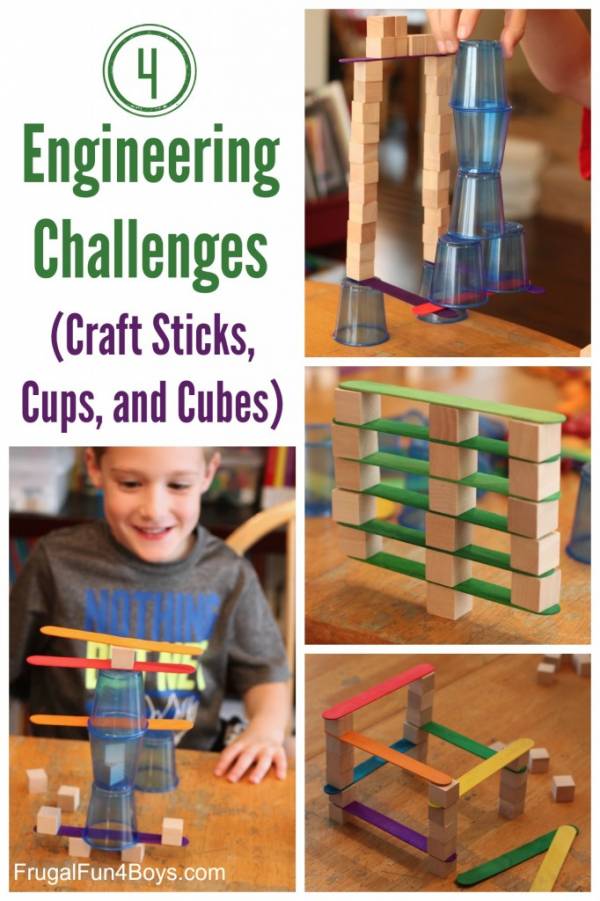
Experiential Math and Engineering Challenges: A Fun Approach to Learning
Are you tired of the traditional classroom setting where students are confined to textbooks and lectures? Do you want your child to develop critical thinking skills, problem-solving abilities, and a love for math and engineering? Experiential math and engineering challenges might be the answer!
What is Experiential Math?
Experiential math involves learning through hands-on experiences, allowing students to actively engage in mathematical concepts. It goes beyond rote memorization of formulas by providing real-world applications that make math more meaningful and enjoyable.
How does it work?
Experiential math challenges typically involve designing, building, or solving problems using mathematical principles. For example, students may be tasked with constructing bridges using specific materials while considering weight distribution and load-bearing capacities. This exercise not only reinforces geometry concepts but also encourages creativity and critical thinking.
Why is it effective?
Engaging in experiential math challenges has several benefits for learners:
1. Real-world relevance: By applying mathematical concepts to practical situations, students can see the direct impact of what they learn. This makes mathematics more relatable and helps them understand its importance in everyday life.
2. Active learning: Instead of passively absorbing information from textbooks or lectures, students actively participate in problem-solving activities. They become active learners who take ownership of their education.
3. Collaboration: Many experiential math challenges require teamwork, promoting collaboration among students as they work together towards a common goal. This fosters communication skills, cooperation, and mutual respect.
4. Critical thinking skills: Experiential math challenges encourage students to think creatively and critically as they explore different approaches to solving problems. They learn how to break down complex tasks into manageable steps while making informed decisions along the way.
What about Engineering Challenges?
Engineering challenges complement experiential math activities by incorporating principles from science, technology, engineering, and mathematics (STEM). These challenges allow students to explore engineering concepts and develop problem-solving skills in a hands-on manner.
Examples of engineering challenges include building structures with limited resources, designing and constructing simple machines, or creating prototypes for various inventions. These activities require students to apply scientific principles while considering factors such as design, materials, functionality, and efficiency.
Benefits of Engineering Challenges:
1. Practical application: Engineering challenges bridge the gap between theoretical knowledge and real-world applications. Students gain a deeper understanding of how science and math concepts are used in everyday life.
2. Creativity: Engineering challenges encourage students to think outside the box and come up with innovative solutions. They learn that there can be multiple approaches to solving problems, fostering creativity and originality.
3. Problem-solving skills: By facing engineering challenges head-on, students become adept at identifying problems, brainstorming solutions, testing ideas through trial-and-error methods, and refining their designs based on feedback.
4. Resilience: Engineering challenges often involve setbacks or failures along the way. This teaches students about perseverance and resilience as they learn from mistakes and continue working towards a successful outcome.
In conclusion, experiential math and engineering challenges provide an engaging approach to learning that fosters critical thinking skills, problem-solving abilities, teamwork, creativity, practical application of knowledge, and resilience among students. By incorporating these hands-on activities into your child’s education journey or exploring them yourself as an adult learner seeking alternative educational experiences – you will undoubtedly enhance your understanding of mathematics and engineering while having fun!
 Alternative Amie
Leave a comment