Waldorf Education: Nurturing the Whole Child
In a world where traditional education systems often prioritize academic achievement and standardized testing, Waldorf education offers an alternative approach that focuses on nurturing the whole child. Developed by Austrian philosopher Rudolf Steiner in the early 20th century, this educational philosophy emphasizes a holistic and experiential learning style, aiming to cultivate students’ intellectual, artistic, social, and moral capacities.
One of the distinguishing features of Waldorf education is its belief in age-appropriate learning. Instead of pushing young children into rigorous academics at an early age, Waldorf schools provide a play-based curriculum during the early years. This allows children to engage in imaginative free play and explore their surroundings at their own pace. Teachers create a warm and nurturing environment that stimulates creativity while fostering social skills through group activities.
Another vital element of Waldorf education is its integrated curriculum. Unlike traditional schools that compartmentalize subjects into separate classes or periods throughout the day, Waldorf schools incorporate various subjects into interdisciplinary blocks lasting several weeks or months. For example, history may be taught alongside literature and art to give students a comprehensive understanding of different eras. By connecting subjects in this way, students can recognize meaningful relationships between diverse areas of knowledge.
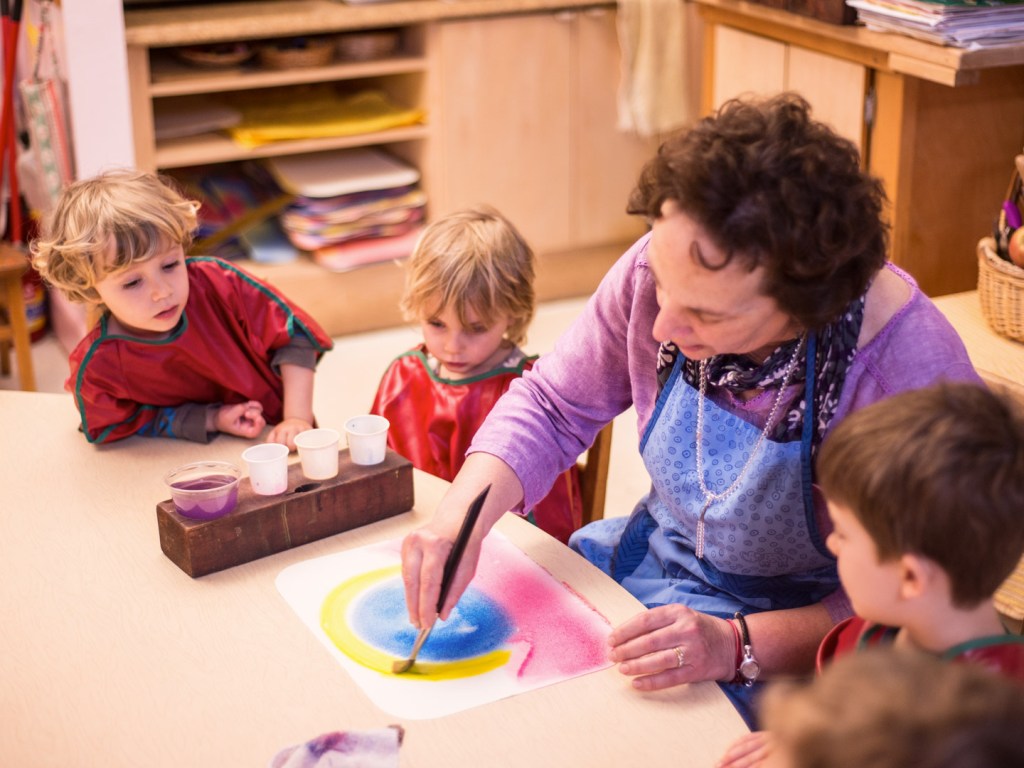
The arts hold significant importance within Waldorf education as they are considered essential for cognitive development. Students engage in various artistic activities such as painting, drawing, sculpture-making, music playing and singing,drama,and handwork (such as knitting or sewing). These creative practices not only enhance fine motor skills but also foster self-expression and imagination. Through regular exposure to these art forms across different stages of development,waldorph students become more well-rounded individuals with heightened aesthetic sensibilities.
Unlike most conventional classrooms where textbooks dominate teaching materials,Waldorf educators often rely on storytelling to convey information effectively.By telling stories rather than using dry facts from textbooks,Waldof teachers tap into children’s natural love for stories and narratives,which makes learning more engaging and memorable. These stories also help students develop language skills, critical thinking, and moral understanding as they explore different characters’ perspectives and make connections to their own lives.
Another unique aspect of Waldorf education is its emphasis on nature-based learning. Many Waldorf schools have extensive outdoor spaces where children can connect with the natural world. Outdoor activities such as gardening,farming,hiking,and camping are an integral part of the curriculum. Through these experiences,students develop a profound appreciation for nature’s beauty while gaining valuable knowledge about sustainability and ecological responsibility.
Waldorf schools also prioritize character development and social-emotional growth in their approach to education. The focus on building strong relationships between teachers,students,and families creates a supportive community that values empathy,respect,and cooperation. By fostering qualities such as kindness,integrity,and self-discipline,Waldorf education aims to shape students into compassionate individuals who can contribute positively to society.
Critics argue that Waldorf education lacks emphasis on academic subjects like science or technology at later stages.However,this criticism overlooks the fact that Waldorf graduates often excel in higher education due to their well-rounded skill sets.The holistic approach nurtured throughout their schooling years equips them with creativity,critical thinking abilities,strong communication skills,and adaptability—traits highly valued in today’s rapidly changing world.
While there is no one-size-fits-all solution when it comes to choosing an educational path,Waldorf education provides a compelling alternative for parents seeking a holistic approach that cultivates both intellect and imagination.Waldorf schools encourage children’s innate curiosity,nurture their artistic capabilities,foster deep connections with nature,promote social-emotional intelligence,and prepare them for lifelong learning beyond just academics.In essence,Waldorf education strives not only to educate but also inspire students—preparing them for a future full of possibilities by nurturing their minds,souls,and spirits alike.
 Alternative Amie
Leave a comment