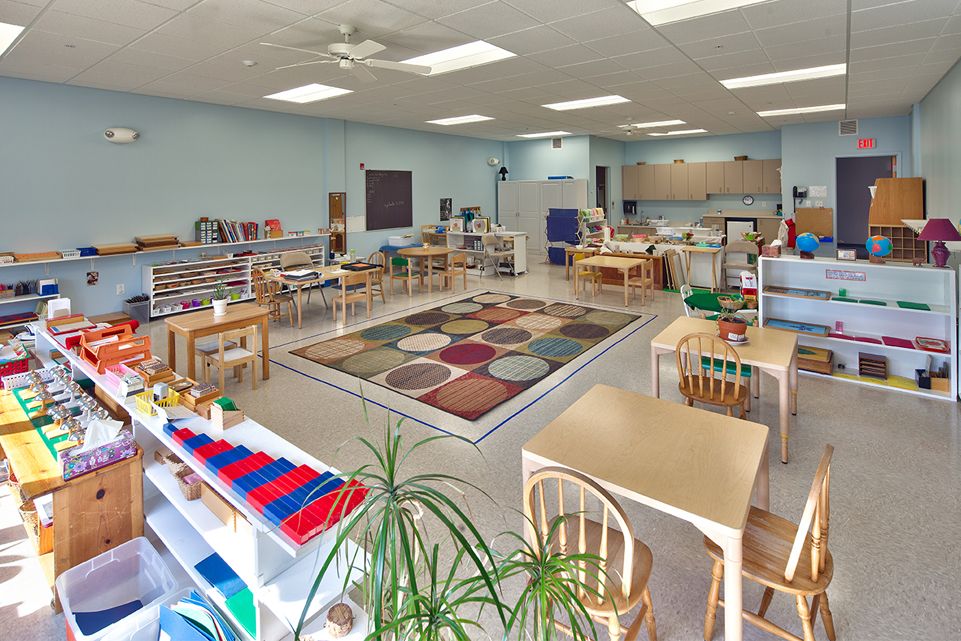
The Montessori method is a renowned educational approach that emphasizes independence, self-directed learning, and hands-on experiences. While initially developed for typically developing children, the Montessori philosophy has proven to be highly effective for children with special needs as well. By adapting the materials and activities to meet individual needs and providing a supportive and inclusive environment, Montessori schools have successfully integrated students with various disabilities.
One of the key aspects of the Montessori method for children with special needs is its focus on individualized education. In traditional classrooms, all students are expected to follow a standardized curriculum at the same pace. However, in a Montessori classroom, each child’s unique abilities and interests are taken into account when designing their learning plan. This personalized approach allows children with special needs to progress at their own pace while ensuring they receive appropriate support and guidance.
Incorporating technology in the Montessori classroom has become increasingly important in today’s digital age. While some may argue that technology contradicts the principles of hands-on learning advocated by Maria Montessori, when used appropriately it can enhance the educational experience for all students. Technology can provide additional resources such as interactive apps or educational games that cater specifically to different abilities and learning styles.
For instance, touchscreen devices can be particularly beneficial for children with motor impairments who struggle with manipulating physical objects but excel at using digital interfaces. Additionally, assistive technologies like text-to-speech software or communication apps can greatly aid students with speech or language disorders in expressing themselves effectively.
However, it is crucial to strike a balance between incorporating technology and maintaining the core principles of hands-on learning in a Montessori environment. The use of technology should always supplement rather than replace traditional materials and activities.
Mathematics is an integral part of any curriculum, including within the framework of a Montessori setting. The unique approach taken by Maria Montessori towards teaching mathematics helps develop not only numerical skills but also critical thinking and problem-solving abilities.
In the Montessori approach to teaching mathematics, concepts are introduced through concrete materials that allow children to physically manipulate objects and understand mathematical principles through direct experience. For example, the use of the golden beads material helps children grasp concepts of place value, addition, subtraction, multiplication, and division.
As students progress from concrete to abstract understanding, they transition from working with physical materials to using mental representations. This gradual shift enables them to internalize mathematical operations and develop a strong foundation in numeracy.
Outdoor education is an essential component of the Montessori curriculum as it provides opportunities for exploration, sensory stimulation, and connection with nature. In a world where children spend increasing amounts of time indoors surrounded by screens, outdoor experiences offer a much-needed balance.
Outdoor education in a Montessori setting involves regular nature walks or field trips where students can observe plants and animals up close. They engage in gardening activities that teach them about ecosystems while developing practical life skills like responsibility and teamwork. Additionally, outdoor play fosters physical development and gross motor skills while allowing for unstructured creativity.
Moreover, being outdoors has been shown to have numerous cognitive benefits such as increased attention span, improved problem-solving skills, enhanced imagination, reduced stress levels, and heightened overall well-being. By including ample outdoor learning experiences within their curriculum framework,
The Montessori philosophy places great emphasis on mindfulness practices as part of promoting holistic development in children. Mindfulness refers to the practice of being fully present in the current moment without judgment or attachment. It cultivates self-awareness and emotional regulation while fostering empathy towards others.
Montessori classrooms incorporate mindfulness practices through various techniques such as breathing exercises or guided meditations at the beginning or end of each day’s work cycle. These practices help children develop focus and concentration while encouraging positive social interactions among peers.
By integrating mindfulness into daily routines within a supportive environment where children are encouraged to express their emotions, Montessori schools foster an atmosphere of emotional well-being and self-reflection.
Music and art play a vital role in the Montessori classroom as they provide avenues for self-expression, creativity, and aesthetic appreciation. These disciplines are integrated into various activities throughout the curriculum to enhance learning outcomes.
Incorporating music in a Montessori setting involves providing children with opportunities to explore different instruments, engage in group singing or playing musical games. Music helps develop auditory discrimination skills, rhythm perception, and promotes language development.
Similarly, art activities encourage fine motor skills while allowing children to express themselves visually. Drawing, painting, sculpting, and other artistic endeavors stimulate creativity and imagination while fostering critical thinking skills.
Promoting social-emotional development is a fundamental aspect of the Montessori method. The mixed-age classrooms create a natural environment for cultivating social interaction and empathy among peers. Older students act as mentors and role models for younger ones while gaining leadership skills themselves.
Montessori classrooms also emphasize grace and courtesy lessons that teach children how to navigate social situations with respect and understanding. Conflict resolution strategies are introduced early on so that students can learn effective communication techniques from an early age.
Additionally, cooperative projects and group work foster collaboration skills while promoting teamwork dynamics within the classroom community. By creating a supportive environment where every child’s voice is valued,
Physical education in a Montessori school goes beyond traditional sports-focused programs by incorporating purposeful movement activities that cater to individual needs across all age groups. Montessori-inspired physical education aims at developing gross motor skills through purposeful movement rather than solely focusing on competitive sports.
Activities such as yoga or tai chi help improve balance, coordination, concentration while promoting relaxation techniques essential for overall well-being. Similarly,
Peace education is deeply rooted in the philosophy of Maria Montessori who believed that peace could be achieved through nurturing peaceful individuals from an early age.
Through peace education initiatives in Montessori settings, children are exposed to concepts such as conflict resolution, empathy, compassion, and global citizenship. They learn about different cultures, traditions, and perspectives to develop a sense of respect and appreciation for diversity.
Peace education is not limited to theoretical discussions but is integrated into daily classroom practices. Teachers model peaceful behavior while encouraging students to resolve conflicts peacefully through dialogue and mutual understanding.
Additionally, Montessori schools often engage in community service projects that allow students to contribute positively towards creating a more peaceful world.
Second language acquisition is seamlessly integrated into the Montessori environment through the use of materials specifically designed for language learning. The Montessori method recognizes that young children have an innate capacity for language acquisition and provides them with opportunities to explore multiple languages simultaneously.
Language materials like sandpaper letters or movable alphabets enable children to associate sounds with symbols and construct words phonetically. As they progress, they can work on building sentences using grammar boxes or engage in conversational activities with peers or native speakers.
The multi-sensory approach employed within the Montessori framework creates an optimal learning environment for second language acquisition by engaging visual, auditory, kinesthetic modalities simultaneously.
Montessori education has long recognized the importance of sustainability and environmental awareness as essential components of a well-rounded curriculum. By incorporating principles of sustainability into their programs,
Practical life skills form the foundation of the Montessori approach as they lay the groundwork for independence, concentration,
and self-regulation abilities.
Practical life activities involve tasks such as pouring liquids from one container to another or buttoning clothes that promote fine motor skills while also developing focus and attention span.
These activities teach children valuable life skills required for everyday living while fostering a sense of responsibility towards themselves
and their environment
Cultural diversity is celebrated within a Montessori setting as it allows children to appreciate cultural differences while promoting inclusivity. Through lessons on geography,
history,
and cultural celebrations, children gain a global perspective and develop respect for diverse cultures around the world.
Cultural materials like maps,
flags,
or artifacts provide opportunities for hands-on exploration while fostering curiosity and understanding.
In a mixed-age Montessori classroom, differentiation of instruction is naturally built into the curriculum. Older students act as mentors to younger ones,
while teachers provide individualized guidance based on each child’s unique needs and abilities.
The flexible nature of Montessori materials allows for modifications to meet specific learning goals,
ensuring that every child receives appropriate challenges and support.
Nature-based learning experiences are an integral part of the Montessori program as they provide children with direct contact with their natural environment. Outdoor activities such as nature walks or gardening foster a sense of wonder and connection with the world around them.
Children learn about ecological systems, life cycles,
and environmental conservation through firsthand experiences.
These experiences not only facilitate academic knowledge but also instill a sense of responsibility towards caring for our planet.
Play is considered essential in a Montessori setting as it facilitates active engagement, imagination,
and creativity. Play-based activities allow children to explore their interests and curiosities while developing problem-solving skills
and social-emotional competencies.
Through unstructured playtime,
children learn how to negotiate, cooperate, share resources
and resolve conflicts independently.
Independence is one of the core principles underlying the Montessori approach. By providing children with choices within structured environments,
the Montessori method encourages self-regulation skills from an early age.
Children are given freedom to select work tasks according to their preferences
and interests within established boundaries set by teachers.
This autonomy fosters intrinsic motivation
and self-discipline while promoting a love for lifelong learning.
Addressing individual learning styles is inherent in the Montessori framework due to its emphasis on personalized education. The use of multi-sensory materials appeals to different modalities such as visual or tactile learners,
and the freedom to work at one’s own pace caters to individual preferences.
Teachers observe students closely to identify their unique strengths and areas for improvement,
thus tailoring instruction accordingly.
Executive function skills are crucial for academic success, and the Montessori method supports their development through intentional use of materials and activities. Practical life exercises require children to follow multi-step processes that help improve organization
and planning abilities.
Mathematical tasks promote logical thinking
and reasoning skills.
Language materials foster memory recall
and attention span.
Creating inclusive environments within a Montessori school is of utmost importance as it ensures that every child feels valued, respected,
and supported. Inclusion involves adapting materials, learning spaces,
and teaching strategies to accommodate diverse needs while promoting belongingness among all students. Collaboration between teachers,
parents, and specialists helps create individualized plans for children with disabilities or exceptionalities
to ensure their full participation in the classroom community.
Multi-sensory learning approaches are integral to a Montessori classroom as they engage multiple senses simultaneously, enhancing learning outcomes.
The use of tactile materials like sandpaper letters or golden beads allows children to touch and feel concepts being taught.
Auditory modalities are stimulated through storytelling or conversations with peers,
while visual elements such as colorful images or manipulatives aid comprehension and retention.
Cosmic education is a term used in Montessori philosophy that refers to an interdisciplinary approach aimed at helping students develop a holistic understanding of the interconnectedness of all things. It encompasses topics such as astronomy,
geography,
biology,
history,
ecology among others.
By exploring these subjects in an integrated manner from an early age, children gain a sense of wonder about the world around them while developing critical thinking skills necessary for navigating complex global challenges.
Storytelling has been widely recognized as an effective teaching tool in both traditional classrooms and Montessori settings. Through stories, abstract concepts become more relatable and accessible to children.
Teachers can use storytelling to introduce new topics,
reinforce understanding, or spark curiosity.
Stories also provide opportunities for children to develop language skills,
empathy,
and imagination.
Project-based learning is an approach that encourages students to investigate real-world problems or challenges through hands-on projects. Within the traditional Montessori structure, project-based learning can be seamlessly integrated as it aligns with the principles of self-directed exploration and interdisciplinary connections.
Projects allow children to engage in research,
experimentation,
and collaboration while developing critical thinking
and problem-solving skills. Teachers act as facilitators guiding the process rather than dictating outcomes.
Observation and assessment play a crucial role in guiding instruction within a Montessori program. Through careful observation, teachers gain insights into each child’s progress, interests,
and needs. This information is used to tailor individualized learning plans and provide appropriate scaffolding or extensions based on each child’s unique development.
Assessment in a Montessori setting focuses on holistic growth rather than solely academic achievement. Teachers observe not only cognitive abilities but also social-emotional competencies, motor skills,
and executive functions.
Documentation of student work through portfolios or journals allows for ongoing reflection
and evaluation of progress over time.
In conclusion, the Montessori method offers a comprehensive framework for education that supports diverse learners’ needs and fosters their overall development. From incorporating technology thoughtfully to promoting social-emotional growth through mindfulness practices,
Montessori classrooms provide inclusive environments where every child has an opportunity to thrive academically,
emotionally,
physically
and socially
 Alternative Amie
Leave a comment