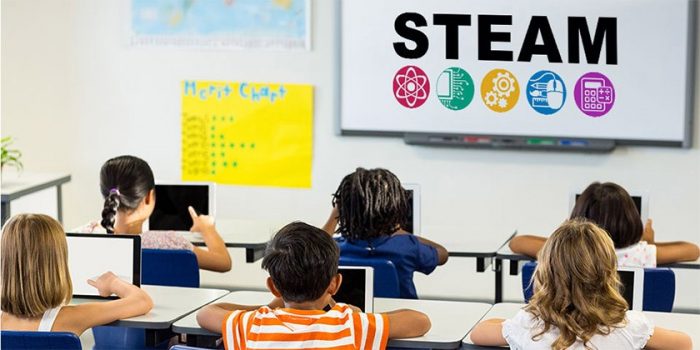
In recent years, there has been a growing emphasis on STEAM education as an alternative approach to traditional schooling. STEAM stands for Science, Technology, Engineering, Arts, and Mathematics – five disciplines that are considered crucial for preparing students for the demands of the 21st century.
STEAM education takes a holistic approach to learning by integrating these subjects in a way that encourages critical thinking, problem-solving skills, creativity, and collaboration. By blending arts with STEM fields, students are able to explore complex concepts through hands-on projects and real-world applications.
One of the key benefits of STEAM education is its ability to foster innovation and entrepreneurship. By encouraging students to think outside the box and pursue their interests across different disciplines, they develop an entrepreneurial mindset that can be applied in various industries. Moreover, this interdisciplinary approach helps students make connections between seemingly unrelated concepts or ideas.
Another advantage of STEAM education is its focus on experiential learning. Rather than relying solely on textbooks and lectures, students actively engage in designing experiments or creating prototypes. This hands-on approach not only reinforces theoretical knowledge but also allows them to learn from failures and iterate upon their designs.
Furthermore, STEAM education promotes teamwork and collaboration. Many projects require students to work together in groups or teams where each member brings their unique expertise. This collaborative environment mirrors real-world workplaces where professionals from diverse backgrounds come together to solve complex problems.
Additionally, STEAM education equips students with essential skills for future careers. The demand for professionals skilled in science, technology, engineering or math continues to grow rapidly across all industries. However, employers also seek individuals who possess strong communication skills and creativity – qualities nurtured through arts integration within the curriculum.
While there are challenges associated with implementing STEAM programs such as funding constraints or lack of teacher training opportunities; many educators recognize its potential impact on student success beyond academics alone.
In conclusion, STEAM offers a transformative educational experience by combining science, technology, engineering, arts, and mathematics. By integrating these disciplines, students gain a well-rounded education that fosters critical thinking, creativity, collaboration, and problem-solving skills – all necessary for success in the modern world. STEAM education not only prepares students for future careers but also equips them with the tools to make meaningful contributions to society.
 Alternative Amie
Leave a comment