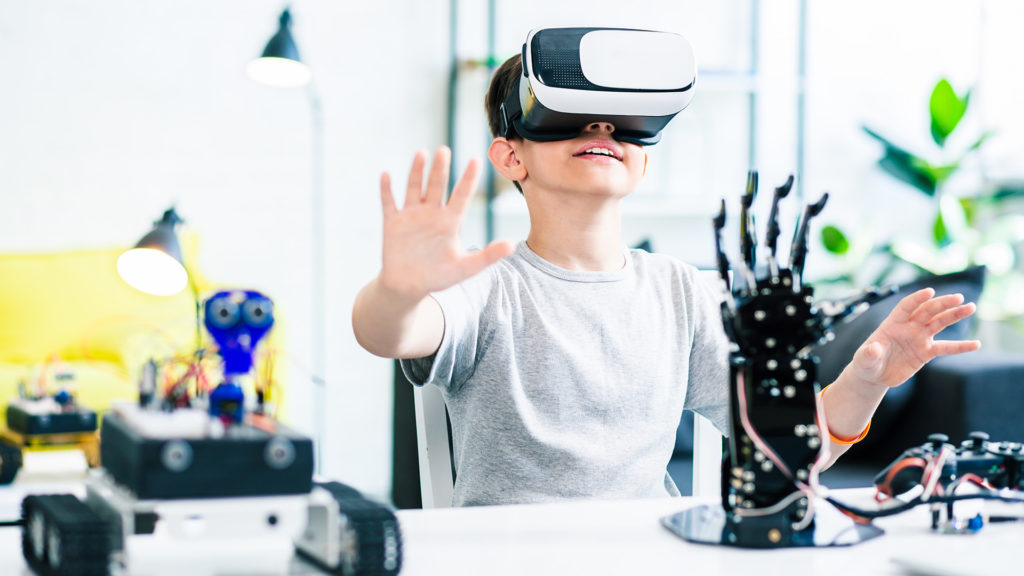
Technology has become an integral part of our lives, transforming the way we live, work, and learn. In the realm of education, technology has opened up new avenues for alternative schooling and education. From online learning platforms to virtual reality tools, these technological advancements have revolutionized the way students engage with educational content and acquire knowledge.
One of the most significant developments in alternative schooling is the rise of online learning platforms. These platforms offer a wide range of courses that cater to various interests and skill levels. Students can access these courses from anywhere at any time, making it convenient for those who prefer flexible schedules or live in remote areas without access to traditional educational institutions.
Coursera is one such platform that provides free online courses from top universities around the world. With over 2000 courses available across multiple disciplines, Coursera allows students to expand their knowledge beyond what is traditionally offered in schools. Whether someone wants to learn computer programming or delve into philosophy, Coursera offers a comprehensive selection of courses taught by renowned professors.
Another popular online learning platform is Khan Academy. Known for its extensive library of instructional videos covering subjects ranging from mathematics to economics, Khan Academy has made quality education accessible to millions worldwide. The platform also includes interactive quizzes and exercises that reinforce learning and allow students to track their progress.
In addition to online learning platforms, technology has also brought about innovative tools that enhance student engagement and understanding. One such tool is virtual reality (VR). VR immerses students in simulated environments that replicate real-world scenarios or historical events they are studying.
For instance, instead of merely reading about ancient Rome in textbooks, students can use VR headsets to explore a 3D reconstruction of ancient ruins or walk through a digital representation of Roman streets bustling with activity. This level of immersion not only makes learning more exciting but also helps students develop a deeper understanding by visualizing concepts in context.
Google Expeditions is a widely used VR tool in classrooms. It offers a vast collection of virtual field trips that take students on immersive journeys to places like the Great Barrier Reef, Machu Picchu, or even outer space. By allowing students to explore these locations virtually, Google Expeditions brings the world into the classroom and makes learning more engaging.
In addition to VR, augmented reality (AR) is another technology that has found its way into alternative education settings. AR overlays digital content onto the real world, enhancing the learning experience by blending physical and virtual elements.
One notable example of AR in education is Anatomy 4D. This app allows students to superimpose detailed 3D models of human organs onto their surroundings using their smartphones or tablets. By interacting with these virtual models, students can learn about anatomy in an interactive and immersive way.
Technology has also revolutionized assessment methods in alternative schooling and education. Traditional exams and quizzes are no longer the only means of evaluating student progress. With online platforms such as Kahoot!, teachers can create fun and interactive quizzes that engage students while providing valuable feedback on their understanding of concepts.
Kahoot! turns assessments into games where students compete against each other in answering questions correctly within a set time limit. This gamified approach not only motivates students but also allows teachers to identify areas where further instruction may be needed based on individual performance data collected during gameplay.
Furthermore, technology has made it easier for teachers to personalize instruction based on individual student needs. Adaptive learning tools use algorithms to analyze student performance data and deliver tailored content accordingly.
For instance, Duolingo is a popular language-learning platform that adapts its lessons based on each user’s strengths and weaknesses. As learners progress through different levels, Duolingo adjusts the difficulty of exercises to ensure they are continuously challenged at an appropriate level.
Moreover, technology has facilitated communication between educators and students outside traditional classroom settings through various channels such as email, discussion boards, or video conferencing. This allows for ongoing support and feedback, ensuring that students have access to resources even when not physically present in the classroom.
In conclusion, technology has significantly impacted alternative schooling and education by providing access to online learning platforms, immersive tools like VR and AR, innovative assessment methods, personalized instruction through adaptive learning tools, and improved communication between educators and students. These advancements have made education more accessible, engaging, and tailored to individual needs. As technology continues to evolve, it is essential for alternative schools and educators to embrace these tools as valuable assets in enhancing the learning experience for their students.
 Alternative Amie
Leave a comment