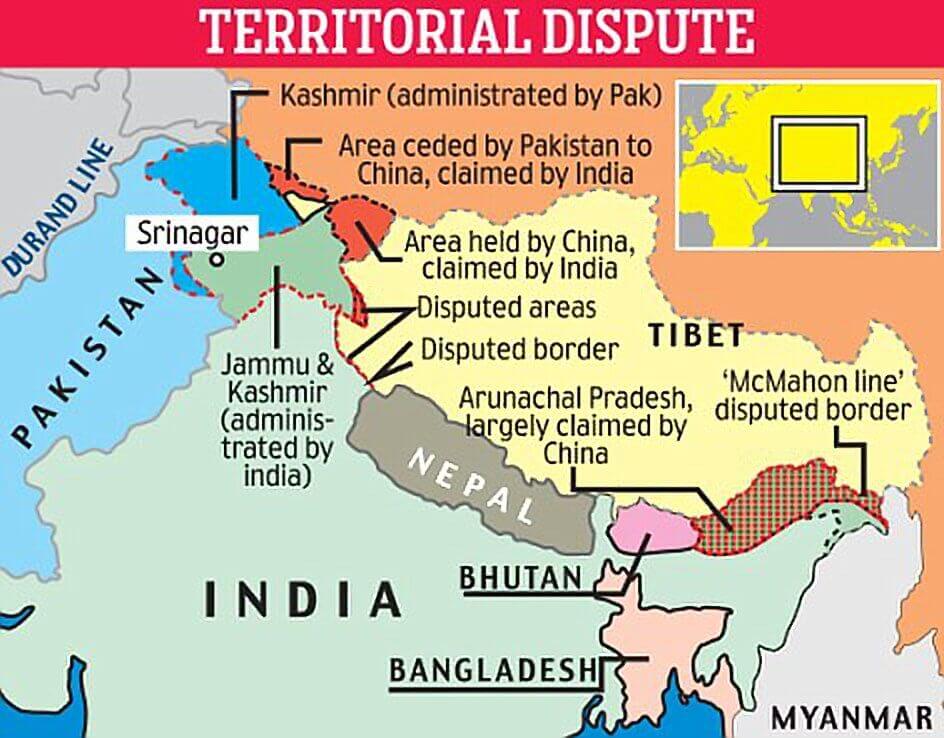
Studying Border Disputes or Geopolitical Issues Related to Neighboring Regions
In the field of geography, studying border disputes and geopolitical issues related to neighboring regions is an essential aspect of understanding the complexities of our world. Borders shape political boundaries, influence economic relationships, and impact cultural interactions between countries. By delving into these topics, researchers gain valuable insights into historical conflicts, territorial claims, resource disputes, and diplomatic tensions.
Border disputes occur when two or more nations have conflicting claims over a specific piece of land or maritime territory. These disagreements can arise due to various reasons such as historical legacies, ethnic or religious differences, natural resource wealth distribution, or strategic considerations. Analyzing these disputes allows us to examine how they affect international relations and potentially contribute to regional instability.
One prominent example is the Kashmir conflict between India and Pakistan. The dispute over this region has been ongoing since their partition in 1947. Both countries claim sovereignty over the entire territory but currently control different portions separated by a heavily militarized Line of Control. This issue has led to multiple wars between India and Pakistan and continues to be a major source of tension in South Asia.
Another notable case is the Israeli-Palestinian conflict centered around the disputed territories in the West Bank and Gaza Strip. This protracted dispute arises from competing national aspirations for self-determination within historic Palestine. The conflict has severe implications for both Israelis and Palestinians alike but also impacts regional stability in the Middle East.
Apart from land-based border disputes, maritime boundary disagreements are also significant areas of study in oceanography and geopolitics. For instance, tensions exist among several Southeast Asian nations over territorial claims regarding islands in the South China Sea. China’s expansive claims have ignited concerns among neighboring countries like Vietnam, Malaysia, Taiwan, Brunei Darussalam ,and Philippines leading to heightened military presence in disputed waters.
Studying these border conflicts helps us understand how they influence geopolitical dynamics. It allows nations to assess their national security concerns, devise diplomatic strategies, and seek peaceful resolutions through negotiation or international arbitration.
In addition to border disputes, it is crucial to explore the geopolitical issues that arise from neighboring regions. Geopolitics examines how physical geography, such as natural resources, climate conditions, and terrain shape political relations between countries.
A prime example of a geopolitical issue stemming from a neighboring region is the Syrian conflict and its impact on neighboring countries like Turkey, Lebanon, Jordan, Iraq, and Israel. The war has led to mass displacement of people into these nations and strained their economies and social fabric. Moreover, it has also attracted regional powers like Iran and Russia who have vested interests in the outcome of the conflict.
Transportation networks play a vital role in both border disputes and geopolitical issues related to neighboring regions. Roads serve as lifelines for economic development by facilitating trade exchanges between countries. They connect people across borders and enable cultural interactions while promoting tourism activities.
Analyzing transportation networks helps identify areas where infrastructure development can enhance connectivity between nations. By having efficient road systems that link different regions together seamlessly , we foster economic cooperation which can lead to greater understanding among neighbors.
For instance , the Friendship Highway connecting China with Nepal plays an essential role in strengthening ties between these two nations. This highway not only facilitates trade but also encourages cultural exchange as tourists travel back-and-forth benefiting both sides significantly.
In conclusion , studying border disputes or geopolitical issues related to neighboring regions provides us with valuable insights into historical conflicts territorial claims resource distribution diplomacy national security concerns economic relationships cultural interactions and regional stability. Analyzing transportation networks within these contexts allows us to identify opportunities for interconnectivity that promote peaceful coexistence and mutual growth among nations.
 Alternative Amie
Leave a comment