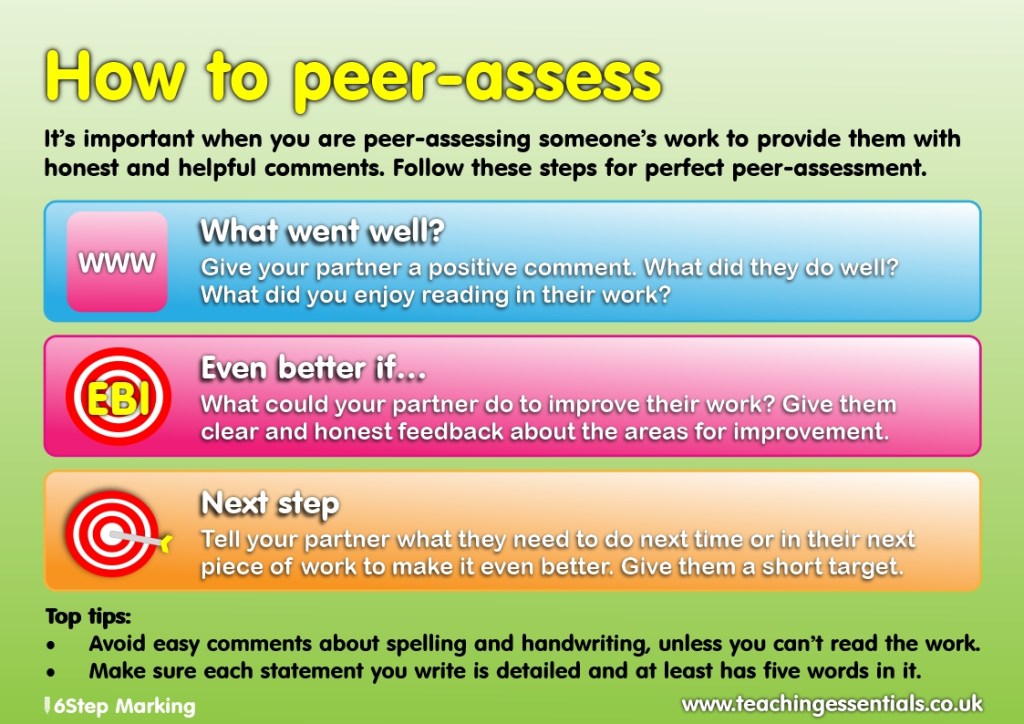
Peer assessment in collaborative learning:
Collaborative learning is an approach that emphasizes teamwork, communication, and cooperation among students. One important aspect of this approach is peer assessment, which involves students evaluating each other’s work and providing feedback. Peer assessment not only helps students develop critical thinking skills but also promotes a sense of responsibility and ownership over their learning.
When implemented effectively, peer assessment can have several benefits for both the individuals involved and the overall collaborative learning environment. Firstly, it encourages active engagement with the material being studied. When students know they will be assessed by their peers, they are more likely to invest time and effort into understanding the content thoroughly.
Secondly, peer assessment fosters a sense of autonomy and self-regulation among learners. By taking on the role of assessors themselves, students become more aware of their own strengths and weaknesses. This self-reflection enables them to set personal goals for improvement and take ownership of their learning journey.
Furthermore, peer assessment develops essential communication skills as students learn how to give constructive feedback effectively. Through this process, they gain insights into different perspectives and learn how to articulate their thoughts clearly. Additionally, receiving feedback from peers allows learners to see things from a different angle or discover new approaches that may enhance their work.
To ensure effective implementation of peer assessment in collaborative learning settings, there are certain strategies that educators can employ:
1) Clear guidelines: Provide clear instructions about what aspects should be assessed (e.g., content knowledge, organization), as well as specific criteria or rubrics for evaluation.
2) Training on giving feedback: Offer training sessions or resources on how to provide constructive criticism respectfully without discouraging or demotivating peers.
3) Anonymous assessments: Consider using anonymous assessments to reduce bias or potential conflicts among group members while ensuring honest evaluations.
4) Reflection activities: Incorporate regular reflection activities where students discuss the feedback received from peers and reflect on ways they can improve based on that feedback.
5) Peer moderation: Assign students the responsibility of moderating and ensuring fair assessments within their groups. This promotes accountability and helps develop leadership skills.
It is important to note that while peer assessment is an effective tool, it should not replace teacher assessment entirely. Teachers still play a crucial role in guiding and monitoring the learning process. They can intervene when necessary to provide additional support or clarify any misconceptions.
In conclusion, peer assessment plays a significant role in collaborative learning environments by promoting active engagement, autonomy, and communication skills among students. By implementing clear guidelines and providing training on giving constructive feedback, educators can ensure that peer assessment becomes an integral part of the learning experience. When used in conjunction with teacher assessments, peer assessment contributes to a well-rounded evaluation system that fosters growth and development for all learners involved
 Alternative Amie
Leave a comment