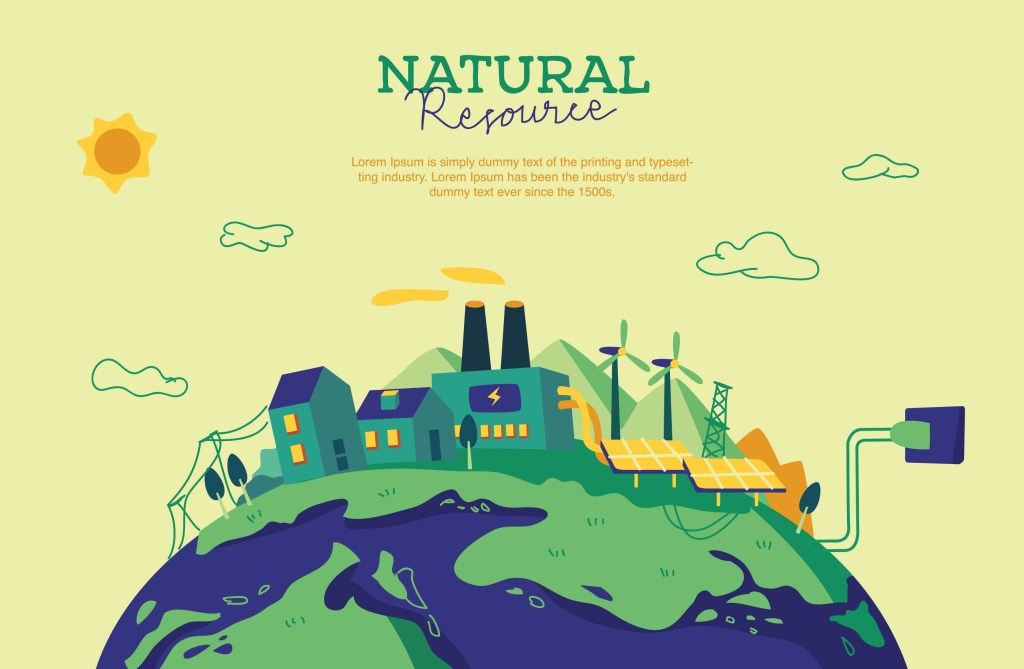
Natural resources have long played a crucial role in shaping the economies and societies of nations across the globe. From ancient civilizations to modern industrialized nations, the availability and utilization of natural resources have been instrumental in driving economic growth, technological advancements, and cultural development.
The significance of natural resources lies in their inherent value as raw materials for various industries such as agriculture, mining, manufacturing, and energy production. These resources can be broadly categorized into renewable and non-renewable resources. Renewable resources include water, sunlight, wind energy, forests, and agricultural products. On the other hand, non-renewable resources encompass fossil fuels like coal, oil, and natural gas along with minerals like iron ore or copper.
One of the most critical renewable resources is water. Access to clean water is essential for human survival and has far-reaching implications for both rural communities and urban centers. It plays a pivotal role in agriculture by sustaining crop production through irrigation systems that enable farmers to cultivate larger areas of land throughout the year. Additionally, hydropower generated from flowing or falling water supports electricity generation needed to power industries.
Sunlight is another vital renewable resource that holds immense potential for sustainable energy production. Solar power harnesses sunlight using photovoltaic cells or solar thermal collectors to generate electricity or heat respectively. As concerns about climate change grow globally due to increased carbon emissions from burning fossil fuels for energy generation purposes; solar power offers an environmentally friendly alternative that reduces greenhouse gas emissions while providing a reliable source of energy.
Wind energy is yet another valuable renewable resource that has gained traction over recent years as a means of generating electricity on both small-scale projects (such as individual homes) and large-scale wind farms capable of powering entire cities. Wind turbines convert kinetic energy from wind into electrical power which can then be integrated into national grids for public consumption.
Forests are not only rich biodiversity hotspots but also significant sources of timber which serves as raw material for construction projects, furniture production, and paper manufacturing. Moreover, forests provide ecosystem services such as carbon sequestration, soil conservation, and water regulation. They also contribute to the livelihoods of indigenous communities through sustainable forest management practices.
Agricultural products form the backbone of food security and have profound implications for societies. Countries blessed with fertile soils are better equipped to produce sufficient quantities of food thereby ensuring their population’s well-being. Additionally, agricultural exports can boost a country’s economy by generating revenue from international trade.
While renewable resources provide a foundation for sustainable development, non-renewable resources have historically driven economic growth and technological advancement in many nations. Fossil fuels like coal, oil, and natural gas have been instrumental in powering industrial revolutions around the world.
Coal played a pivotal role during the Industrial Revolution in Europe during the 18th and 19th centuries. Its abundant availability fueled steam engines that powered factories and locomotives which revolutionized transportation systems. However, coal is notorious for its high carbon emissions contributing significantly to global warming and environmental degradation.
Oil emerged as a dominant energy source during the 20th century due to its versatility as fuel for transportation vehicles (such as cars) along with its numerous applications in various industries like petrochemicals or plastics manufacturing. The discovery of large oil reserves transformed some countries into major global players with substantial wealth derived from oil exports.
Natural gas has gained prominence in recent years due to its cleaner burning properties compared to coal or oil. It serves as an essential energy source for heating homes, cooking meals, generating electricity at power plants while also being utilized by industries such as fertilizers or chemicals production.
Minerals are another crucial category of non-renewable resources that underpin modern economies through their use in construction materials (such as cement), electronics (like copper wiring), or vehicle manufacturing (using iron ore). Countries rich in mineral deposits often benefit from revenues generated through mining activities while simultaneously fueling global supply chains.
The availability or lack of natural resources has profound implications for the economic, social, and political dynamics within nations. Countries blessed with abundant resources often experience periods of rapid economic growth as they leverage these assets to attract investments, foster industrial development, create jobs, and improve living standards for their citizens.
However, the over-reliance on natural resource extraction can also pose challenges for economies known as the “resource curse.” This phenomenon occurs when countries become overly dependent on a single resource or industry leading to macroeconomic instability and inequality. The influx of revenues from resource exports can distort local currencies’ exchange rates making other sectors less competitive in international markets. Additionally, corruption and mismanagement associated with resource-rich economies can exacerbate socio-political conflicts leading to unrest among marginalized communities.
To mitigate the negative impacts of relying solely on natural resources, some countries have implemented strategies such as diversifying their economies by promoting sectors like tourism, technology innovation hubs or investing in education and human capital development. By doing so, nations can reduce vulnerability to commodity price volatility while fostering sustainable long-term growth that is less dependent on finite resources.
In conclusion, natural resources continue to play a pivotal role in shaping economies and societies worldwide. Renewable resources offer immense potential for sustainable development through energy generation, agriculture production, and environmental conservation efforts. Meanwhile, non-renewable resources have historically driven industrial revolutions but come with significant environmental concerns. Achieving a balance between harnessing these valuable assets responsibly while simultaneously diversifying economies remains crucial in building resilient societies capable of weathering future uncertainties.
 Alternative Amie
Leave a comment